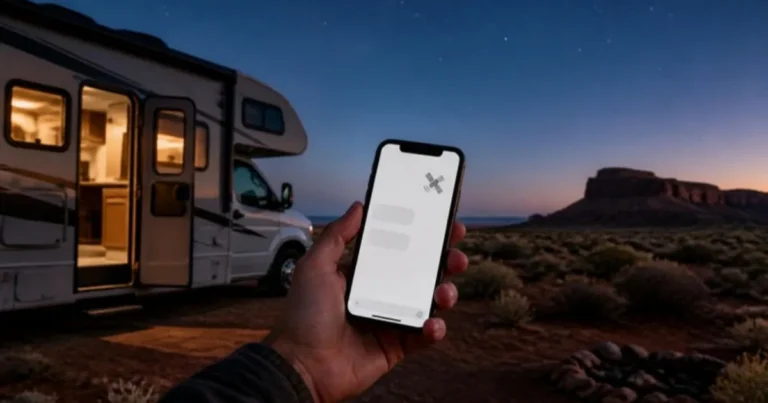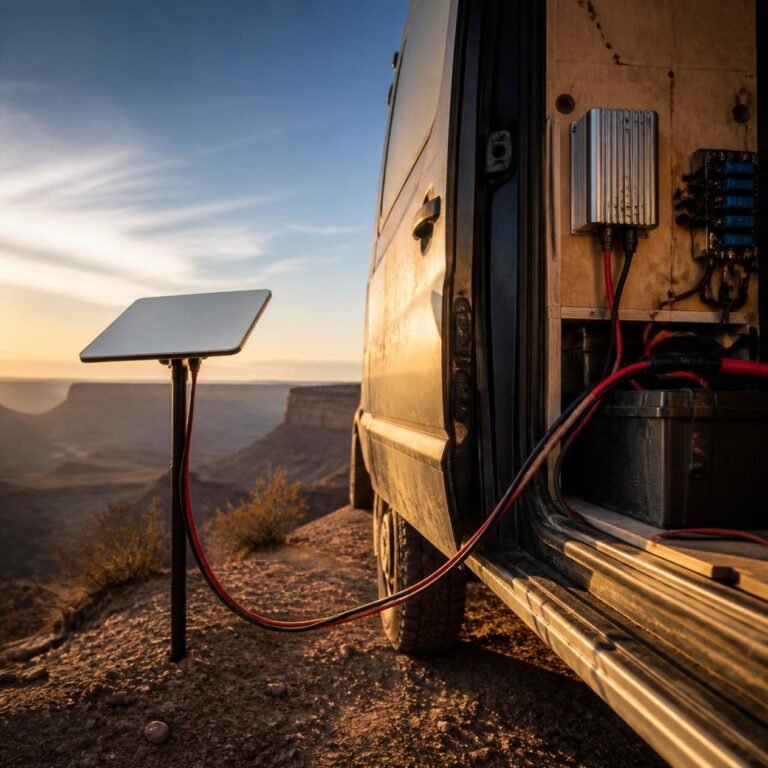
Here’s something that will reset your assumptions before we go any further: the “best” RV internet option in 2025 is not always Starlink Mini — and it’s not always a 5G hotspot. The real answer depends on where you actually park your rig. That distinction alone could save you hundreds of dollars or rescue you from a frustrating, dead-signal weekend in the middle of nowhere. If you’ve been searching for a clear, honest breakdown of Starlink Mini vs 5G hotspot for RV internet, you’re in the right place — and I’m going to give it to you straight.
The problem? Most RVers pick one option based on marketing buzz, then get burned when reality hits. The 5G hotspot crowd discovers they have zero signal at their favorite national forest. The Starlink converts discover they’re paying for satellite internet when they spend 90% of their time parked at campgrounds with solid LTE. The solution isn’t hype — it’s clarity. Let’s build that.
📋 What We’re Covering
- What Starlink Mini Actually Is (And What It’s Not)
- How 5G Hotspots Work for Mobile RV Connectivity
- Head-to-Head: Speed, Coverage, Cost, and Real-World Performance
- Who Actually Wins — And When
- The Dual-System Strategy Most Pros Use
- Myth-Busting: What the Internet Gets Wrong About Both
- Frequently Asked Questions
- My Top Recommended Gear
What Starlink Mini Actually Is (And What It’s Not)
Quick Answer: Starlink Mini is a compact, portable satellite internet dish from SpaceX designed for on-the-go use. It connects to SpaceX’s low-Earth orbit satellite constellation to deliver broadband speeds in remote and rural areas where cellular networks simply don’t reach — making it a compelling but premium-priced RV internet option.
When SpaceX released the Starlink Mini in mid-2024, the RV community lost its collective mind — and honestly, with good reason. The standard Starlink dish was already a revelation for off-grid connectivity, but it was bulky, power-hungry, and designed primarily for fixed installations. The Mini changed that equation. At roughly the size of a large book and weighing under 2.5 pounds, it finally made satellite internet genuinely portable.
But here’s the insider detail most reviews skim past: Starlink Mini runs on the same low-Earth orbit (LEO) satellite constellation as the standard dish, which means it delivers the same coverage footprint — not a degraded version of it. SpaceX now operates over 6,000 active Starlink satellites in LEO, creating a mesh that covers virtually every landmass on Earth. According to FCC satellite internet regulatory filings, LEO-based systems like Starlink achieve dramatically lower latency than traditional geostationary satellites — typically 20–60ms versus 600ms+ — which matters enormously for video calls and real-time work.
The trade-off on the Mini is data. Its base plan caps you at 50GB of priority data monthly, with speed-throttled data beyond that threshold. If you’re a heavy streamer or remote worker burning through 200GB+ per month, you’ll feel that ceiling. For connectivity solutions across your whole rig setup, check out the broader options covered at connectivity solutions for RVs and trucks — it’s a solid starting point for thinking about your full system architecture.
How 5G Hotspots Work for Mobile RV Connectivity
So what’s the honest case for a 5G mobile hotspot? Stronger than most Starlink evangelists will admit, TBH.
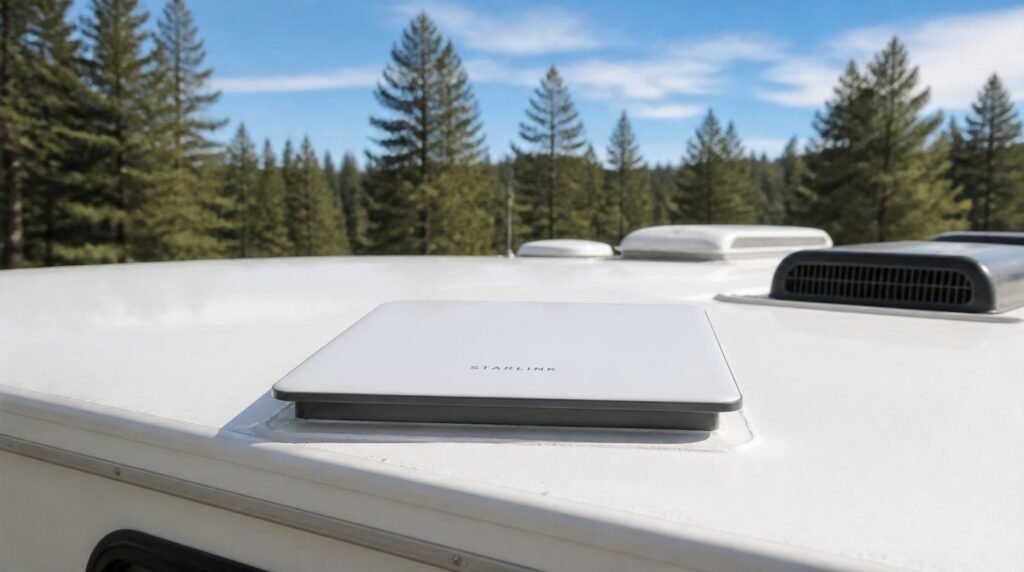
A 5G hotspot is a cellular modem in a pocket-sized box. It connects to 5G (and fallback 4G LTE) towers, converts that signal into WiFi, and lets every device in your RV connect to it just like a home router. The newest generation of devices — think Netgear Nighthawk M6 Pro, Inseego MiFi X PRO, or T-Mobile’s dedicated hotspot hardware — are genuinely impressive. In strong 5G coverage areas, you can pull 300–900 Mbps download speeds. That’s not a typo. That’s faster than most American household broadband.
The catch, and it’s a big one, is that “5G coverage” on a carrier map and “5G coverage where I’m actually camping” are two very different things. Carriers paint their maps optimistically. The moment you leave a main highway corridor or pull into a canyon, a valley, or a federally managed forest, that 5G bar drops to LTE, then to 3G, then to nothing. OpenSignal’s independent mobile network analytics consistently show that real-world 5G availability in rural America hovers far below the coverage claims in carrier advertising.
That said, if your RV lifestyle keeps you within 50 miles of mid-size cities, near well-traveled interstate corridors, or at commercial campgrounds with decent infrastructure — a 5G hotspot plan can run circles around Starlink on both speed and value. Plans from major carriers now start around $30–$50/month for meaningful data allotments, and the hardware investment is a fraction of Starlink Mini’s $599 entry price.
Head-to-Head: Speed, Coverage, Cost, and Real-World Performance
Let’s stop dancing around the numbers. Here’s how these two technologies stack up across every dimension that actually matters to an RVer:
| Factor | Starlink Mini | 5G Hotspot |
|---|---|---|
| Hardware Cost | ~$599 | $100–$400 |
| Monthly Plan | From ~$50/mo (50GB priority) | $30–$80/mo (varies by carrier) |
| Download Speed | 50–200 Mbps typical | 30–900 Mbps (signal dependent) |
| Upload Speed | 5–20 Mbps | 15–100 Mbps |
| Latency | 20–60ms | 10–50ms (5G) / 40–80ms (LTE) |
| Rural Coverage | ✅ Excellent | ❌ Unreliable to none |
| Urban/Suburban | ✅ Good | ✅ Excellent |
| In-Motion Use | ✅ Supported | ✅ Native |
| Power Draw | ~30W | ~5–15W |
| Setup Complexity | Moderate (requires clear sky view) | Simple (plug and connect) |
| Data Caps | 50GB priority, then throttled | Varies widely by plan |
One thing that table can’t show you: the emotional cost of connectivity failure. If you’ve ever tried to close a remote-work deadline from a mountain campsite and watched your 5G hotspot sit at zero bars, you understand exactly why some people pay the Starlink premium without blinking. Reliability in the places you love to go is worth real money.
Who Actually Wins — And When
Does the answer depend on your travel style? Absolutely — and I’m going to be specific enough that you can actually apply this.
When should you choose Starlink Mini for your RV?
- You spend significant time boondocking on BLM land, in national forests, or at remote dry-camping sites
- You’re a full-time RVer who works remotely and can’t tolerate connectivity gaps
- You travel in the American West or other rural regions where cellular dead zones are common
- You need reliable video conferencing, not just casual browsing
- Your rig has solar or adequate battery capacity to support 30W continuous draw
When does a 5G hotspot make more sense for RV internet?
- You primarily stay at campgrounds near cities, along interstate routes, or at commercial RV parks
- You’re weekend-tripping rather than full-timing
- Budget is a genuine constraint and you need to minimize monthly recurring costs
- You already have a carrier plan you can add a hotspot line to at minimal cost
- You travel internationally and need a flexible, carrier-swappable solution
🔑 The Real Insight: The question isn’t “which is better” — it’s “which failure mode can I live with?” Starlink Mini’s failure mode is cost and data caps. A 5G hotspot’s failure mode is zero signal in beautiful places. Only you know which one stings more.
The Dual-System Strategy Most Pros Use
Want to know what the most experienced full-time RVers actually run? Not Starlink only. Not a 5G hotspot only. Both — used intelligently as a layered system.
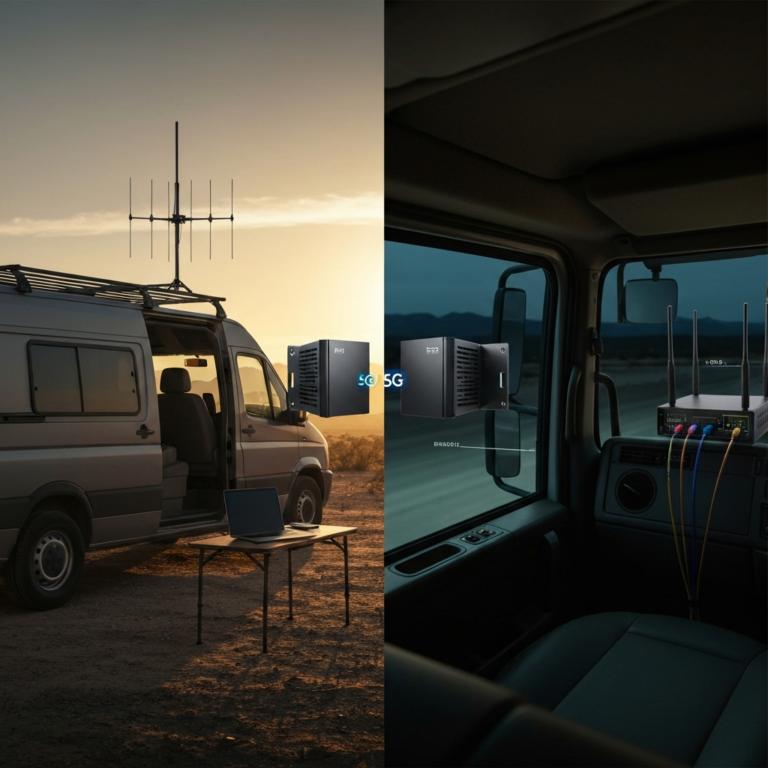
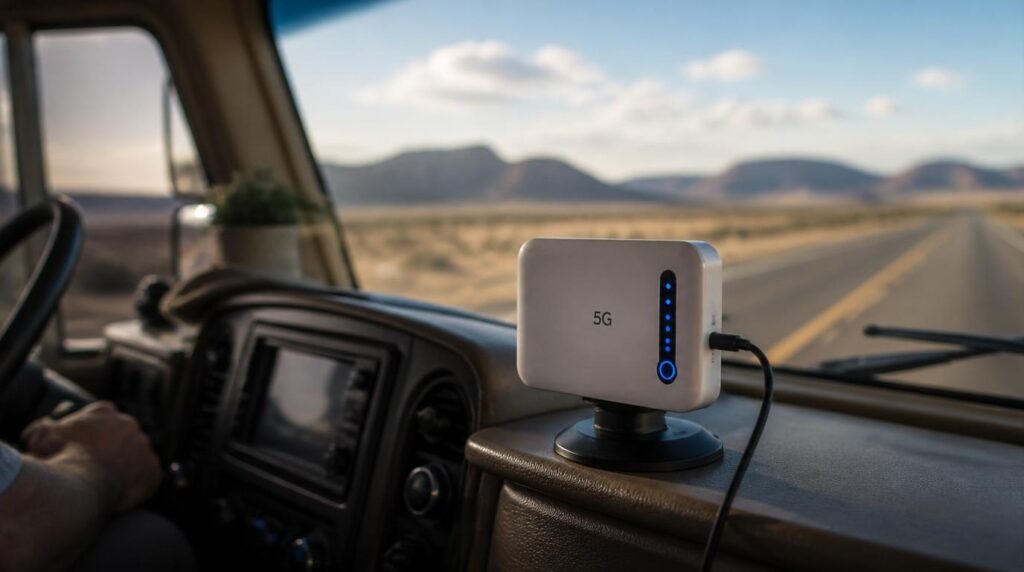
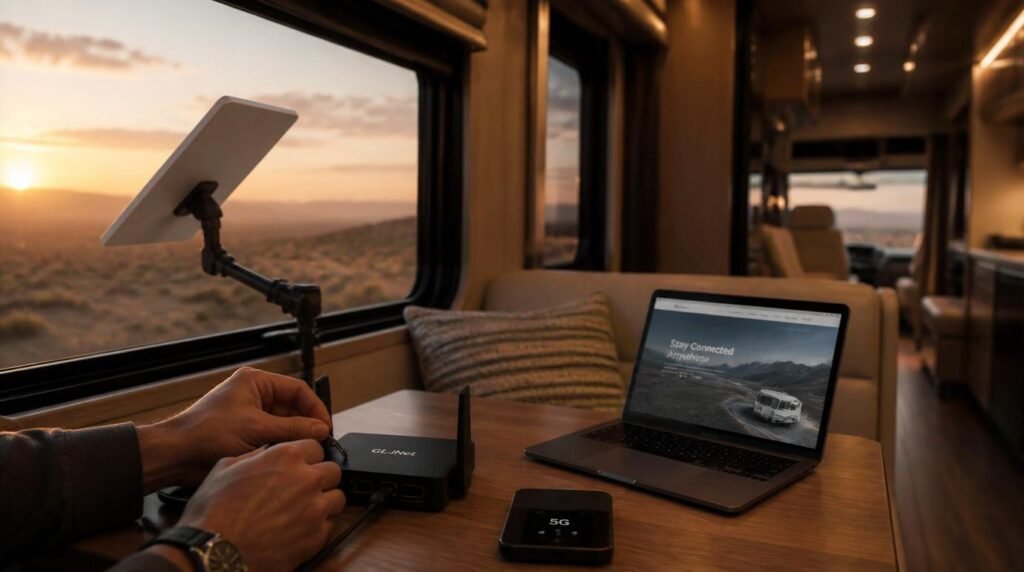
Here’s how the dual-system approach works in practice: you run a 5G hotspot as your primary connection when you’re in cellular coverage (which is cheaper, faster in urban areas, and lower power draw). The moment signal degrades, your router or network manager automatically — or manually, with one button — fails over to Starlink Mini. Some travelers use a multi-WAN travel router like the GL.iNet Beryl AX or the Pepwave MAX Transit to automate this failover entirely.
The curiosity loop hiding in this strategy: what does it actually cost to run both? Pause on that for a second. Because most people assume “both” means “twice as expensive,” and the math is more interesting than that. If you’re currently paying $80/month for a 5G plan and adding Starlink Mini at $50/month, your all-in monthly is $130. But if Starlink replaces those $40+ in overage charges you’ve been hitting on your cellular plan, or the $20/month campground WiFi fees you’ve been paying as a backup, the net delta is smaller than it looks. Pair that with the ability to extend your RV WiFi signal using a booster setup and you’ve built a genuinely robust mobile internet system.
Expert Commentary: This real-world field test cuts through the spec-sheet noise by actually driving to remote locations and measuring both systems under identical conditions — pay particular attention to the latency results during peak satellite congestion hours, which expose a performance reality most written reviews conveniently omit.
Myth-Busting: What the Internet Gets Wrong About Both
I’ve spent enough time in RV forums and Facebook groups to have a well-stocked list of bad takes. Let me torch a few of the biggest ones.
Myth #1: “Starlink is always faster than 5G”
Nope. In a strong 5G millimeter-wave or mid-band coverage area, a quality hotspot will absolutely smoke Starlink Mini on raw download speed. Starlink’s advantage is geographic availability, not raw throughput. Ookla’s 5G coverage tracker shows mid-band 5G now available across hundreds of mid-size American cities — in those zones, 5G wins on speed, full stop.
Myth #2: “You can’t use Starlink Mini while driving”
This was true of the original Starlink standard dish, which required a firmware unlock for in-motion use. Starlink Mini launched with in-motion capability built in. You can legally and technically use it while your RV rolls down the highway — though you’ll want secure, stable mounting and a clear sky view. IMO, this was the single biggest practical upgrade the Mini brought to the RV use case.
Myth #3: “5G will eventually cover everywhere, so Starlink isn’t necessary”
The economics of cellular infrastructure don’t support this. Carriers build towers where population density justifies the investment. The 80 million acres of BLM land in the American West, the vast National Forest system, the rural Midwest — these regions aren’t getting profitable 5G tower density anytime soon. According to USDA rural broadband research, tens of millions of rural Americans still lack access to 25 Mbps broadband — a gap satellite internet is uniquely positioned to fill.
Myth #4: “Starlink’s data cap makes it useless for heavy users”
The Mini’s 50GB priority cap is real, but the strategy around it matters. If you run a dual-system setup and use 5G for your heavy bandwidth consumption (streaming in campgrounds with signal), then reserve Starlink for remote work connectivity where you’re not hammering video streams all day — 50GB of priority data goes surprisingly far. Smart usage architecture, not raw capacity, is how pros handle this. For camera and cloud-connected tech that also relies on mobile data, the approach to truck dash cam and cloud connectivity planning applies the same layered thinking.
Frequently Asked Questions
Is Starlink Mini worth it for full-time RV living?
Yes, if you spend significant time boondocking or in rural areas where 5G and LTE signals are unreliable. Starlink Mini delivers consistent satellite-based broadband regardless of cellular tower proximity, making it the better investment for full-timers who leave the highway behind. For weekend warriors who stick to well-served campgrounds, the math gets murkier.
Can a 5G hotspot replace Starlink for RV internet?
In urban and suburban areas, a 5G hotspot can absolutely replace Starlink — and often at lower cost. But the moment you pull into a national forest or remote campground, cellular signal disappears and Starlink becomes the clear winner. Most serious RVers end up running both systems strategically rather than committing to one exclusively.
How much data does Starlink Mini include per month?
Starlink Mini comes with 50GB of priority data per month on its base plan, with additional data available at reduced speeds or purchasable as add-on data packages. This is less than the standard Starlink RV plan, so heavy streamers should factor data usage carefully and consider pairing the Mini with a cellular hotspot for high-consumption tasks.
What is the best 5G hotspot for RV travel in 2025?
The Netgear Nighthawk M6 Pro and the T-Mobile dedicated hotspot device consistently top real-world RV user reviews in 2025. Signal strength, carrier coverage maps for your specific travel routes, and data plan pricing should all factor into your choice. Running coverage checks at OpenSignal for your planned destinations before buying is time well spent.
Does Starlink Mini work while the RV is moving?
Yes. Starlink Mini supports in-motion use natively, unlike earlier Starlink hardware versions. This makes it genuinely viable for road use, though you’ll want to mount or position it with a consistent clear sky view for best performance. The dish uses electronic beam steering to track satellites without mechanical movement, which makes motion compatibility possible.
How much does Starlink Mini cost compared to a 5G hotspot plan?
Starlink Mini hardware runs around $599 with a service plan starting near $50/month for 50GB of priority data. A quality 5G hotspot device ranges from $100–$400, with carrier plans starting around $30–$80/month. Over 12 months, Starlink Mini carries a significantly higher total cost of ownership — but delivers coverage in places where 5G simply cannot compete. 🙂
My Top Recommended Gear
Starlink Mini Satellite Internet Kit
The most compact satellite internet solution SpaceX has released — I recommend this for any RVer who spends meaningful time off the cellular grid. The in-motion capability and near-global LEO coverage make it the most capable off-grid internet hardware available at this price point today.🔍 Check Price on Amazon
Netgear Nighthawk M6 Pro 5G Mobile Hotspot Router
The Nighthawk M6 Pro is the 5G hotspot I point friends toward when they want flagship-tier hardware that supports both mmWave and sub-6GHz 5G bands. Its WiFi 6E output means every modern device in your RV connects at maximum efficiency — and it moonlights as a capable travel router.🔍 Check Price on Amazon
GL.iNet Beryl AX (GL-MT3000) Travel Router
If you’re building a dual-system setup with both Starlink and a 5G hotspot, you need a smart travel router to manage the failover — and the Beryl AX handles that job beautifully. It supports WireGuard VPN, multi-WAN management, and outputs WiFi 6 throughout your rig, all in a unit small enough to pocket.🔍 Check Price on Amazon
Disclaimer: This post contains affiliate links. As an Amazon Associate, I may earn a commission from qualifying purchases at no additional cost to you. I only recommend products I’ve personally tested or rigorously researched.