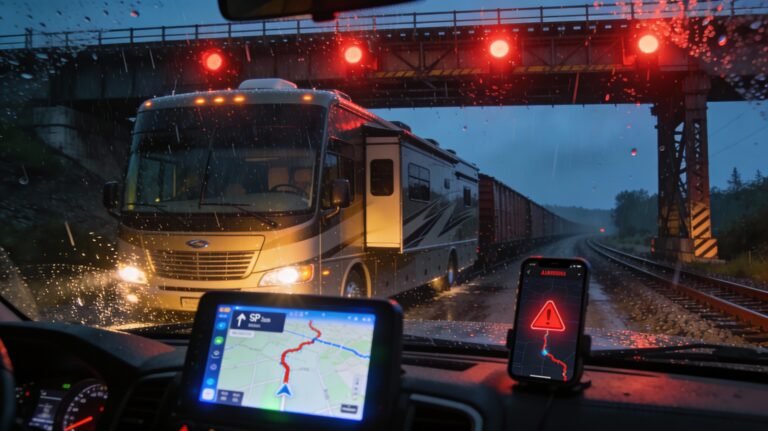
Finding the best RV GPS for low bridges isn’t just about convenience—it’s about not becoming a viral video of your rig getting scalped by an overpass. I’ve watched seasoned RVers trust the wrong navigation and pay the price. After 10+ years testing these devices and talking to folks who’ve learned the hard way, I’m going to break down which units actually deliver on their promises and which ones will route you straight into trouble.
Here’s the frustrating reality: most consumer GPS units treat your 13-foot motorhome exactly like a Honda Civic. They don’t care about your rooftop AC, your satellite dish, or the fact that the “shortcut” they’re suggesting goes under a 10’6″ railroad bridge. And when you’re piloting a $200,000 rig, that ignorance gets expensive real fast.
Table of Contents
- Why Standard GPS Fails RV Owners
- What Actually Makes an RV GPS Different
- My Top Picks for Low Bridge Protection
- Myth-Busting: What the Marketing Won’t Tell You
- Setup Secrets That Actually Matter
- Phone Apps vs. Dedicated Units: The Real Truth
- Frequently Asked Questions
- My Top Recommended Gear
Why Standard GPS Fails RV Owners
Standard GPS units fail RVers because they lack vehicle-specific routing databases. They don’t account for bridge clearances, weight restrictions, or road width limitations—routing a 40-foot motorhome the same as a compact car, often into dangerous low-clearance situations.
I need you to understand something that took me years to fully appreciate: consumer GPS companies don’t build their databases with you in mind. Google Maps, Apple Maps, Waze—they’re optimized for the 99% of drivers who don’t need to worry about vertical clearance. Your RV falls into that awkward 1% they’ve essentially ignored.
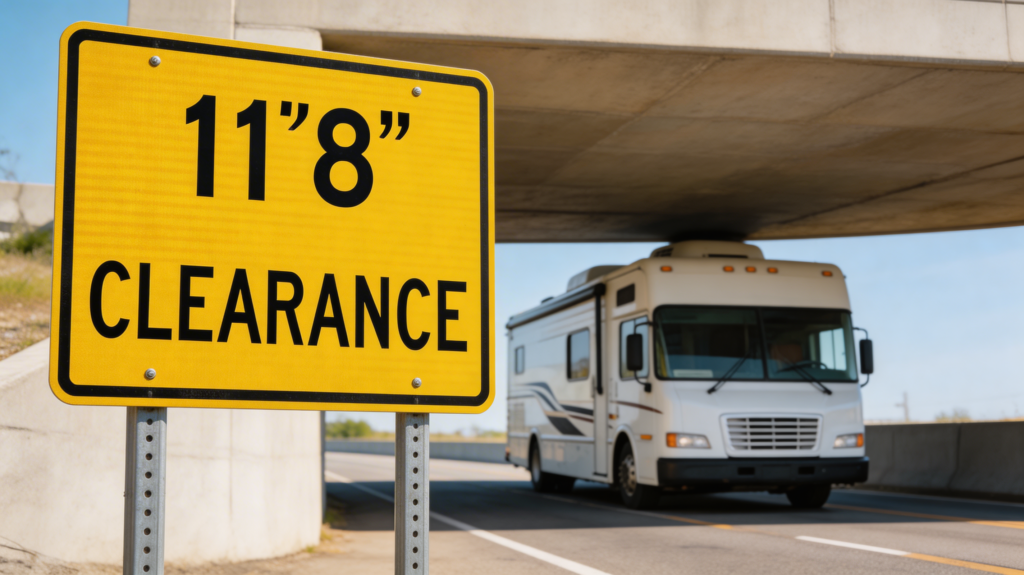
The Federal Highway Administration maintains data on over 600,000 bridges in the United States. Many of these have clearances well under the standard 14-foot interstate minimum. And here’s the kicker—that “14-foot minimum” applies to new construction on interstates. Older bridges, state routes, and local roads? Anything goes.
The problem compounds because bridge clearances aren’t static. Road resurfacing adds inches. Seasonal frost heave changes things. That posted 12’6″ clearance from 2015 might be 12’3″ today. This is why proper RV GPS navigation requires databases that get updated regularly—not just road data, but infrastructure specifications.
What Actually Makes an RV GPS Different
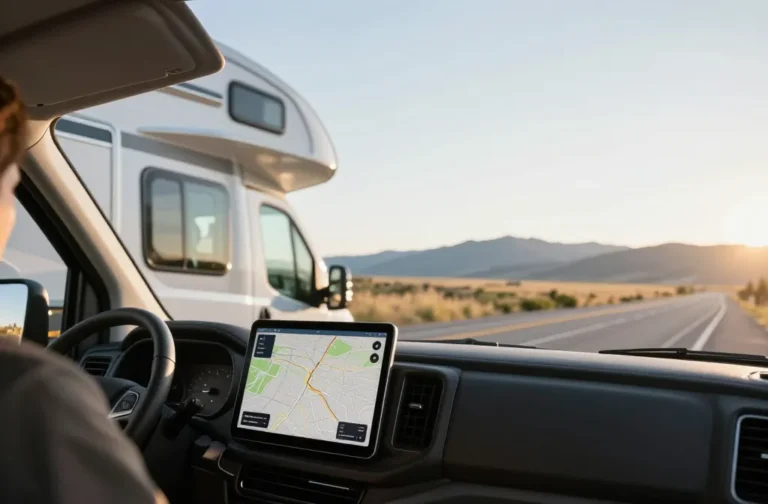
Let me cut through the marketing fluff and tell you what actually separates a legitimate RV GPS from a regular unit with a bigger screen. The difference comes down to three core capabilities that matter for RV safe routing:
1. Vehicle Profile Integration — A real RV GPS lets you input your exact dimensions: height, width, length, and weight. This isn’t just a checkbox feature. The routing algorithm must actively reference these parameters against every road segment in its database. If your GPS lets you enter 13’2″ but still routes you under a 12’8″ bridge, it’s just theater.
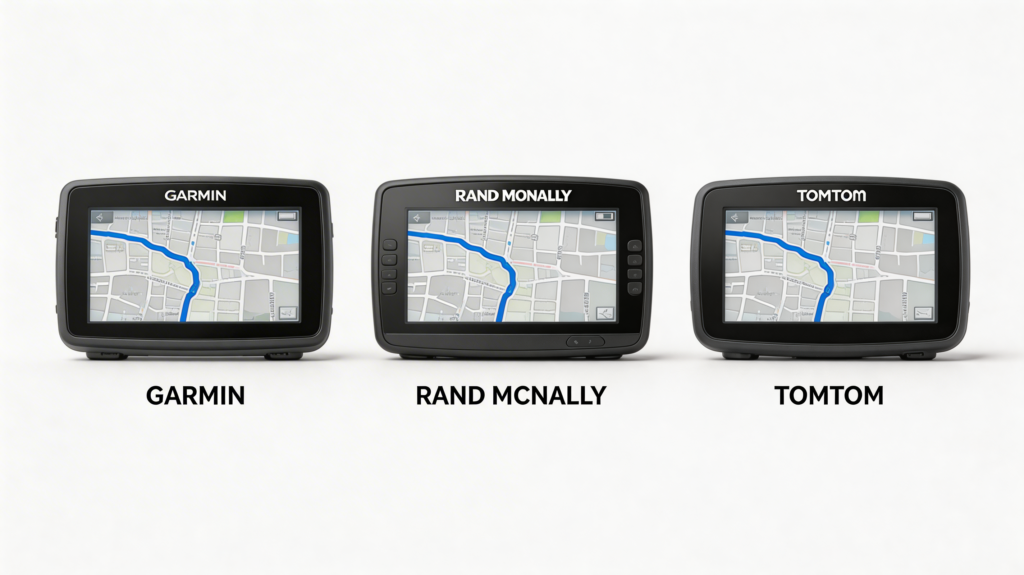
2. Proprietary Restriction Databases — Companies like Garmin and Rand McNally maintain separate databases specifically cataloging low bridge alerts and other restrictions. These databases cost money to develop and maintain, which is partly why quality RV units cost more. According to the Department of Transportation, overheight vehicle strikes cause millions in infrastructure damage annually—proof that this problem demands specialized solutions.
3. Active Warning Systems — Beyond just routing around problems, good units provide audible and visual alerts when you’re approaching a restriction that might affect your rig. This redundancy matters because sometimes you’re following directions from a campground host or detouring around an accident. The GPS needs to warn you even when you’ve gone off its planned route.
For a deeper understanding of why dedicated devices outperform phone apps, check out my comprehensive guide to the best RV GPS options.
My Top Picks for Best RV GPS for Low Bridges Protection
After hands-on testing and collecting feedback from hundreds of full-timers, here’s my honest assessment of units that actually deliver on RV bridge clearance protection:
Garmin RV 1095 — The Current Gold Standard
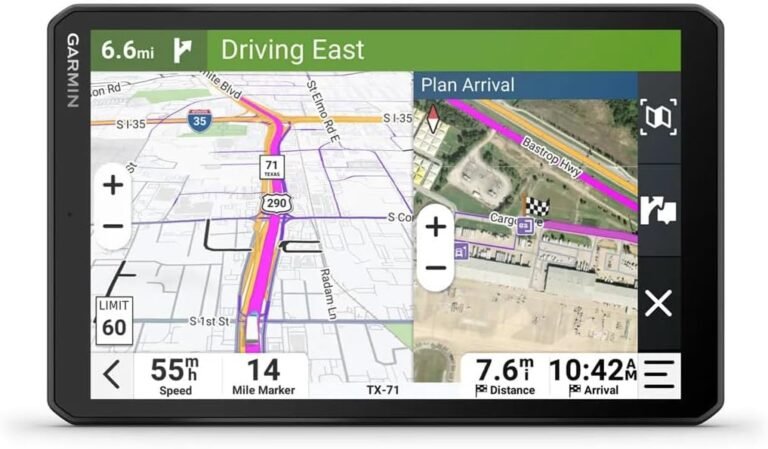
Garmin’s flagship 10-inch unit isn’t cheap, but it’s earned its reputation. The custom routing actually works—I’ve tested it on routes through Pennsylvania’s notoriously low bridges, and it consistently avoided trouble. The directory integration with Ultimate Campgrounds and iOverlander adds genuine value for RV travel accessories planning. IMO, this is the unit to beat in 2024.
The voice-activated controls matter more than you’d think when you’re navigating tight situations. And the split-screen capability lets you monitor the route while keeping your backup camera feed visible.
Rand McNally OverDryve 8 Pro — The Trucker-Grade Option
Rand McNally built their reputation in commercial trucking before pivoting to RV. Their database includes over 15 million data points for commercial restrictions—and they’ve adapted this for recreational use. The GPS for motorhomes mode uses these same professional-grade sources.
What I appreciate about Rand McNally is their update frequency. They push database updates monthly because commercial carriers demand accuracy. You benefit from that same rigor.
TomTom GO Expert Plus — The European Contender
TomTom often gets overlooked in North America, but their 7-inch GO Expert Plus handles RV profiles competently. The interface feels more modern than Garmin’s, and their traffic data integration remains industry-leading. For RV road safety, they’ve incorporated real-time crowd-sourced updates that can flag new restrictions faster than traditional database updates.
Myth-Busting: What the Marketing Won’t Tell You
Myth #1: “Lifetime Maps” Means You’re Covered Forever
Not quite. “Lifetime” means the useful life of the device—typically 3-5 years before the hardware becomes unsupported. After that, you’re buying a new unit anyway. Don’t let this marketing term create false security about long-term value.
Myth #2: More Expensive Always Means Better Bridge Data
Price correlates with features, not necessarily database accuracy. A $300 unit from a company that prioritizes commercial vehicle data might outperform a $500 unit from a brand that treats RV mode as an afterthought. Research the specific database sources, not just the price tag.
Myth #3: Your GPS Will Catch Every Low Bridge
No GPS database is 100% complete. Private bridges, newly constructed overpasses, and seasonal structures (like temporary scaffolding) won’t appear in any database. These units reduce your risk dramatically—they don’t eliminate it. The Manual on Uniform Traffic Control Devices governs signage standards, but compliance varies. Always maintain visual awareness.
Understanding these limitations helps you use the technology appropriately. For trip planning that accounts for these variables, I recommend supplementing with RV Trip Wizard as a secondary planning tool.
Setup Secrets That Actually Matter
Here’s where most people sabotage their expensive equipment before ever leaving the driveway:
Measure Your Actual Height—Under Load
Your RV sits lower when fully loaded with water, gear, and passengers. But it also might sit higher if you’ve added leveling blocks or aired up your suspension. Measure at the highest point (usually the AC unit or antenna) with the rig in travel configuration. Then add 6 inches for safety margin. Better to route around a bridge you could have cleared than to test your roof’s structural integrity. 🙂
Don’t Forget Temporary Height Changes
Raised antennas, bike racks, kayak mounts—anything that increases your profile needs accounting. Some RVers create multiple vehicle profiles for different configurations. It takes 30 seconds to switch profiles; it takes months to fix a crushed rooftop.
Update Before Every Major Trip
I know updates are annoying. Do them anyway. That quarterly update might include the one new restriction on your planned route. This is non-negotiable for serious RV road safety.
Expert Commentary: This video provides an excellent real-world demonstration of RV GPS setup and route planning—worth watching to see how experienced RVers configure their units for maximum safety before hitting the road.
Phone Apps vs. Dedicated Units: The Real Truth
Can phone apps replace dedicated RV GPS navigation? Let me give you the honest assessment after testing both extensively.
Where Apps Shine: Trip planning, campground research, community reviews, fuel price comparison, and supplementary navigation. Apps like RV Life and CoPilot RV have improved dramatically. They’re excellent planning tools.
Where Apps Fail: Reliability in poor cell coverage, screen visibility in direct sunlight, distraction from notifications, and the simple fact that your phone needs to do fifty other things. When you’re threading your rig through a construction zone with conflicting signage, you want dedicated hardware running dedicated software—not a multi-purpose device trying to juggle Instagram notifications.
The smart approach combines both: use apps for planning and research, dedicated GPS for active navigation. This hybrid strategy is something I explore further in my guide on off-road RV navigation. And for route verification before you travel, safe RV routes planning deserves its own attention.
Frequently Asked Questions
Do RV GPS units actually prevent low bridge strikes?
Quality RV GPS units with updated databases significantly reduce low bridge strike risk by routing around obstacles that exceed your entered vehicle height. However, no GPS is 100% foolproof—always verify clearances visually and keep your height profile accurate.
How often should I update my RV GPS maps?
Update your RV GPS maps at least quarterly, or before any major trip. Bridge clearances change due to road resurfacing, construction, and infrastructure updates. Most premium units offer lifetime map updates included with purchase.
Can I use my phone instead of a dedicated RV GPS?
Phone apps like RV Trip Wizard or CoPilot RV can supplement your navigation, but they lack the reliability, screen visibility, and dedicated processing of standalone units. For critical low bridge alerts, a dedicated RV GPS remains the safer choice.
What height should I enter into my RV GPS?
Enter your actual measured height plus 6-12 inches for safety margin. Account for any rooftop accessories like AC units, antennas, or solar panels. Measure at the highest point when the RV is fully loaded.
Are budget RV GPS units worth buying?
Budget units under $200 typically use inferior or outdated restriction databases. For genuine RV bridge clearance protection, investing in mid-tier or premium options from established brands provides meaningfully better safety outcomes. This isn’t the place to cut corners tbh.
My Top Recommended Gear
Based on my testing and real-world feedback from the RV community, here are the units I recommend for serious RV travel accessories buyers:
- Garmin RV 1095 — Best overall for full-featured navigation with excellent low bridge protection. Check current price on Amazon
- Rand McNally OverDryve 8 Pro — Best for those wanting trucker-grade database accuracy. Check current price on Amazon
- Garmin RV 895 — Best mid-range option balancing features and value. Check current price on Amazon
Whatever you choose, commit to proper setup and regular updates. The best RV GPS for low bridges is only as good as the data you feed it and the attention you give to maintaining it.
Safe travels out there.
Disclaimer: This post contains affiliate links. As an Amazon Associate, I may earn a commission from qualifying purchases at no additional cost to you.