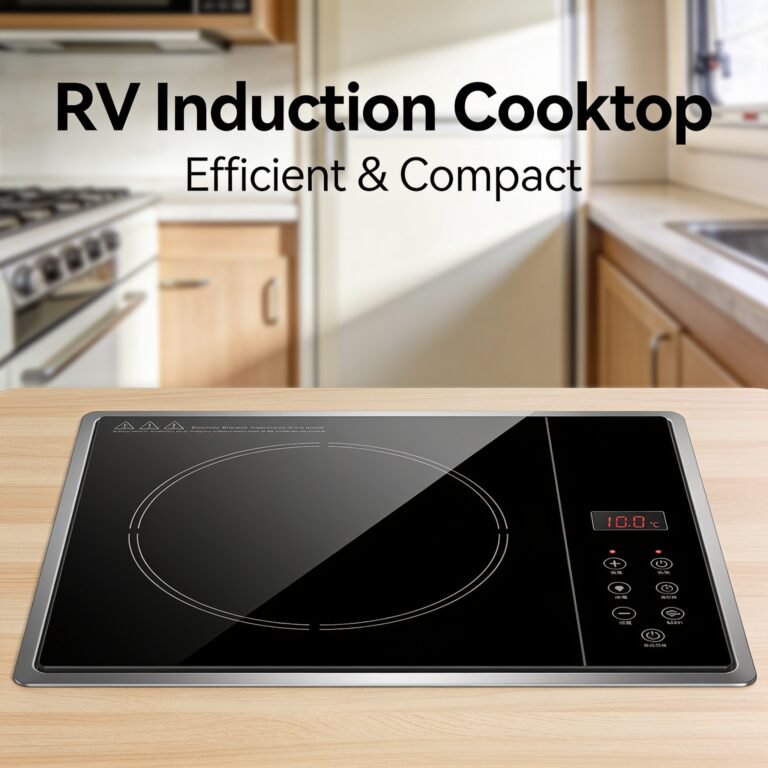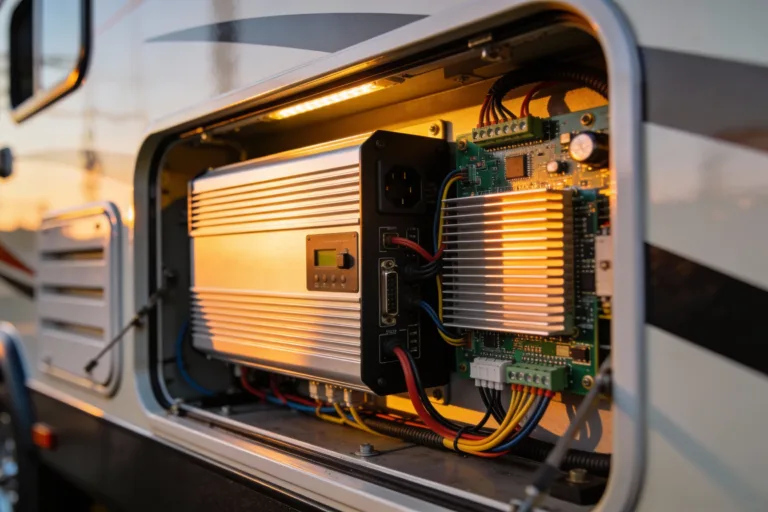
12V induction cooktop RV listings have flooded Amazon and RV retailers in 2026 — flame-free, fast-boiling, and marketed as the perfect boondocking upgrade. But there’s a catch most buying guides skip: the majority of these “12V” units are actually 120V AC induction plates that only run through a sizeable inverter, not appliances that sip power straight off your battery bank. Before you add one to your rig, here’s what the 12V label really means, how much power an induction cooktop actually draws, and the battery and inverter math you need to run one without draining your bank in a single dinner.
Table of Contents
- What “12V” Really Means on an Induction Cooktop
- How Much Power Does an RV Induction Cooktop Actually Draw?
- Battery and Inverter Sizing: The Real Math
- Induction vs Propane vs Other 12V Appliances
- Safety Advantages of Induction Cooking
- What to Look For When Buying
- Is a 12V Induction Cooktop Right for Your Rig?
- FAQ
What “12V” Really Means on an Induction Cooktop
Search “12V induction cooktop RV” and you’ll get pages of results — but read the spec sheet on almost any of them and you’ll find “Input: 120V AC.” The “12V” in the listing title usually refers to the category (RV/marine appliances) or the vehicle’s electrical system, not the cooktop’s actual power input. True DC-native induction units that plug straight into a 12V circuit exist, but they’re uncommon, typically single-burner, and priced at a premium compared to the countertop 120V units RVers buy from big-box retailers.
The practical upshot: unless a listing explicitly states DC voltage input, assume you’re buying a 120V appliance that needs a pure sine inverter between it and your battery bank. That single distinction changes your entire power budget, so it’s worth confirming before you buy — not after you’re stuck troubleshooting an inverter that trips every time you sear something.
How Much Power Does an RV Induction Cooktop Actually Draw?
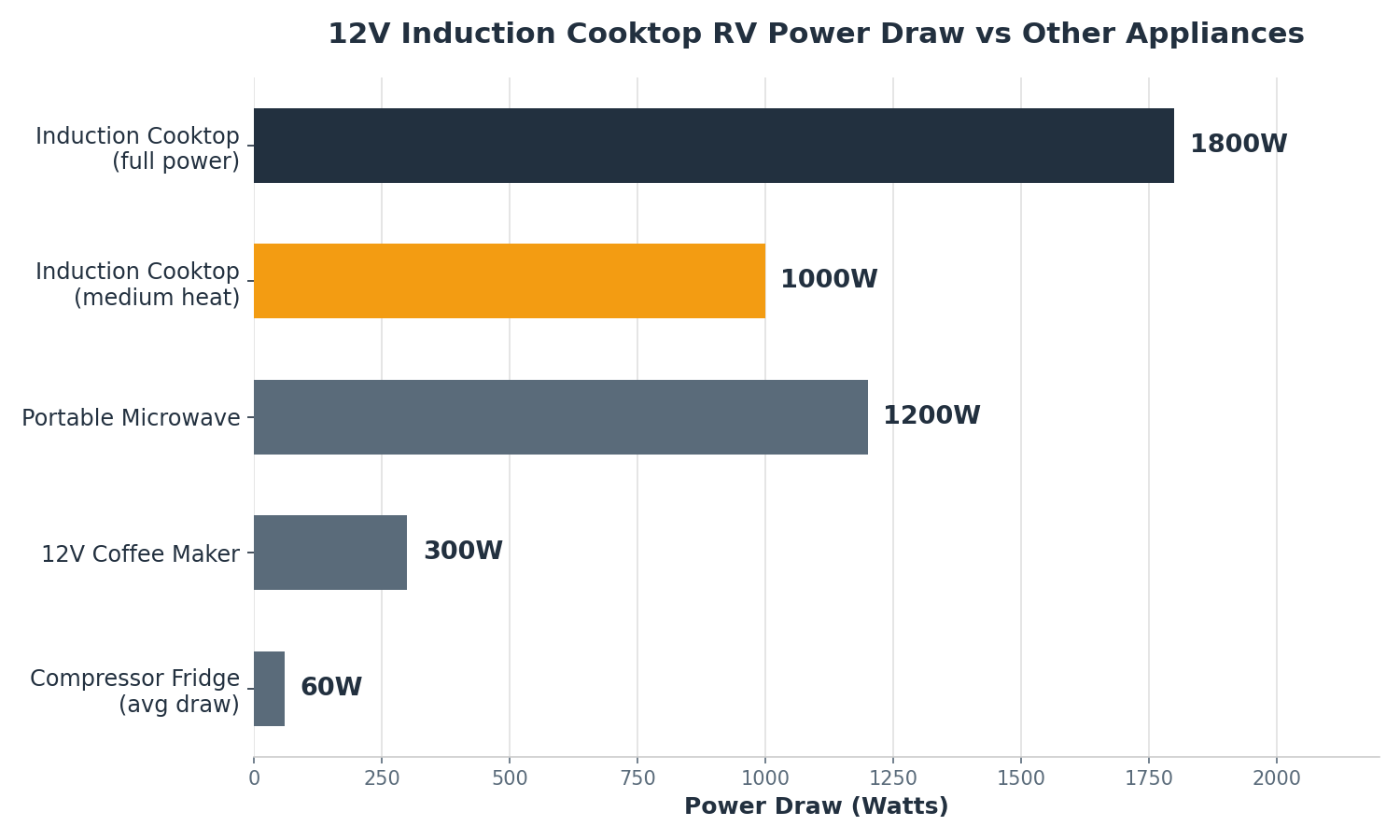
Most portable induction cooktops sold for RV use draw around 1,000 watts at a medium heat setting and 1,800 to 2,400 watts at full power. That’s a massive jump compared to the low-draw 12V appliances RVers are used to running all day. For context, a 12V compressor fridge averages roughly 60 watts, and a 12V coffee maker draws around 300 watts — an induction cooktop at full power can pull more than 20 times what your fridge uses.
The upside is efficiency. According to the U.S. Department of Energy, induction cooking transfers energy to the pan with roughly 85% efficiency, compared to about 32% for gas and 75-80% for standard electric coil elements — induction appliances are up to three times more efficient than a gas burner. In practice that means shorter cook times and less wasted heat radiating into your rig’s cabin, which matters when you’re also trying to keep your AC from working overtime.
Battery and Inverter Sizing: The Real Math
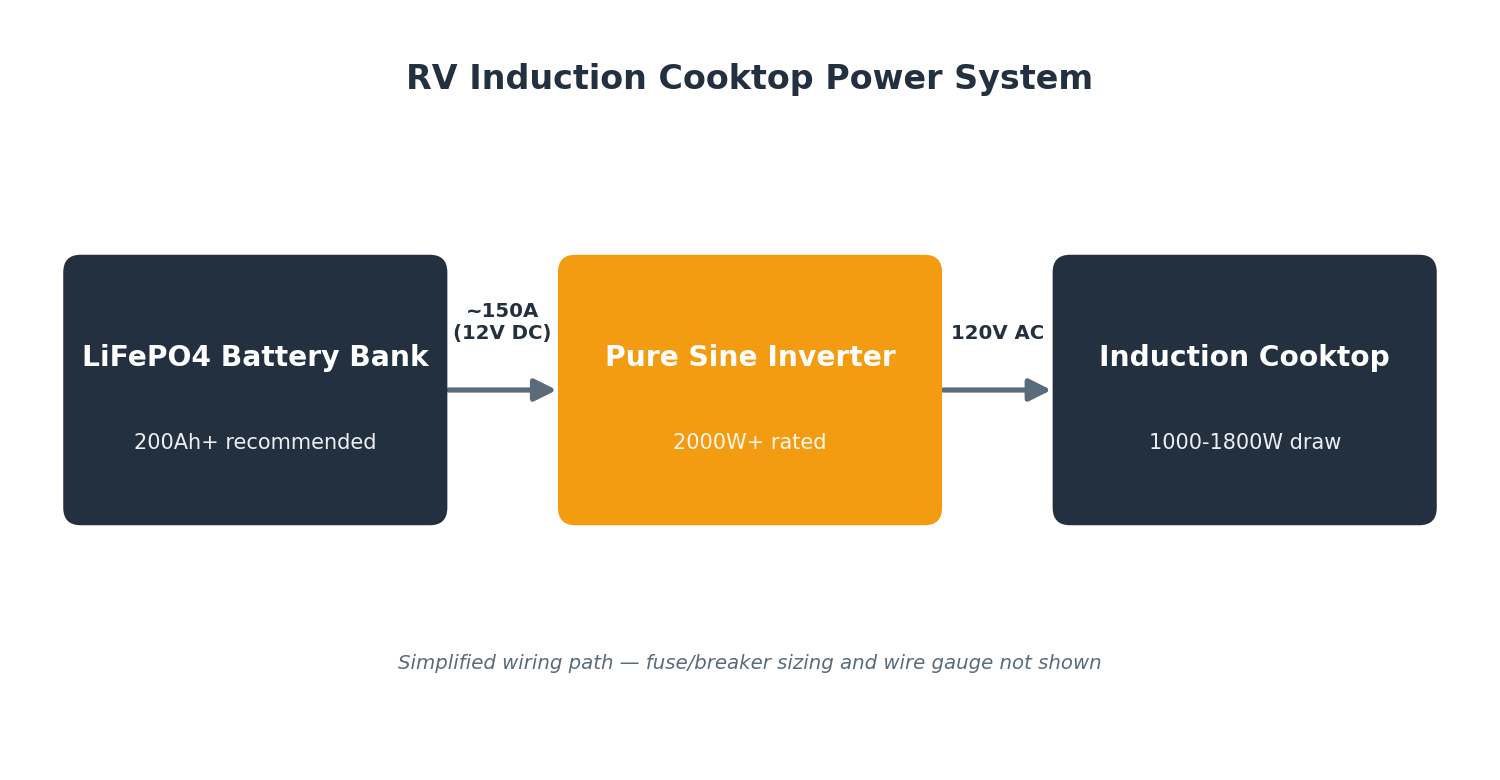
Since almost every RV-marketed induction cooktop needs an inverter, sizing that inverter correctly is the first step. As a rule of thumb, your inverter should provide 20-30% more capacity than the cooktop’s rated wattage to handle startup surges and avoid running flat-out continuously. A cooktop rated for 1,800 watts needs a 2,000-watt-plus pure sine inverter at minimum — if you’re not sure how to size one for your rig, our RV inverter sizing guide walks through the full process.
On the DC side, remember that amps = watts ÷ volts. A 2,000-watt inverter pulling from a 12V battery bank can draw close to 165-170 amps at full load, which means the wiring, fuse, and battery terminals between your battery and inverter need to be rated for 200A+ — undersized cable here is a fire risk, not just an inconvenience.
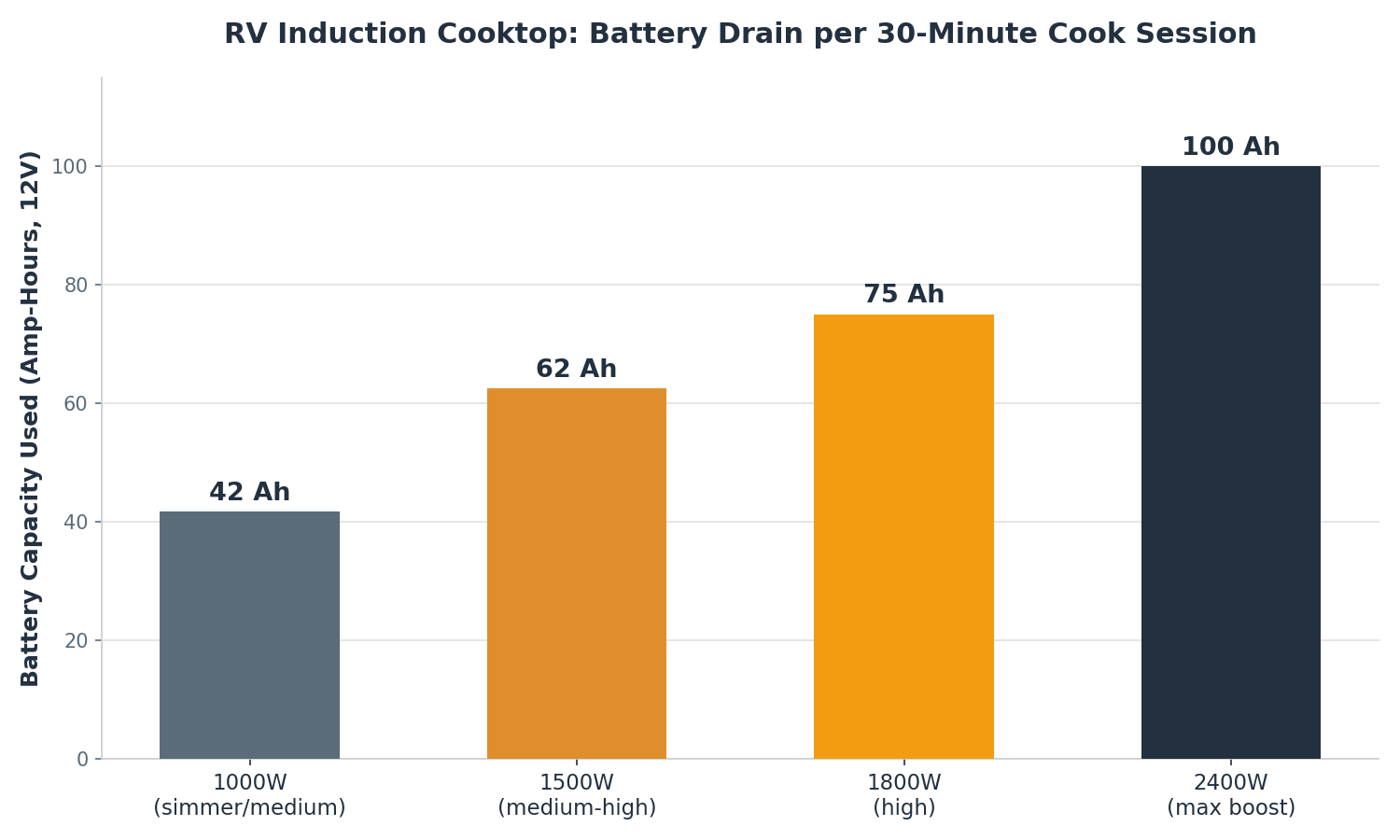
Battery capacity is the other half of the equation. Battle Born Batteries notes that its LiFePO4 packs are built to handle high-draw appliances like induction cooktops, delivering nearly 100% usable capacity — unlike lead-acid batteries, which you can only safely discharge to about 50%. That difference matters a lot here: a 30-minute cook session at high heat can use 75 amp-hours or more, so an underspecced lead-acid bank can leave you with a dead battery and no dinner.
Most boondockers running an induction cooktop regularly land on a 200Ah-plus lithium bank as the practical floor. Our Renogy 100Ah LiFePO4 battery review is a useful reference point for what a single battery can realistically deliver, and if you’re building or resizing your solar setup to recharge what you used, run the numbers through our RV solar sizing calculator before you commit to panel count.
Induction vs Propane vs Other 12V Appliances
Propane stovetops remain the simplest boondocking option because they don’t touch your battery bank at all — you’re trading fuel weight and combustion byproducts for zero electrical load. Induction flips that trade: no propane to haul or refill, but a real hit to your battery bank every time you cook. Compared to other 12V comfort appliances, induction cooking sits in a different league entirely — appliances like a 12V compressor fridge are designed to sip power continuously in the background, while an induction cooktop is a short, heavy-draw spike. Your electrical system needs to be built for peak load, not just average daily consumption, which is the mistake a lot of new boondockers make when they add one of these units after their solar and battery setup is already finalized.
Safety Advantages of Induction Cooking
Beyond power math, induction has a real safety case in an RV. Because the cooktop only heats the pan and not the surrounding surface, there’s no open flame and no hot coil to accidentally brush against in a small kitchen. More importantly, it eliminates combustion entirely, which removes a real risk: the CDC notes that carbon monoxide poisoning sends an estimated 50,000 people to the emergency room each year in the U.S., with RVs, campers, and trailers cited as a common setting because their small interior volume lets CO concentrations build up far faster than in a house. A propane cooktop, heater, or water heater is a potential CO source; an induction cooktop simply isn’t.
That’s not a reason to rip out your propane appliances — you still need a working CO detector regardless of what you cook on — but it’s a genuine point in induction’s favor if you’re weighing the switch.
What to Look For When Buying a 12V Induction Cooktop for Your RV
- Confirmed input voltage — don’t trust the category name; check the spec sheet for “120V AC” or genuine DC input before you buy.
- Real-world wattage range — look for a low simmer setting (600-800W) as well as the max rating, since you’ll rarely cook at full power.
- Cookware compatibility — induction only works with ferrous (magnetic) cookware; test your existing pots with a magnet before assuming they’ll work.
- Auto shutoff and pan detection — these prevent the unit from drawing power with nothing on the burner, which matters when every amp-hour counts.
- Low-voltage/brownout protection — cheaper inverter-cooktop combos can behave erratically as battery voltage sags under load; better units cut out cleanly instead of glitching.
- Physical footprint and non-slip feet — a unit that can slide on a countertop while you’re driving down a washboard road is a hazard.
Is a 12V Induction Cooktop Right for Your Rig?
If you’re already running a 200Ah-plus lithium bank, a 2,000W-plus inverter, and enough solar to recharge what you use, an induction cooktop is a genuinely good upgrade — faster cooking, no propane refills, and one less combustion source in the rig. If your electrical system is smaller than that, or you boondock for days at a time without reliable sun, you’ll likely find yourself rationing cook sessions to protect your battery, which defeats a lot of the convenience. In that case, propane remains the more forgiving choice, with induction reserved for campground stays where you’re plugged into shore power.
FAQ
Can I run a 12V induction cooktop directly off my battery without an inverter?
Almost never. The vast majority of units sold as “12V RV induction cooktops” are actually 120V AC appliances and require a pure sine inverter rated at least 20-30% above the cooktop’s max wattage.
How many amp-hours does a 30-minute cook session use?
Roughly 42Ah at a 1,000W simmer setting up to around 100Ah at max power (2,400W), based on a 12V system — see the chart above for the full breakdown by wattage.
Is induction cooking safer than propane in an RV?
It removes the carbon monoxide risk that comes with any combustion appliance, which is a meaningful safety advantage in a small living space — though you should still run a CO detector if you have any propane appliances aboard.
Do I need special cookware for an induction cooktop?
Yes — the cookware must be ferrous (magnetic). Cast iron and most stainless steel work; aluminum, glass, and copper generally don’t unless the base is clad with a magnetic layer.
Bottom line: a 12V induction cooktop RV setup can absolutely work in 2026, but “12V” is doing a lot of marketing heavy lifting. Budget for the inverter and battery capacity it actually needs, and it’ll earn its counter space. Skip that math, and it’ll just be the appliance that keeps tripping your inverter at dinnertime.