Most drivers who know about truck and RV safety and security warning signs still ignore half of them. That is the problem right there.
You see a yellow light flicker on the dash. You think, “It’s probably nothing.” Three hundred miles later, your brake system fails on a mountain pass. That “probably nothing” just became a $14,000 repair — or worse.
I have spent over a decade studying vehicle safety systems, and I will tell you this plainly: the warning signs are not the problem. Ignoring them is. This guide fixes that.
Table of Contents
- Why Ignoring Warning Signs Costs You More Than Money
- Dashboard Warning Lights: What Each Color Really Means
- Mechanical Red Flags You Can Feel, Hear, and Smell
- Trailer and Towing Warning Signs You Cannot Afford to Miss
- RV Security Warning Signs: When Someone Is Targeting Your Rig
- Truck Security Warning Signs Every Owner Must Know
- Campsite and Environmental Safety Warning Signs
- Expert Video: Real-World Warning Sign Walkthrough
- Your 10-Point Warning Sign Action Checklist
- Frequently Asked Questions
- My Top Recommended Gear
Why Ignoring Warning Signs Costs You More Than Money
Truck and RV safety and security warning signs are your vehicle’s communication system. They signal brake failures, tire blowouts, electrical faults, and security breaches before they become catastrophic. Recognizing and acting on these signs immediately prevents accidents, theft, and repair costs that can run into the tens of thousands of dollars.
Here is what I know about you. You are not careless. You spent serious money on your truck and RV. You do your research. You care about your family’s safety on the road.
That is exactly why this topic matters to you already. Warning signs are not nanny features. They are data. And you are the kind of person who uses data to make smart decisions.
The National Highway Traffic Safety Administration (NHTSA) reports that mechanical failure contributes to roughly 12% of all large vehicle crashes. A huge chunk of those failures sent a warning first. The driver just did not act.
I am not here to lecture you. I am here to help you read the signals your truck and RV are already sending — and know exactly what to do when they show up.
For a broader foundation, check out this no-BS safety and security hub I put together. It covers the full picture without the filler.
Dashboard Warning Lights: What Each Color Really Means
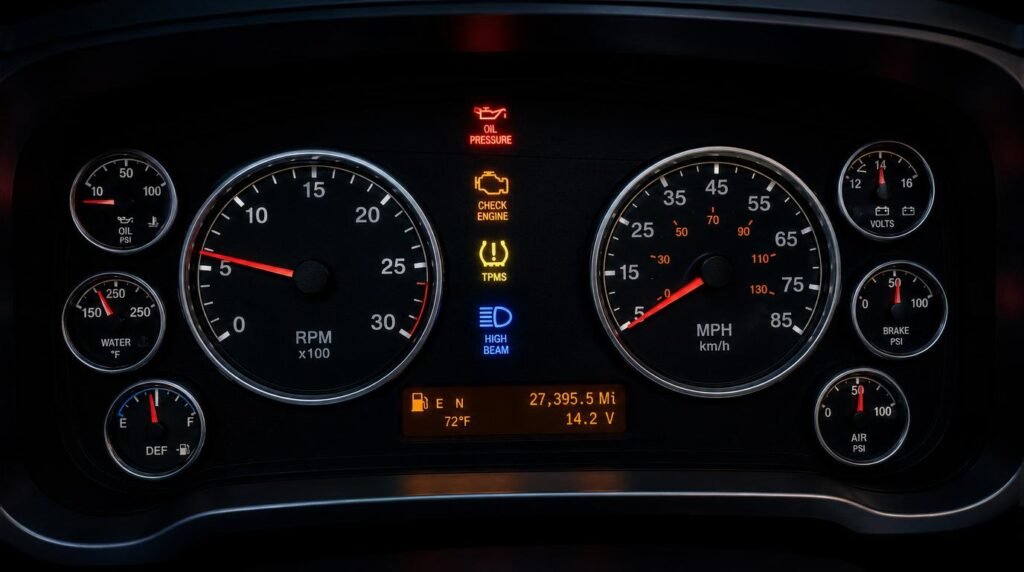
Think of warning light colors like a traffic system. Red means stop now. Yellow means slow down and pay attention. Green and blue are just information.
Here is the breakdown that every truck and RV driver needs to memorize:
Red Warning Lights — Act Immediately
- Oil Pressure Warning: Pull over now. Running without oil pressure destroys your engine in minutes.
- Battery/Charging Alert: Your alternator may be failing. You have limited time before you lose everything electrical.
- Brake System Warning: This is a life-safety issue. Do not drive one more mile. Call a mechanic.
- Engine Temperature (Red): Your engine is overheating. Pull over, turn off the engine, and let it cool.
- Transmission Temperature: Common in trucks towing heavy loads. Pull over and let the transmission cool before damage sets in.
Yellow/Amber Warning Lights — Address Within 24–48 Hours
- Check Engine Light: Could be a loose gas cap or a misfiring cylinder. Get it scanned — do not guess.
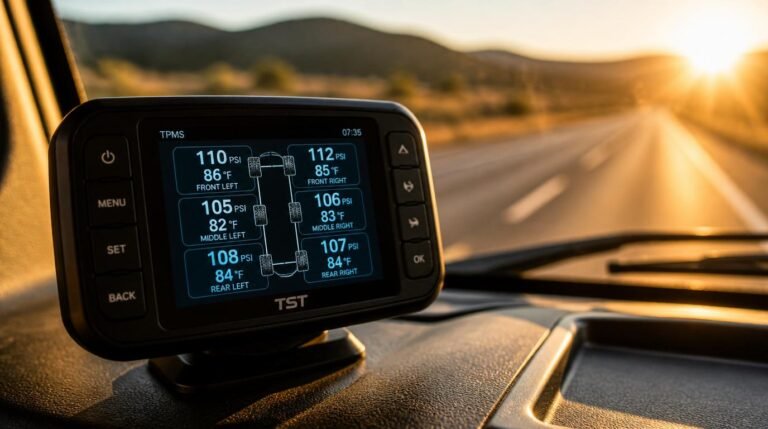
- TPMS (Tire Pressure Monitoring System): One or more tires are low. Check all four plus your trailer tires immediately.
- Traction Control Off: Your system is compensating for wheel slip. Reduce speed in wet or icy conditions.
- Service Required: Your maintenance schedule needs attention. Do not delay oil changes when towing heavy loads.
One thing most people get wrong: they assume yellow lights can wait indefinitely. They cannot. Yellow is your early warning. Red is your last warning.
Mechanical Red Flags You Can Feel, Hear, and Smell
Your five senses are the original diagnostic tool. Before any dashboard light illuminates, your body often detects the problem first.
What You Feel
- Steering wheel vibration: Could indicate unbalanced tires, worn wheel bearings, or a bent rim — especially dangerous at highway speed.
- Soft or spongy brake pedal: Air in the brake lines or a failing master cylinder. This is a stop-immediately situation.
- Pulling to one side under braking: Uneven brake wear or a stuck caliper. Your stopping distance becomes unpredictable.
- Excessive body roll when cornering: Worn sway bar links or overloaded axles. Both are dangerous when towing.
What You Hear
- Grinding when braking: Metal on metal. Your brake pads are gone. Replace them immediately.
- Clicking or popping during turns: CV axle issue. Let this go and you risk losing drive to a wheel mid-turn.
- Knocking from the engine: Low oil or bearing failure. Pull over. This sound is expensive every second it continues.
- Hissing near the engine bay: A coolant or vacuum leak. Both can escalate quickly under load.
What You Smell
- Burning rubber or plastic: A belt slipping or a wire contacting something hot. Both are fire risks.
- Sweet or syrupy smell: Coolant leak. Your engine is overheating even if the gauge has not caught up yet.
- Rotten eggs (sulfur): A failing catalytic converter or a battery issue. Do not ignore this inside a closed cab.
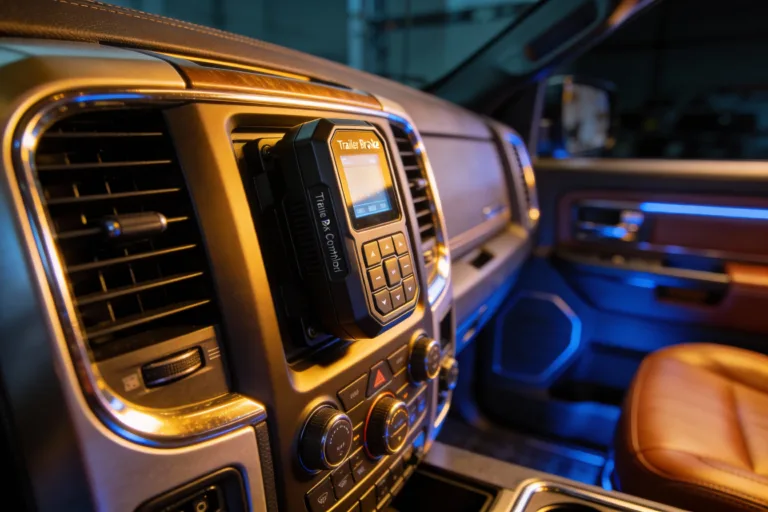
- Burning brake smell on a downhill: You are riding the brakes too hard. Use engine braking. This is where a proper trailer brake controller saves your rotors — and your life.
The Federal Motor Carrier Safety Administration (FMCSA) mandates pre-trip inspections for commercial drivers for a reason. I recommend every serious truck and RV owner adopt that same habit — even on a casual trip.
Trailer and Towing Warning Signs You Cannot Afford to Miss
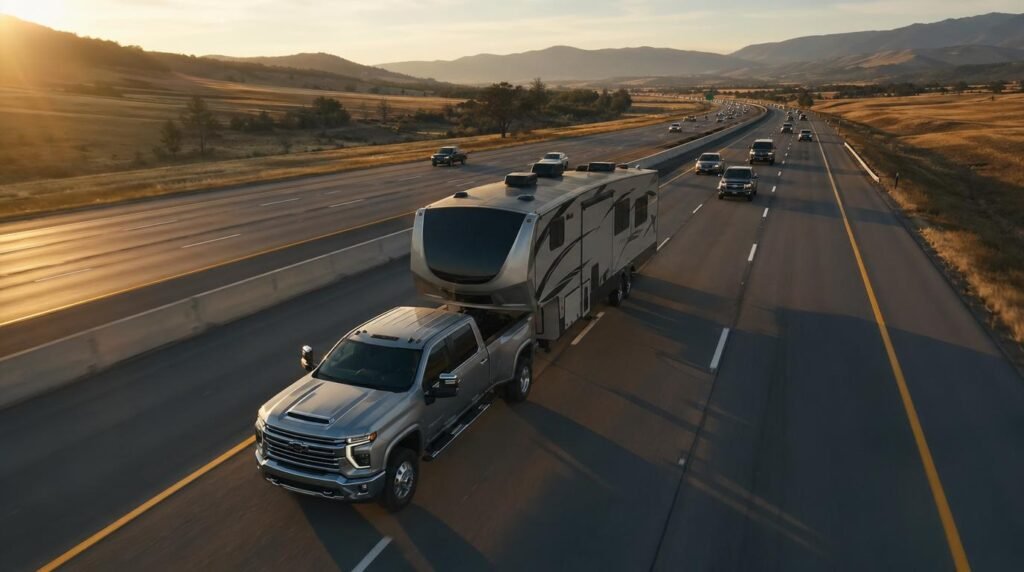
Towing introduces a whole new category of safety risks. Your truck becomes a system — and that system has its own set of warning signs.
Trailer Sway
Sway starts small. A gentle side-to-side rocking. Then it builds. Within seconds, you can lose control of a 40-foot rig at highway speed.
Causes include improper weight distribution, overloading, crosswinds, or a sudden steering input. The fix? Slow down gradually — do not hit the brakes hard. Engage your trailer brake controller manually if equipped.
Sway that returns after correcting often means your load is wrong. Stop, check your hitch weight distribution, and redistribute cargo before continuing.
Hitch Warning Signs
- Excessive movement at the hitch ball: Your ball is the wrong size or worn. A disconnected trailer at speed is catastrophic.
- Safety chains dragging: They are too long and not properly crossed. Reattach them correctly before moving.
- Trailer lights not working: A wiring short or blown fuse. This is both a legal and safety issue — other drivers cannot see your signals.
- Uneven tire wear on the trailer: Axle alignment issue or overloading. Either can cause a blowout on the highway.
I cover the deeper mechanical failure patterns — the ones most people never see coming — in this detailed breakdown of truck safety systems and their 5 hidden failures. It is worth reading before your next tow.
RV Security Warning Signs: When Someone Is Targeting Your Rig
RV security is not just about mechanical safety. It is about recognizing when a human threat is present. These warning signs are subtle — and most owners miss them entirely.
Physical Signs of Tampering
- Scratches around door locks or compartment latches: Someone tested your entry points. Do not assume it was accidental.
- A door or bay that is slightly ajar: Check whether you left it open. If not, treat it as a breach.
- Unfamiliar marks or stickers on your rig: Some thieves mark vehicles for later targeting. Remove them and change your parking location.
- Broken or displaced door seals: Entry was attempted or achieved. Inventory your belongings immediately.
Behavioral and Environmental Red Flags
- A vehicle parked near yours for extended periods with no movement: Someone may be watching your schedule.
- Someone asking unusual questions about your travel plans: Thieves love knowing when your rig will be unoccupied.
- Missing or loose hitch locks: Someone may have tried to move your trailer during the night.
The RV Industry Association (RVIA) notes that RV theft has increased significantly in recent years as the RV ownership market has grown. Your rig is a valuable, mobile target.
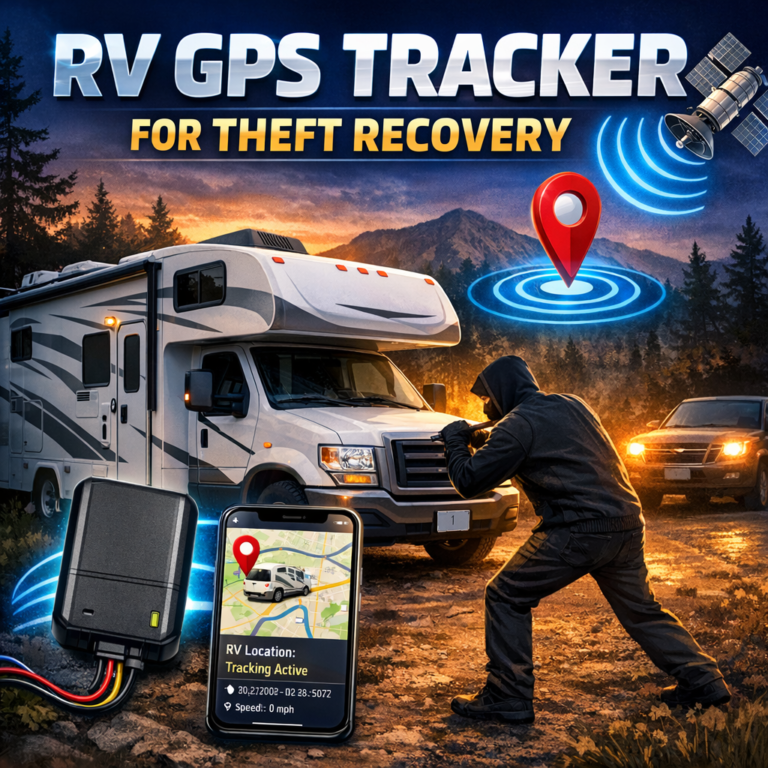
Installing a GPS tracker, motion-activated security camera, and a quality hitch lock is the minimum. The full picture of what works — and what does not — is covered in my complete truck and RV safety systems guide.
Truck Security Warning Signs Every Owner Must Know
Trucks — especially HD pickup trucks — are among the most stolen vehicles in North America. The National Insurance Crime Bureau (NICB) consistently ranks full-size pickups at the top of theft lists.
Signs Your Truck Has Been Targeted
- Catalytic converter theft signs: A sudden roar or rattling sound from under the vehicle. Your catalytic converter may already be gone.
- Steering column damage: Cracks, exposed wires, or a broken ignition surround mean someone attempted a hot-wire entry.
- Aftermarket alarm triggering frequently: This is not a glitch — something or someone is setting it off.
- Loose or missing lug nuts: This is rare but documented. Check your wheels if your truck has been parked in an unsecured area overnight.
- Bed toolbox tampering: Pry marks around the lid mean your tools are a target. Upgrade to a locking system with an alarm.
Campsite and Environmental Safety Warning Signs
Your safety does not stop when you park. The campsite introduces a completely different set of warning signs that many RV owners overlook until it is too late.
Carbon Monoxide — The Invisible Killer
Your CO detector going off is not a nuisance alarm. It is telling you to leave immediately. Carbon monoxide kills people in RVs every year — often while they sleep.
Warning signs before the alarm triggers include sudden headaches, dizziness, or nausea that clears when you go outside. If this happens, exit the RV, get fresh air, and find the source before re-entering.
Propane Leak Signs
- Smell of rotten eggs or sulfur near the stove, fridge, or furnace: Propane is odorized for a reason. If you smell it, open windows, turn off the supply valve, and exit.
- Pilot lights that keep going out: A draft or a failing thermocouple. Both can allow unburned gas to accumulate.
- Hissing near propane lines or fittings: A direct leak. Do not use any electrical switches — exit immediately.
Electrical System Warning Signs
- Burning smell from the power panel: A breaker is failing or a wire is arcing. This is a fire risk.
- Outlets that spark when you plug in: A grounding issue in the campsite pedestal or your rig’s wiring.
- Lights flickering when the generator is running: Voltage fluctuations that can damage appliances and signal wiring problems.
Expert Video: Real-World Warning Sign Walkthrough
Expert Commentary: This walkthrough reinforces what experienced RV technicians see repeatedly — most preventable failures show clear warning signs days or weeks before they become emergencies.
Your 10-Point Warning Sign Action Checklist
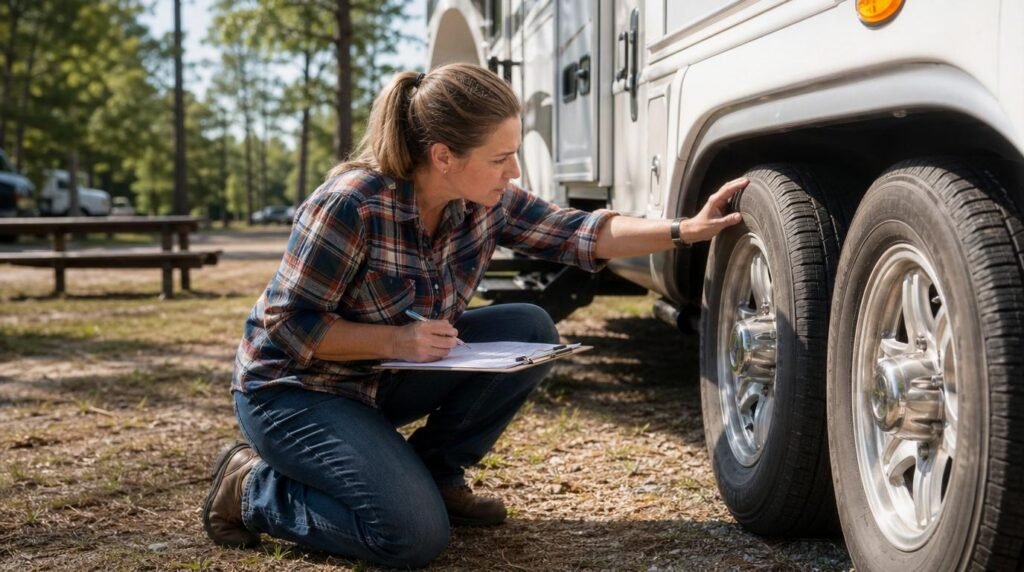
Print this. Tape it to your visor. Use it every single trip.
- Check all dashboard lights before starting the engine. Any red lights mean do not drive until the issue is resolved.
- Walk around and visually inspect all four truck tires and all trailer tires. Look for bulges, cracks, and low pressure.
- Test your brake lights, turn signals, and running lights. Have someone stand behind while you operate each one.
- Confirm the hitch ball is fully seated and locked. Tug on the trailer — there should be zero play.
- Cross your safety chains properly. They should form a cradle under the tongue, not drag on the ground.
- Test your trailer brake controller before reaching the highway. A gentle brake at 10 mph should show trailer brake engagement.
- Check propane connections and sniff for leaks before entering the RV. A fast smell test takes three seconds.
- Verify your CO and smoke detectors have working batteries. Test them with the button — do not assume.
- Inspect all external storage bays for proper closure and lock engagement. A flying compartment door at 65 mph is catastrophic.
- Check your mirrors for full rear coverage of the trailer. Adjust before you pull out — not at a red light.
This checklist pairs directly with the safety system framework I outline in detail over at the truck and RV safety and security hub. Use both together.
Frequently Asked Questions
What are the most critical truck and RV safety warning signs to watch for?
The most critical warning signs include check engine lights, brake system alerts, tire pressure warnings, unusual exhaust smoke, and trailer sway. On the security side, watch for tampered locks, broken seals, and unfamiliar wiring near your electrical panel.
When should I pull over immediately due to a warning sign?
Pull over immediately if you see a red warning light, smell burning brakes or rubber, feel sudden trailer sway you cannot control, or lose steering response. These are life-safety issues — do not wait.
How do I know if someone has tampered with my RV?
Look for scratches around locks, broken door seals, out-of-place wiring, unfamiliar devices under the chassis, and doors or storage bays that seem slightly open. Install a GPS tracker and a security camera to monitor your rig remotely.
Are yellow dashboard warning lights serious?
Yellow lights mean “caution — address soon.” They are not emergencies, but ignoring them turns them into red lights. A yellow TPMS light or check engine warning needs diagnosis within a day or two, not weeks.
What truck safety gear should every RV tower carry?
Every RV tower should carry a brake controller, tire pressure monitoring system (TPMS), trailer hitch lock, wheel chocks, a fire extinguisher, and a carbon monoxide detector. These are not optional — they are the baseline. You can see my picks for the best trailer brake controllers here.
My Top Recommended Gear
These are the three tools I tell every truck and RV owner to have. No exceptions. No substitutes.
1. Tire Pressure Monitoring System (TPMS)
A quality TPMS alerts you to pressure loss before it becomes a blowout. Essential for any rig with a trailer. Real-time monitoring while you drive changes everything. View TPMS Options on Amazon →
2. Wireless Trailer Brake Controller
Brake controllers are not optional when towing. They are life-saving devices. A wireless unit installs in minutes and gives you manual control over trailer brakes when sway starts. View Brake Controllers on Amazon →
3. RV GPS Tracker with Real-Time Alerts
If your RV moves without you, you want to know immediately. A hardwired GPS tracker with geo-fencing gives you real-time alerts and a recovery path if theft occurs. View GPS Trackers on Amazon →
The warning signs are already there. Your truck and RV are already talking to you. The only question is whether you are listening.
Start with the checklist. Add the gear. And when a warning shows up — take it seriously the first time, not the third.
For the complete system-level approach to keeping your rig safe, visit the full truck and RV safety systems guide. It is the most thorough resource I have built on this topic.
Amazon Affiliate Disclosure: This site is a participant in the Amazon Services LLC Associates Program, an affiliate advertising program designed to provide a means for sites to earn advertising fees by advertising and linking to Amazon.com. As an Amazon Associate, I earn from qualifying purchases at no additional cost to you. Product recommendations are based on my own research and experience — not paid placements.