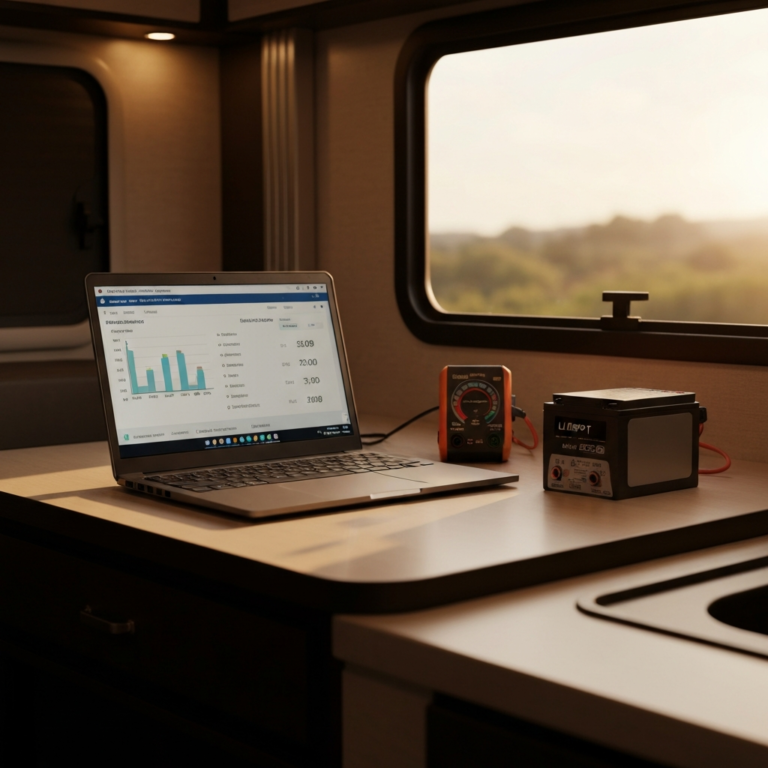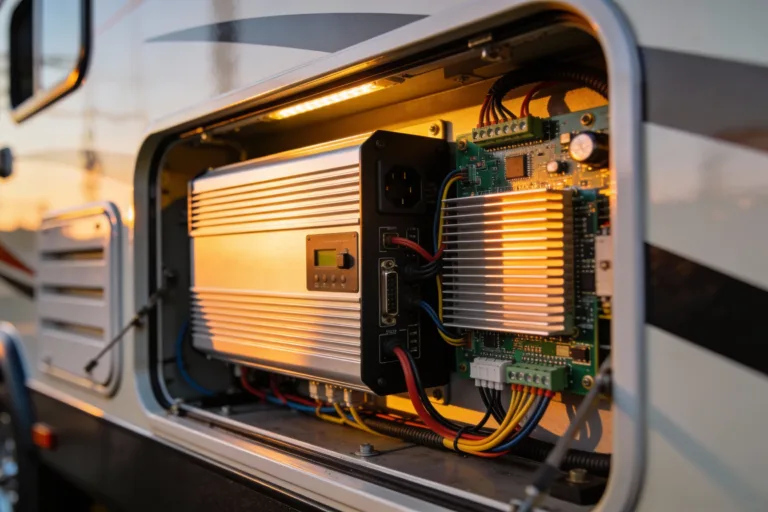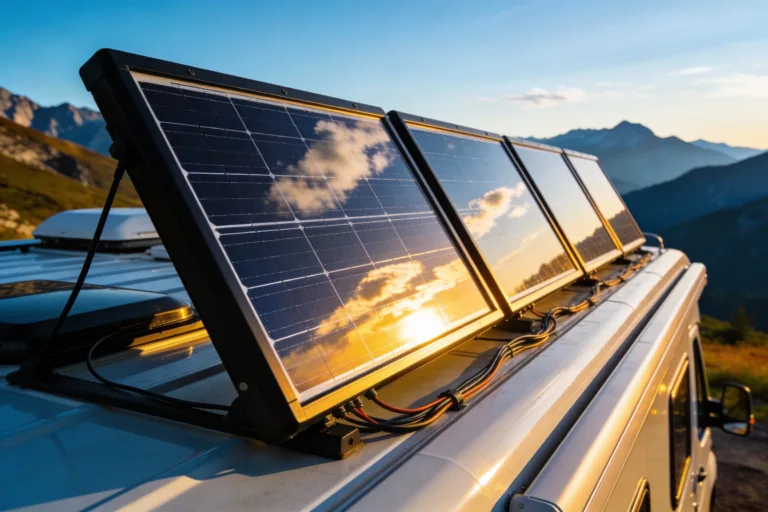
Imagine hitting the open road, free to roam wherever you please, with the power to keep your adventures going. For many, this freedom is made possible by rv solar panels, a key part of off-grid living.
Whether you’re boondocking in the wilderness or parked at a campsite, having a reliable power source is key. That’s where a well-designed rv solar kit comes in. It gives you the energy to keep your appliances running and your batteries charged.
At Truck & RV Electronics, you’ll find everything you need to upgrade your setup. This will take your adventures to the next level.
Key Takeaways
- Discover the top RV solar panels for off-grid living
- Learn how to choose the right rv solar kit for your needs
- Understand the importance of reliable power for your adventures
- Explore the benefits of upgrading your RV or truck’s electrical system
- Find expert guidance on installing and maintaining your solar panels
The Sun-Powered Road Trip Revolution
The RV community is on the verge of a big change, thanks to the sun. Solar power and new battery tech are making travel better. They give us more freedom and flexibility.
Why Solar Power is a Game-Changer for RVers
Solar power is changing the RV life for the better. It gives us a clean, reliable energy source. With solar panels, we can travel off-grid for longer, enjoying nature without giving up comforts.
An RV solar kit usually has solar panels, a controller, and a battery. This lets RVers use the sun’s energy. They don’t need to rely on campsite hookups or generators as much.
Breaking Free from Campground Hookups
Solar power lets us leave campground hookups behind. With a good RV solar kit, we can boondock confidently. We know we have energy when we need it.
| Benefits | Campground Hookups | Solar Power |
|---|---|---|
| Energy Source | External Power Grid | Renewable Solar Energy |
| Cost | $30-$50 per night | Free after initial investment |
| Flexibility | Limited to campsites | Boondock anywhere |
By using solar power, RVers can travel more freely and sustainably. Whether you’re always on the move or just enjoy weekends away, solar power is making a big difference.
RV Solar Panels 101: Your Off-Grid Superpower
RV solar panels are changing how we travel. They let you charge batteries and power appliances anywhere. This freedom is priceless.
Our RV Solar panel kits include everything you need. This makes starting with solar power easy. But, how do these kits work, and what solar panels are best for RVs and trucks?
How Solar Panels Actually Work (Without the Boring Physics)
Solar panels turn sunlight into electricity using photovoltaic cells. This method is clean, quiet, and efficient. It’s great for RVs and trucks.
The energy is stored in batteries for later use. This lets you power your appliances, lights, and even fridge.
Types of Solar Panels for RVs and Trucks
There are many solar panel types, like monocrystalline, polycrystalline, and thin-film. Monocrystalline panels are highly efficient and durable. They’re a top pick.
Polycrystalline panels are more affordable. Thin-film panels are lightweight and flexible.
As
“The future of energy is bright, and it’s shining down on us every day.”
With the right solar panel kit, you can enjoy off-grid adventures. You’ll also reduce your carbon footprint.
Sizing Your Solar System: How Much Power Do You Really Need?
Getting the right size for your solar system is more than just adding panels. It’s about fitting your setup to your energy needs. You need to know how much power you use and choose the right equipment.
Calculating Your Daily Energy Consumption
To size your RV solar kit, start by figuring out your daily energy use. List all your daily appliances, like fridges and laptop chargers. Note their wattage and how long you use them each day.
For example, a 50W laptop charger used for 4 hours daily is 200Wh or 0.2kWh per day.
Let’s say you’re using:
- A 100W fridge for 8 hours (800Wh)
- Lights (20W) for 5 hours (100Wh)
- A laptop (50W) for 4 hours (200Wh)
Your total daily use would be 1100Wh or 1.1kWh.
Matching Panel Output to Your Power Needs
After figuring out your daily energy use, match it with the right solar panel output. For 1.1kWh daily, your panels should produce that much. Add 25% for inefficiencies, so you need about 1.375kWh per day.
An MPPT controller boosts your solar energy by ensuring panels work at their best.
| Daily Energy Needs (kWh) | Recommended Solar System Size (kW) |
|---|---|
| 1.1 | 1.5 |
| 2.2 | 3.0 |
| 3.3 | 4.5 |
Planning for Weather Variables
Weather can change your solar power a lot. On cloudy days, panels make less energy. Think about where you travel and the seasons. If you’re in cloudy or rainy places, you might need a bigger system.
“The sun is a constant companion for those who know how to harness its power.”
Using top-notch batteries like Canada Proof or LITHIUM BLUE helps store extra energy for cloudy days.
Fixed vs. Portable Solar Panels for RV: The Great Debate
The debate between fixed and portable solar panels for RVs is heating up. It’s time to weigh the pros and cons. As RV owners increasingly adopt solar power, understanding the differences is key for making an informed decision.
Permanent Roof-Mounted Systems: Pros and Cons
Fixed solar panels are mounted directly to the RV’s roof. They offer a sleek and permanent solution. The advantages include a streamlined appearance and reduced risk of damage or theft.
Yet, they require a more complex installation process. They may not be ideal for RVs with complex roof structures or those that frequently visit shaded areas.
Key Benefits:
- Streamlined appearance
- Less risk of damage or theft
- Potential for higher efficiency
Portable Solar Panels for RV: When Flexibility Matters
Portable solar panels offer flexibility and ease of use. They allow RV owners to adjust their solar setup according to their needs. They’re ideal for those who frequently change their parking location or need to supplement their power supply.
- Flexibility in placement
- Ease of storage and transport
- Adaptability to changing power needs
Hybrid Approaches for the Commitment-Phobic
For those who can’t decide between fixed and portable solar panels, hybrid approaches offer the best of both worlds. By combining a smaller fixed system with portable panels, RV owners can enjoy the benefits of a permanent setup while maintaining flexibility.
| System Type | Pros | Cons |
|---|---|---|
| Fixed Solar Panels | Sleek appearance, higher efficiency | Complex installation, less flexible |
| Portable Solar Panels | Flexible, easy to store | May be less efficient, risk of damage |
| Hybrid Systems | Balances flexibility and efficiency | Higher upfront cost, more complex planning |
The choice between fixed, portable, or hybrid solar panels depends on your specific RV needs. It also depends on your travel habits and personal preferences. By weighing the pros and cons, you can make an informed decision that powers your adventures for years to come.
Essential Components of a Complete RV Solar Kit
Building an RV solar kit is like putting together a team of superheroes. Each part has its own special power. It’s not just about adding panels to the roof. It’s about making a system that keeps your batteries full and your appliances working well.
Solar Panels: The Energy Harvesters
Solar panels are the main heroes, turning sunlight into electricity. When picking panels, look at their wattage, efficiency, and how long they last. Monocrystalline panels are very efficient, while polycrystalline panels are cheaper.
Charge Controllers: MPPT vs. PWM Showdown
The charge controller is the brain of your solar setup. It controls how energy goes from panels to batteries. MPPT (Maximum Power Point Tracking) controllers are top-notch, getting the most energy, even when it’s cloudy. PWM (Pulse Width Modulation) controllers are simpler and cheaper but not as good.
| Feature | MPPT | PWM |
|---|---|---|
| Efficiency | High | Lower |
| Cost | Higher | Lower |
| Complexity | More Complex | Simpler |
Batteries: Where the Magic Happens
Batteries hold the energy your panels make. Deep cycle batteries are perfect for RVs, giving power over time. Pick based on how much energy you need and what type you want.
Inverters: AC/DC Isn’t Just a Rock Band
An inverter changes DC power from batteries to AC for your stuff. Pick one that fits your power needs. A pure sine wave inverter is best for delicate electronics.
Solar Panel Mounting RV Options: Getting Attached
Finding the right solar panel mounting RV system is key for off-grid adventures. It’s not just about putting panels on your roof. It’s about getting a reliable power source for your travels.
Roof Mounting Systems: When Commitment Is Key
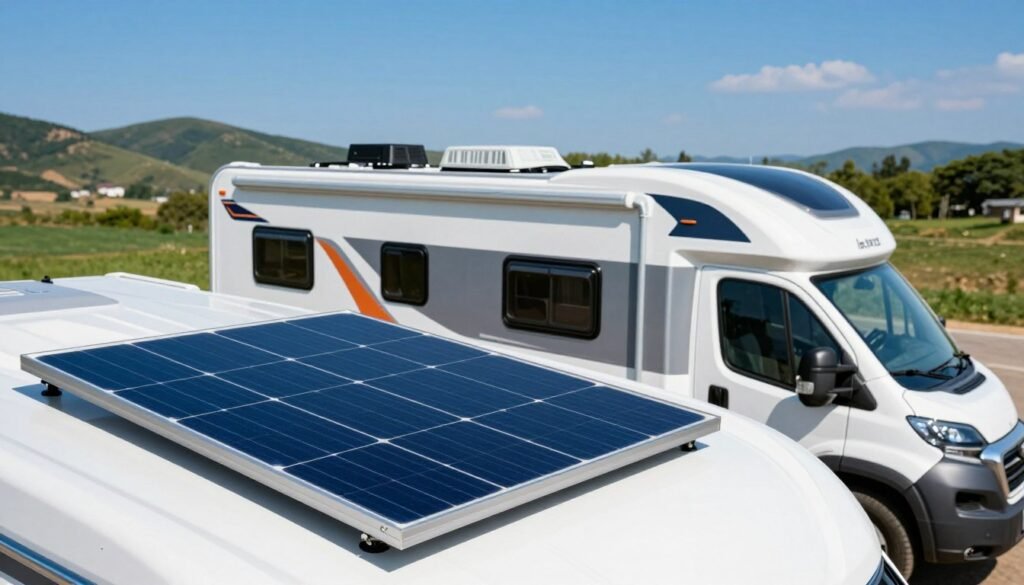
Roof mounting systems are great for RVers who spend a lot of time off-grid. They are strong and keep your panels in place, even at high speeds. But, they are a big commitment – once on, they’re hard to take off.
Tilt Mounts: Maximizing Solar Gain for Sun Chasers
Tilt mounts let you adjust your solar panels for better energy production. They’re perfect for RVers who stay put or follow the sun. Tilt mounts boost your energy, even in winter when the sun is lower.
Specialty Mounts for Unique Situations
Specialty mounts are for RVers with special needs or unique RVs. They fit complex roofs or even bike racks. For precise solar system sizing, use a RV solar sizing calculator to optimize your system.
| Mounting Type | Pros | Cons |
|---|---|---|
| Roof Mounting | Permanent, secure, and aerodynamic | Difficult to remove, requires roof penetration |
| Tilt Mounting | Adjustable for maximum solar gain | More complex installation, may add weight |
| Specialty Mounting | Tailored to unique RV configurations | May require custom fabrication, potentially costly |
The MPPT Controller: Your System’s Brain (With More IQ Points)
The MPPT controller is key to getting the most from your RV’s solar panels. It’s the brain that makes sure you use all the energy your panels can produce.
Why MPPT Controllers Outperform PWM
MPPT controllers beat PWM controllers by making more energy. They can boost efficiency by up to 30% in tough conditions. Here’s why they’re better:
- They work better in low light
- They perform well in different temperatures
- They can handle more voltage
Sizing Your Controller Correctly
Choosing the right MPPT controller size is important. It should match your solar panels’ output. A good size ensures you get the most energy. Here’s how to pick the right one:
- Figure out your solar panel’s total wattage
- Look at your panels’ voltage and current ratings
- Pick a controller that meets or beats these ratings
Smart Features Worth Paying For
Today’s MPPT controllers have cool features. Some features to look for include:
- Bluetooth or Wi-Fi for easy monitoring
- Data logging to track performance
- Remote updates for the controller
Getting a top-notch MPPT controller with smart features boosts your RV’s solar power. It’s a smart investment for those who love off-grid adventures.
Truck-Specific Solar Solutions: Big Rigs Need Sun Too
Truckers rely on a steady power source for long trips. Solar panels are becoming a trusted ally. The trucking world is turning to solar power, and it’s a smart move.
Solar Options for Semi Trucks and Sleeper Cabs
Semi-trucks and sleeper cabs need a lot of power. This is for things like keeping food cold and charging gadgets. Solar panels made for these vehicles offer the power needed, saving fuel and cutting down on pollution.
Powering Truck Accessories Without Idling
Idling is bad for the planet and wastes fuel. Solar panels let truckers power things like fridges, lights, and phones without turning on the engine. This saves fuel and makes engines last longer.
Mounting Challenges and Solutions for Commercial Vehicles
Putting solar panels on big trucks is tricky. There are curved surfaces and air flow to think about. But, there are smart ways to mount them, like flexible panels and special mounts that cut down on wind resistance.
Truckers using solar solutions are helping the environment and getting better at their jobs. As solar tech gets better, we’ll see even more cool uses in trucking.
DIY Installation: Becoming Your RV’s Solar Superhero
Solar power for your RV is more than a trend; it’s a game-changer. We’re here to help you through the DIY installation process. Our RV solar panel kits include everything you need, like solar panels, cables, and charge controllers. This makes turning your RV into a solar powerhouse easy.
Tools You’ll Actually Need (And Some You Just Want)
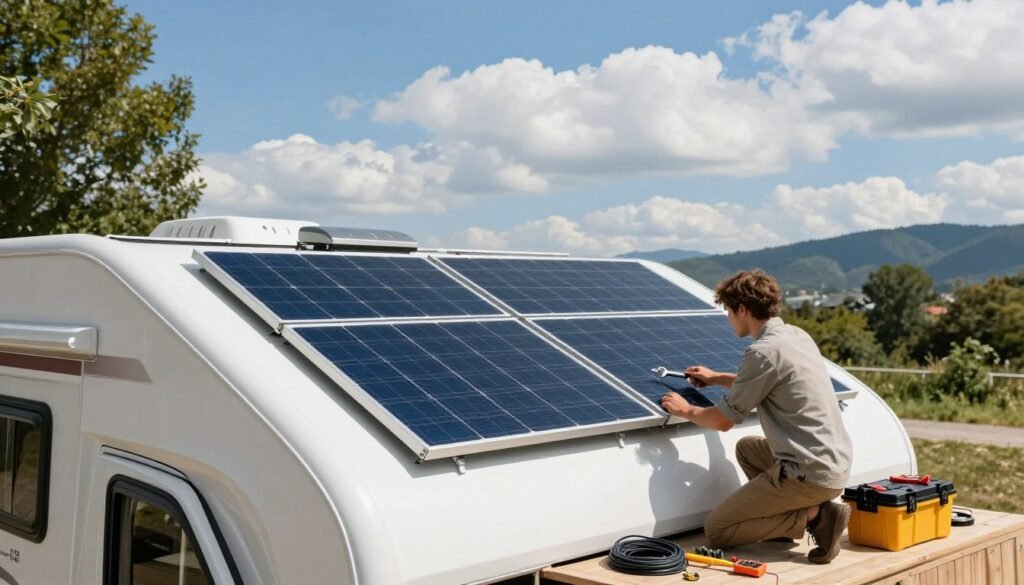
Before starting, make sure you have the right tools. You’ll need a drill, wire strippers, and a multimeter. Our kits are designed to make installation easier. But, having the right tools will make the process even smoother.
Step-by-Step Installation Process
The installation process has several key steps:
- Mounting the solar panels on your RV’s roof.
- Connecting the panels to a charge controller.
- Linking the charge controller to your RV’s battery.
Each step needs careful attention. But with our kits, you’re on your way to enjoying solar power.
Common Installation Pitfalls to Avoid
Be careful of common mistakes like wrong wiring and bad panel placement. A well-planned installation is essential for your RV solar kit’s efficiency.
| Common Mistakes | How to Avoid Them |
|---|---|
| Incorrect Wiring | Double-check connections and consult a professional if unsure. |
| Poor Panel Placement | Choose a location with maximum sun exposure. |
By following these tips and using a complete RV solar kit, you’ll be ready to use the sun’s power for your adventures.
Cost Breakdown: Solar Investment That Doesn’t Require a Second Mortgage
Looking into RV solar panels shows many options for all budgets. Whether you’re out for the weekend or living on the road full-time, there’s a solar system for you.
Budget, Mid-Range, and Premium System Comparisons
When it comes to RV solar panels, you have three choices: budget, mid-range, and premium. Budget systems are perfect for small RVs or beginners. Mid-range systems offer a good balance of cost and performance. Premium systems, with their high-efficiency panels and advanced MPPT controllers, are best for bigger RVs or those needing lots of power.
Hidden Costs That Jump Out Like Campground Bears
There are costs beyond the initial RV solar panels price. You’ll need mounting hardware, wiring, and possibly professional installation. Also, remember the cost of a MPPT controller, which boosts your system’s efficiency.
Calculating Your Return on Investment
To figure out your ROI, think about saving on fuel and campground fees. With RV solar panels, you can boondock more and enjoy off-grid adventures. The initial cost may seem high, but the long-term savings and benefits make it a smart investment for many RVers.
Maintenance and Troubleshooting: Keeping the Sun Working for You
Keeping your RV’s solar power system running well is key. A good RV solar kit saves money and keeps your trips going. It’s all about regular care and quick fixes.
Routine Maintenance Schedule
Your solar panel system needs regular checks, just like your car. It’s simple. Start by cleaning your panels often, after dusty trips or in pollen-heavy areas. Use a soft cloth and mild soap to keep them safe.
- Inspect your solar panel mounting RV structures for any signs of wear or damage.
- Check all connections for corrosion or looseness.
- Monitor your system’s performance regularly to catch any issues early.
Diagnosing Common Problems
Most RV solar system issues can be solved with some basic troubleshooting. If it’s not charging, look at the charge controller for error messages. For tougher problems, get help from a pro. Check out https://solarrvtipes.com/ for expert advice and RV solar products.
Winterizing Your Solar System
Winter can be tough on your RV’s solar system. Make sure your batteries are full before it gets cold. If it’s very cold, think about using a battery heater. Also, clear snow and ice from your panels to keep energy flowing.
By sticking to these easy maintenance and troubleshooting tips, your RV solar kit will power your adventures for years.
Conclusion: Embracing the Solar-Powered Road Life
Embracing solar power can change your RV life for the better. It lets you travel off-grid without losing comfort. With RV solar panels, you can use the sun’s energy for your travels. This works whether you’re at a quiet campsite or on the move.
Getting a good solar panel system is key. This includes portable solar panels for RV use. It means you can enjoy nature without needing to be tied to a campsite. This freedom is invaluable, letting you see new places and make lasting memories.
This article has shown you how to pick the right solar panel system. You need to think about your energy needs, the type of panel, and how to mount it. Making smart choices lets you fully enjoy solar power and enhance your RV trips.
So, what are you waiting for? Begin planning your solar-powered trips now. Feel the excitement of traveling wherever the sun takes you.