Ready to harness the sun’s power for your vanlife adventures? Choosing solar panels for your camper van doesn’t have to feel like rocket science—but pick wrong, and you’ll be stuck with a glorified roof ornament. Let’s break it down so you can power your fridge, gadgets, and midnight snack cravings without a hitch.
1. Know Your Power Needs (Because Guessing = Disaster)
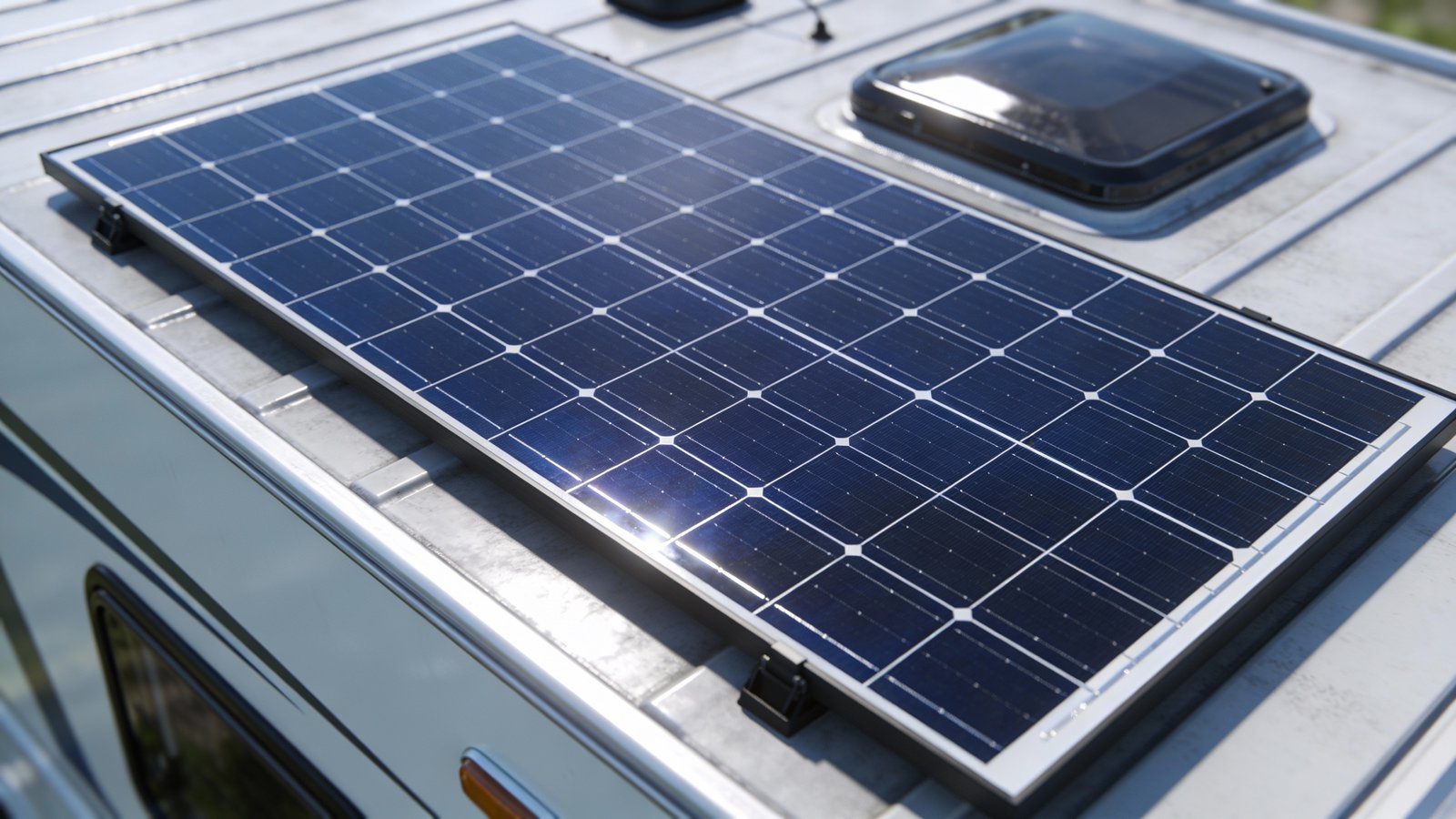
Before you drool over shiny solar panels, figure out how much juice you actually need. Otherwise, you’ll either end up with a system that’s weaker than your campground Wi-Fi or one that costs more than your van.
Pro tip: Start by listing all your power-hungry devices—fridge, lights, laptop, that fancy espresso machine—and tally up their daily watt-hour consumption. Online calculators can help, but here’s a quick cheat sheet:
- Basic setup (lights + phone charging): 100–300Wh/day
- Moderate (fridge + fan): 300–600Wh/day
- Power-hungry (induction cooktop + Netflix marathons): 800Wh+/day
Don’t Forget the Battery
Solar panels are useless without a battery to store that sweet, sweet energy. Match your battery capacity (in amp-hours) to your solar setup. IMO, lithium batteries are worth the splurge—they’re lighter, last longer, and won’t judge you for draining them daily.
2. Monocrystalline vs. Polycrystalline: The Solar Showdown
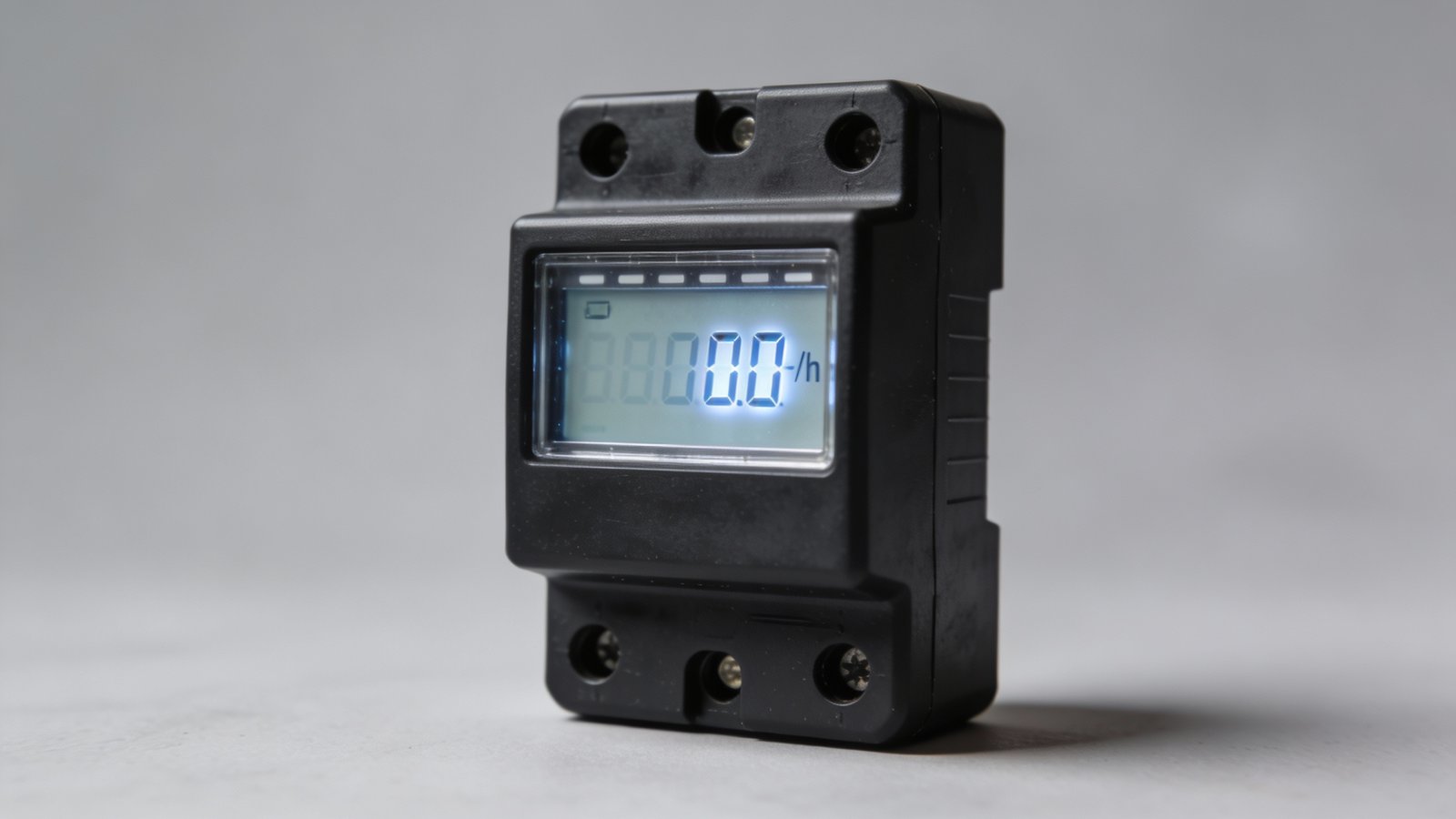
Not all solar panels are created equal. Here’s the lowdown on the two main types:
- Monocrystalline: Sleek, efficient (15–22%), and pricier. Perfect if your roof space is tighter than your budget after van upgrades.
- Polycrystalline: Cheaper but less efficient (13–16%). Great if you’ve got space to spare and love a good bargain.
FYI, flexible panels sound cool but often overpromise and underdeliver. Stick with rigid ones unless you’re building a spaceship.
3. Size Matters (But So Does Your Roof)
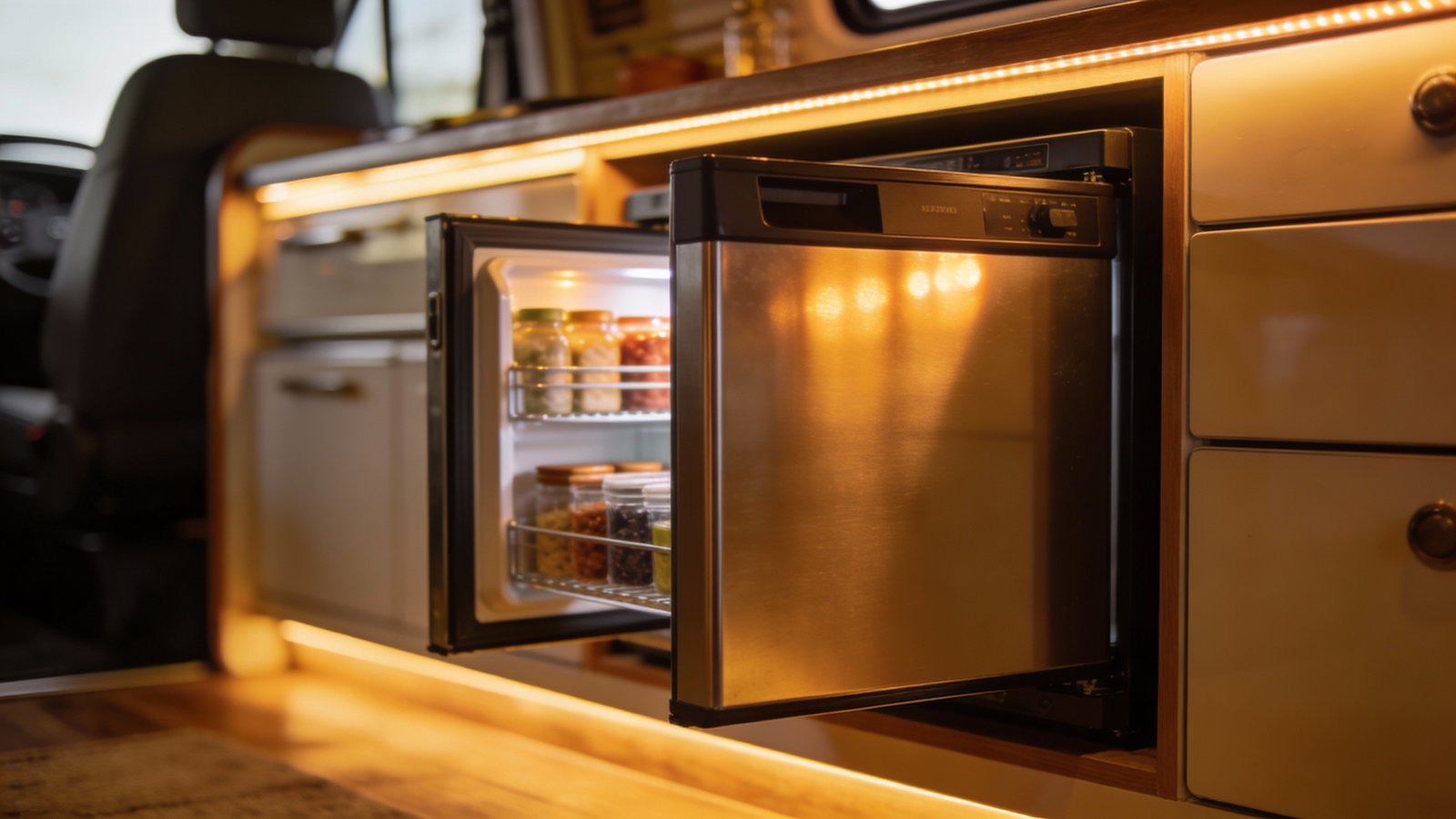
Camper vans aren’t exactly mansions, so every inch counts. Measure your roof’s usable space *before* buying panels. A 300W panel might sound awesome, but not if it hangs over your shower skylight.
Pro Tips for Maximizing Space
- Tilt mounts: Boost efficiency by angling panels toward the sun—just don’t forget to secure them before driving.
- Go portrait: Panels mounted vertically often fit better on narrow van roofs.
4. Charge Controllers: The Unsung Hero

A charge controller prevents your battery from frying like a campsite sausage. There are two types:
- PWM: Budget-friendly but wastes energy. Fine for tiny setups.
- MPPT: Smarter, more efficient, and worth every penny for larger systems.
5. Installation: DIY or Cry for Help?
If you’re handy with a drill and don’t mind swearing at wiring diagrams, DIY can save cash. But if electricity terrifies you more than a bear in your campsite, hire a pro. Key considerations:
- Waterproofing: Leaks = moldy van nightmares.
- Ventilation: Panels need airflow underneath to avoid overheating.
6. Budget Like a Vanlife Boss
Solar setups range from “I found this on Craigslist” to “I could’ve bought a yacht.” Here’s a rough breakdown:
- Budget ($500–$1,000): 100–200W system, PWM controller, lead-acid battery.
- Mid-range ($1,500–$3,000): 300–400W, MPPT controller, lithium battery.
- Ballin’ ($3,000+): 600W+, top-tier lithium, and bragging rights.
FAQ: Your Burning Solar Questions, Answered
How many solar panels do I need for my camper van?
Start with 200W for basics, 400W+ for luxuries like AC or a blender. Your power audit (see section 1) will give you the exact number.
Can I run an air conditioner on solar?
Technically yes, but you’ll need a massive system (800W+). IMO, it’s easier to park in the shade and embrace the sweat.
Do solar panels work in cloudy weather?
They’ll still generate *some* power, but think of it as a slow trickle, not a firehose. Plan for cloudy days with extra battery capacity.
How long do solar panels last?
Most last 25+ years, but output drops over time. After a decade, you might lose 10–20% efficiency—still better than your phone battery.
Should I get a portable solar panel?
Great for flexibility, but they’re easier to steal and less efficient. Ideal for weekend warriors, not full-timers.
Go Forth and Solarify Your Van
Now you’re armed with the knowledge to choose solar panels for your camper van without weeping over buyer’s remorse. Whether you’re powering a mini-fridge or a full-blown van mansion, the sun’s got your back. Just remember: more watts = more coffee. Prioritize accordingly.