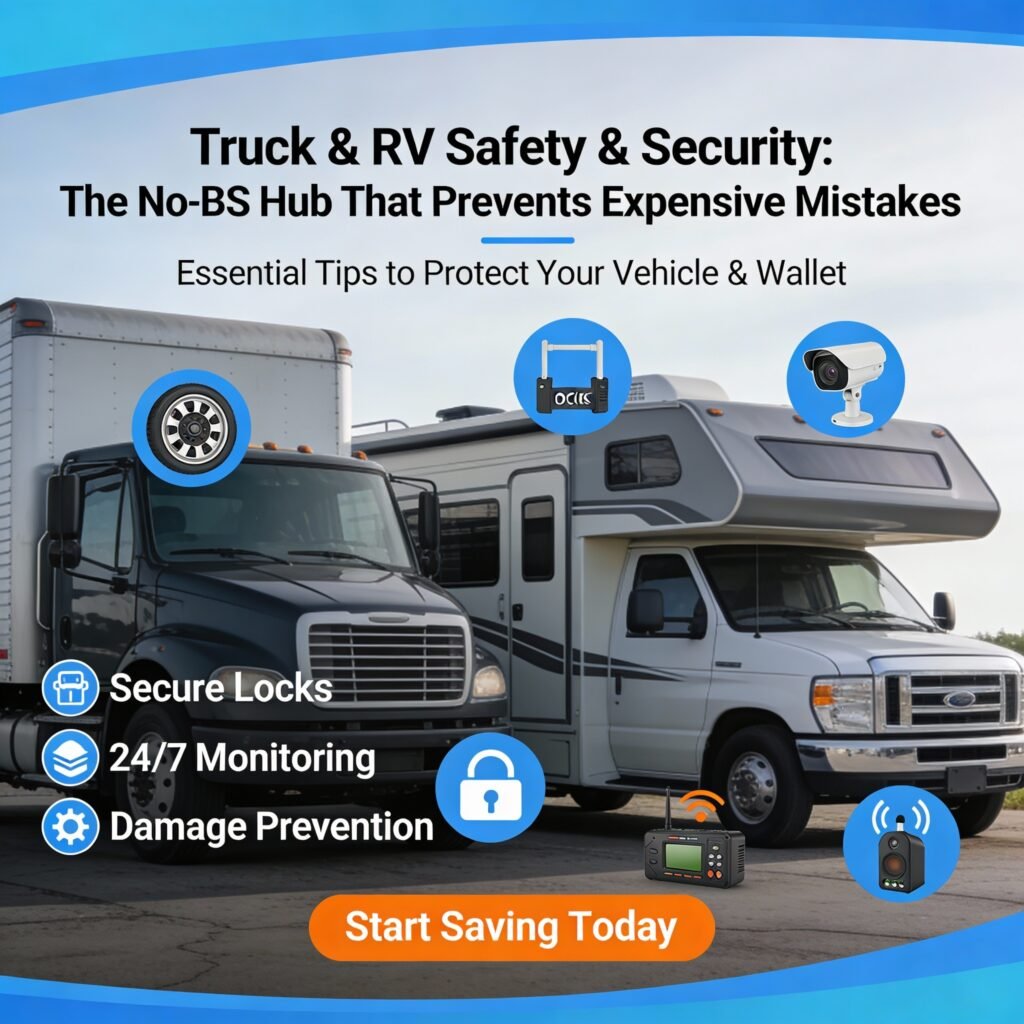
Truck & RV Safety & Security: The No-BS Hub That Prevents Expensive Mistakes
Most “safety” content online is either fear porn (“everything will kill you”) or fluffy basics (“check your mirrors”). Meanwhile, real failures keep repeating: tire blowouts, brake fade on grades, wiring mistakes that cook insulation, propane/CO alarms that were never tested, and theft because the rig screams “easy target.”
This hub is designed to do one job: reduce risk without turning your trip into a paranoid spreadsheet. You’ll get a practical safety system for RVs and trucks—built around routine, prevention, and layered security—so you spend less time troubleshooting and more time traveling.
What you’ll get here:
- A complete safety framework (driving, mechanical, electrical, fire, and health)
- A layered security model (deterrence, detection, delay, recovery)
- A repeatable pre-trip / daily / weekly / seasonal checklist that doesn’t waste time
- How to avoid the top “quiet killers”: tires, power wiring, propane, heat, and complacency
- How to protect your rig without turning it into a rolling surveillance prison
Quick Start: pick your situation.
- I want the short answer: what to install + what to check
- Give me the checklists (pre-trip, daily, weekly, seasonal)
- I’m worried about tires / TPMS / blowouts
- I’m upgrading electronics and want it safe
- I want theft protection that actually works
- I want an emergency plan that’s not dumb
Table of Contents
- 1) Quick Answer: The Safety + Security Stack That Works
- 2) Your Next Reads (Internal Guides on Your Site)
- 3) The Safety Framework: Prevent, Detect, Control, Recover
- 4) The Checklists (Pre-Trip, Daily, Weekly, Seasonal)
- 5) Driving Safety: The Big Vehicle Rules That Prevent 80% of Problems
- 6) Tires, TPMS, and Blowout Prevention (The #1 “Quiet Risk”)
- 7) Brakes, Grades, and Heat: How People Lose Control
- 8) Visibility: Cameras, Mirrors, Lighting, and “See the Problem Early”
- 9) Electrical Safety: Inverters, Batteries, Wiring, and Fire Prevention
- 10) Fire, Propane, CO/Smoke Safety: Don’t Treat Alarms Like Decorations
- 11) Health & Environmental Safety: Heat, Cold, Air Quality, and Fatigue
- 12) Security System Design: Deter, Detect, Delay, Recover
- 13) Campground + Overnight Parking Security (Realistic, Not Paranoid)
- 14) Digital Security on the Road: Cameras, Routers, and Remote Access
- 15) Emergency Plan: What to Do When Things Go Sideways
- 16) Buyer Guide: Spend vs Save (Safety Edition)
- 17) FAQ: Safety & Security
- 18) Authority References
1) Quick Answer: The Safety + Security Stack That Works
If you do nothing else, do this. This stack prevents the most common (and most expensive) problems.
Safety stack (non-negotiables)
- TPMS + tire discipline: you can’t prevent what you don’t measure
- Brake + grade discipline: plan descents, don’t “figure it out later”
- Visibility upgrades: rear camera + side coverage if your rig needs it
- Electrical protection: correct fusing, correct wire sizing, clean installs
- CO + smoke + propane awareness: working alarms + routine tests
- Basic emergency kit: first aid, fire suppression, roadside recovery basics
Security stack (layered, not gimmicky)
- Deterrence: visible camera/lighting presence + obvious “not easy” cues
- Detection: door sensors + interior motion + alerts that reach your phone
- Delay: physical locks on the most obvious entry points
- Recovery: a tracker strategy (because theft sometimes still happens)
Hot take (true): the best security system is the one you actually use. If it’s annoying, you’ll disable it. Build for human behavior, not fantasy.
2) Your Next Reads (Internal Guides on Your Site)
This hub is the command center. These internal pages are your deeper execution modules:
- Main pillar guide: Truck & RV Safety and Security: Full Guide 2026
- Real-world failure analysis: Truck Safety Systems: 5 Hidden Failures Most Drivers Miss
- Category overview: Truck & RV Safety Systems
Safety also depends heavily on installation quality for electronics (cameras, power, inverters). This internal install guide supports “clean, safe upgrades” across the whole rig:
3) The Safety Framework: Prevent, Detect, Control, Recover
Here’s the mental model that keeps safety simple.
Prevent
Prevent means routine + design choices that reduce the chance of a problem. This is tires, wiring protection, proper loading, and good habits.
Detect
Detect means sensors, alarms, and checks that warn you before things get expensive: TPMS, battery monitors, CO alarms, cameras, thermal smell checks.
Control
Control means what you do in the moment: proper braking on descents, safe pull-offs, handling tire failures, isolating electrical issues.
Recover
Recover means you can still operate after a failure: spare plans, basic tools, roadside gear, a recovery strategy if theft occurs, and documentation.
Key idea: You don’t need to eliminate all risk. You need to eliminate “stupid risk” and build resilience for the rest.
4) The Checklists (Pre-Trip, Daily, Weekly, Seasonal)
Checklists work because humans don’t. When you’re rushed, tired, or excited to roll out, your brain lies to you: “It’s probably fine.” That’s how problems sneak in.
Pre-Trip (10 minutes, no excuses)
- Tires: check pressures cold; visually inspect for cracking, bulges, embedded objects
- TPMS: confirm sensors report and alerts are active
- Lights: running, brake, turn signals (yes, all of them)
- Hitch/tow: coupler locked, safety chains, breakaway cable, trailer lights
- Load: heavy items secured; nothing ready to become a projectile
- Leaks/smells: walk-around sniff test (fuel/propane/electrical “hot plastic”)
- Brakes: quick feel test as you start moving (pulling, grinding, softness)
- Route risk: avoid low clearance / tight towns / steep grades if you can
Daily (2–5 minutes)
- quick walk-around: tires, leaks, dangling cables, new damage
- inside: alarms/indicators normal, nothing overheating, no new odors
- if boondocking: battery state and charging status check
Weekly (15–30 minutes)
- torque check where appropriate (wheels/attachments per manufacturer guidance)
- inspect battery area for heat, corrosion, loose connections
- check detector test buttons (CO/smoke/propane)
- check camera lenses and mounts (dirt and vibration wreck reliability)
Seasonal / Every Long Trip
- tire age + tread depth review (including spare)
- brake inspection (pads/rotors/drums, fluid condition)
- propane system inspection and leak check (don’t improvise here)
- deep clean electrical bay: confirm fuses, labels, cable chafe protection
- update GPS/camera firmware if you use connected devices
Opinion: If you refuse checklists, you’re not “low maintenance.” You’re high-risk.
5) Driving Safety: The Big Vehicle Rules That Prevent 80% of Problems
Most incidents come from three things: speed, space, and surprise. Big rigs hate surprise.
Give yourself space like you’re paid to be calm
- increase following distance (braking physics doesn’t negotiate)
- plan lane changes early (last-second moves cause crashes)
- avoid “squeeze plays” with cars that don’t understand your stopping distance
Slow down before the situation gets complex
Tight turns, fuel stations, campground entrances, city streets—slow down early. You’re not proving anything by “sending it.” You’re just increasing the cost of a mistake.
Turn discipline: wide is smart, not embarrassing
Wide turns reduce curb strikes, trailer tracking issues, and panic. If you need to take space, take it—safely and deliberately.
Weight and load shift: the hidden handling killer
Loose loads shift. Shifted loads change handling. That’s how “it was fine yesterday” becomes “why does it feel unstable today?” Secure loads like you care about not dying.
6) Tires, TPMS, and Blowout Prevention (The #1 “Quiet Risk”)
Tires don’t usually fail dramatically without warning. They fail because of slow neglect: underinflation, overload, heat, age, and damage you didn’t inspect.
TPMS isn’t optional; it’s the early warning system
A TPMS helps detect low pressure conditions before they become blowouts. NHTSA’s tire safety guidance emphasizes responding to TPMS warnings and checking tire pressure rather than ignoring the light. That’s boring advice—because it’s the advice that prevents crashes. :contentReference[oaicite:1]{index=1}
What causes blowouts (the short list)
- Underinflation: flexing sidewalls generate heat; heat destroys tires
- Overloading: weight ratings aren’t motivational quotes
- Age: rubber degrades; “looks fine” doesn’t mean “is fine”
- Impact damage: curbs, potholes, debris hits
- Heat stacking: high speeds + hot days + heavy loads + low pressure = boom
Cold pressure checks: the routine that matters
Check pressures cold (before driving). “I checked at the gas station after 90 minutes of highway” is not a real measurement. That’s a warmed tire reading.
TPMS operational settings (practical)
- Set alerts to a level that catches issues early (not only when you’re already in danger)
- Use reliable sensors and replace batteries proactively
- Don’t ignore intermittent warnings—investigate them
If you get a pressure warning while driving
- don’t panic-brake; stabilize the vehicle
- reduce speed smoothly
- move to a safe area to inspect (shoulder if safe; exit if possible)
- inspect tire and wheel area for damage, heat, or debris
Bottom line: the tire system is the easiest place to buy safety with discipline. It’s also the easiest place to lose safety by laziness.
7) Brakes, Grades, and Heat: How People Lose Control
Grades don’t care about confidence. Gravity is undefeated.
Climb strategy
- don’t overheat on the way up (watch temps, avoid redlining for long periods)
- accept slower speeds; it’s normal for heavy vehicles
Descent strategy (where the real danger is)
- downshift early to use engine braking
- avoid riding the brakes (it creates heat)
- use controlled braking cycles rather than constant pressure
- plan pull-offs if you need to cool down
If you smell brakes: treat it as a warning, not a vibe. Heat is telling you something.
8) Visibility: Cameras, Mirrors, Lighting, and “See the Problem Early”
Most low-speed incidents are visibility failures: backing into something, side-swiping a post, missing a tight turn, or not seeing a car living in your blind spot.
Cameras: where they help and where they don’t
- Help: backing, hitching, tight maneuvering, lane awareness (if you have side coverage)
- Don’t help: replacing mirrors and judgment
Mirror discipline is still king
Mirrors give continuous situational awareness. Cameras are great for specific tasks. Use both, not one.
Lighting upgrades for safety
- good reverse lights reduce backing incidents
- marker/clearance lights help other drivers understand your size
- work lights help in campsites and roadside situations
9) Electrical Safety: Inverters, Batteries, Wiring, and Fire Prevention
Electrical upgrades can make your rig amazing—or can make it a rolling fire risk if done badly.
Common electrical failure pattern
People add power-hungry devices (inverters, chargers, heaters) without upgrading:
- wire gauge
- fusing and disconnects
- terminal quality and crimps
- ventilation and mounting
Then they wonder why things get hot. Heat is not “normal.” Heat is a warning sign.
Golden rule: protect conductors close to the source
Any positive conductor leaving a battery should have proper overcurrent protection as close to the source as practical. This is the single most ignored safety rule in DIY electrical.
Inverter installs: do them right or don’t do them
If you’re adding an inverter, use your internal install guide so readers don’t freestyle high-current wiring:
Battery compartment safety basics
- secure batteries against movement (vibration loosens and breaks things)
- use correct terminals and tight crimps
- protect cables from chafe
- keep flammables away from high-current components
“Smell tests” you should take seriously
- hot plastic smell
- burning insulation smell
- electrical “ozone” smell
If you smell it: investigate immediately. Electrical fires don’t announce themselves politely.
10) Fire, Propane, CO/Smoke Safety: Don’t Treat Alarms Like Decorations
RVs combine fuel, electricity, and confined spaces. That means you have to take fire and gas safety seriously—without panicking.
Smoke, CO, and propane detectors
- test regularly
- replace on schedule (detectors have service lives)
- don’t disable because of nuisance alarms—fix the cause
Propane: respect it
Propane systems are safe when maintained and used properly—and risky when ignored or “DIY modified.” If you’re not qualified, don’t improvise changes. Do leak checks, maintain fittings, and treat propane smells as immediate action items.
Fire suppression: realistic options
- at least one accessible fire extinguisher (and know how to use it)
- consider additional extinguishers near cooking and electrical areas
- keep an exit path in mind (especially at night)
Standards exist for a reason
NFPA 1192 provides a baseline safety standard for RV construction and systems (fire protection, electrical, plumbing, etc.). It’s not “fun reading,” but it’s a legit reference point when you’re evaluating what “safe” means beyond forum opinions. :contentReference[oaicite:2]{index=2}
11) Health & Environmental Safety: Heat, Cold, Air Quality, and Fatigue
A lot of RV “safety” incidents are actually human-body incidents: overheating, dehydration, fatigue, and poor sleep.
Heat risk (especially in summer travel)
Heat illness can escalate faster than people expect—especially in small rigs that trap heat. Know the warning signs and plan cooling and hydration like it matters, because it does. :contentReference[oaicite:3]{index=3}
Cold + moisture misery
Cold weather safety isn’t just “have a heater.” It’s moisture control, ventilation, and avoiding condensation that creates mold and discomfort.
Fatigue: the silent crash multiplier
- plan shorter driving days when towing or on mountain routes
- avoid night arrivals at tight campgrounds
- build rest breaks into the route
12) Security System Design: Deter, Detect, Delay, Recover
Theft is a business. Thieves look for low-effort wins. Your job is to make your rig a bad bet.
Vehicle theft trends can swing year to year, but the long story is real: theft rates increased from 2019 to 2023 per FBI reporting, and industry data shows declines starting in 2024 into 2025—meaning criminals shift tactics, and you should still build layered protection. :contentReference[oaicite:4]{index=4}
Deter: make it look annoying to steal
- visible cameras or decals (even simple deterrence works)
- good exterior lighting
- avoid “rich target” cues (don’t advertise expensive gear in plain sight)
Detect: know when something is happening
- door sensors
- motion sensors
- glass break sensors (where applicable)
- alerts to your phone (not just a local siren nobody hears)
Delay: slow entry down
- quality locks on storage bays and entry points
- steering wheel or pedal locks for certain use cases
- physical barriers on high-value compartments
Recover: assume theft might still happen
- a tracking strategy (vehicle + key valuables)
- serial number documentation and photos
- insurance readiness (inventory list makes claims far easier)
Opinion: Recovery planning is not defeatist. It’s what smart people do when they understand probabilities.
13) Campground + Overnight Parking Security (Realistic, Not Paranoid)
Most overnight security comes down to behavior and positioning.
Pick the right spot
- prefer well-lit areas
- avoid isolated corners unless you want privacy and accept the tradeoff
- park so doors and storage bays aren’t easy to access from the dark side
Reduce “easy access” cues
- don’t leave high-value gear visible
- lock storage bays even if you’re “just stepping away”
- use simple interior discipline: keys, wallets, passports not sitting on counters
Use routine
Night routine beats gadgets:
- check locks
- arm your system
- confirm your phone receives alerts
14) Digital Security on the Road: Cameras, Routers, and Remote Access
If you install cameras and connected gear, you’ve also installed a digital attack surface. Don’t be sloppy.
Basic digital safety rules
- change default passwords (every time)
- keep firmware updated (monthly check is enough for most people)
- disable remote admin unless you truly need it
- use a VPN for remote access rather than exposing ports to the open internet
Important: “smart” gear isn’t smart if it makes you easier to compromise.
15) Emergency Plan: What to Do When Things Go Sideways
You don’t need a tactical fantasy plan. You need a simple playbook.
Scenario A: Tire failure
- stabilize, don’t panic-brake
- move to safety
- assess damage and decide: spare, repair, or assistance
- log the failure cause (pressure? damage? overload?) so you don’t repeat it
Scenario B: Electrical smoke / overheating
- disconnect power if safe (main disconnect)
- ventilate and locate the source
- do not re-energize until you understand the failure
Scenario C: Propane smell
- treat it as urgent
- shut off propane if safe
- ventilate
- do not create ignition sources
- get professional help if you can’t quickly identify the cause
Scenario D: Theft attempt
- prioritize personal safety
- use alarms/lighting to deter
- document and report
- use tracking and inventory documentation for recovery/claims
16) Buyer Guide: Spend vs Save (Safety Edition)
Spend here (high leverage safety ROI)
- TPMS + tire quality (your contact with the road)
- Electrical protection hardware (fuses, breakers, disconnects, proper cabling)
- Visibility gear (cameras/mirrors/lighting that actually works)
- Detectors (CO/smoke/propane) and replace them on schedule
Be strategic here
- security gadgets: buy what integrates cleanly; avoid “noisy” systems you’ll disable
- cheap cameras: fine as a starter, but don’t expect premium night performance
Where people waste money
- buying big flashy security systems but never using them
- ignoring tires and then blaming “bad luck”
- adding power gear without upgrading wiring and protection
- treating detectors like optional accessories
17) FAQ: Safety & Security
What’s the single best safety upgrade for RVs?
TPMS + tire discipline. It prevents blowouts and catches problems early.
What’s the best theft prevention strategy?
Layered security: deterrence (lighting/cameras), detection (sensors/alerts), delay (locks), recovery (tracking + documentation). One gadget won’t do it.
How often should I test detectors?
At least weekly if you full-time, and always before long trips. Replace detectors based on the manufacturer service-life guidance.
How do I avoid electrical fire risk when upgrading electronics?
Proper wire sizing, proper fusing, clean crimps, abrasion protection, ventilation, and a real disconnect strategy. If you don’t understand high-current wiring, don’t improvise.
18) Authority References
- NFPA 1192: Standard on Recreational Vehicles
- NHTSA: Tire Safety & TPMS Awareness
- FBI: Motor Vehicle Theft 2019–2023 (press release)
- NICB: Vehicle thefts fell 17% in 2024
- NICB: Decline continues through first half of 2025
Bottom line: Safety is routine + good systems. Security is layers + good habits. Do the simple stuff consistently and you eliminate most of the “it came out of nowhere” disasters.