The problem is simple: truck and rv safety and security fails when people buy gadgets instead of building a system. Thieves don’t care about your brand loyalty, and fire doesn’t care about your “someday I’ll install it” plan.
I’ve seen rigs with $2,000 worth of “security” that still screamed easy target. I’ve also seen basic setups that made criminals move on in under ten seconds.
Table of Contents
- Your 2026 Threat Model (Reality Check)
- The Layered Stack: Deter, Detect, Delay, Recover
- Safe Overnight Parking: The Risk-Reduction System
- Life Safety: Fire, Propane, CO, and Electrical
- Routines That Beat “More Gear” Every Time
- Recommended Tools and Amazon Search Links
- Frequently Asked Questions
- Bottom Line: Your Insider Takeaway
Your 2026 Threat Model (Reality Check)
Snippet trap: The best truck and RV security in 2026 uses layered deterrence (locks + visibility), fast detection (alarms + cameras), real recovery (GPS tracking), and smarter parking habits. If you only buy one gadget, you’ll feel better—but you won’t be safer.
Here’s the truth: most theft isn’t Hollywood. It’s opportunistic, fast, and usually low-skill. Criminals hunt for low-friction wins: unlocked compartments, weak factory latches, exposed generators, easy-to-tow trailers, and owners who park like they’re invisible.
And then there’s the stuff that isn’t theft—because the road doesn’t care about your insurance policy. CO exposure, propane leaks, electrical faults, and fires are the quiet killers of the RV world. If you’re “all-in on cameras” but your CO detection is a $9 no-name unit from five years ago, you’re doing safety cosplay.
Want a quick credibility check? Read the basics on theft prevention directly from the source and notice how boring it is—because it works: NHTSA anti-theft guidance. Then look at fire risk reality from an actual authority: NFPA fire safety resources. Boring, yes. Useful, absolutely.
Opinion: If your plan depends on “hoping nobody tries,” you don’t have a plan. You have vibes.
For a more structured checklist approach, I keep a dedicated internal blueprint handy for audits and upgrades—see the truck & RV safety systems guide and steal the parts that match your rig and travel style.
The Layered Stack: Deter, Detect, Delay, Recover
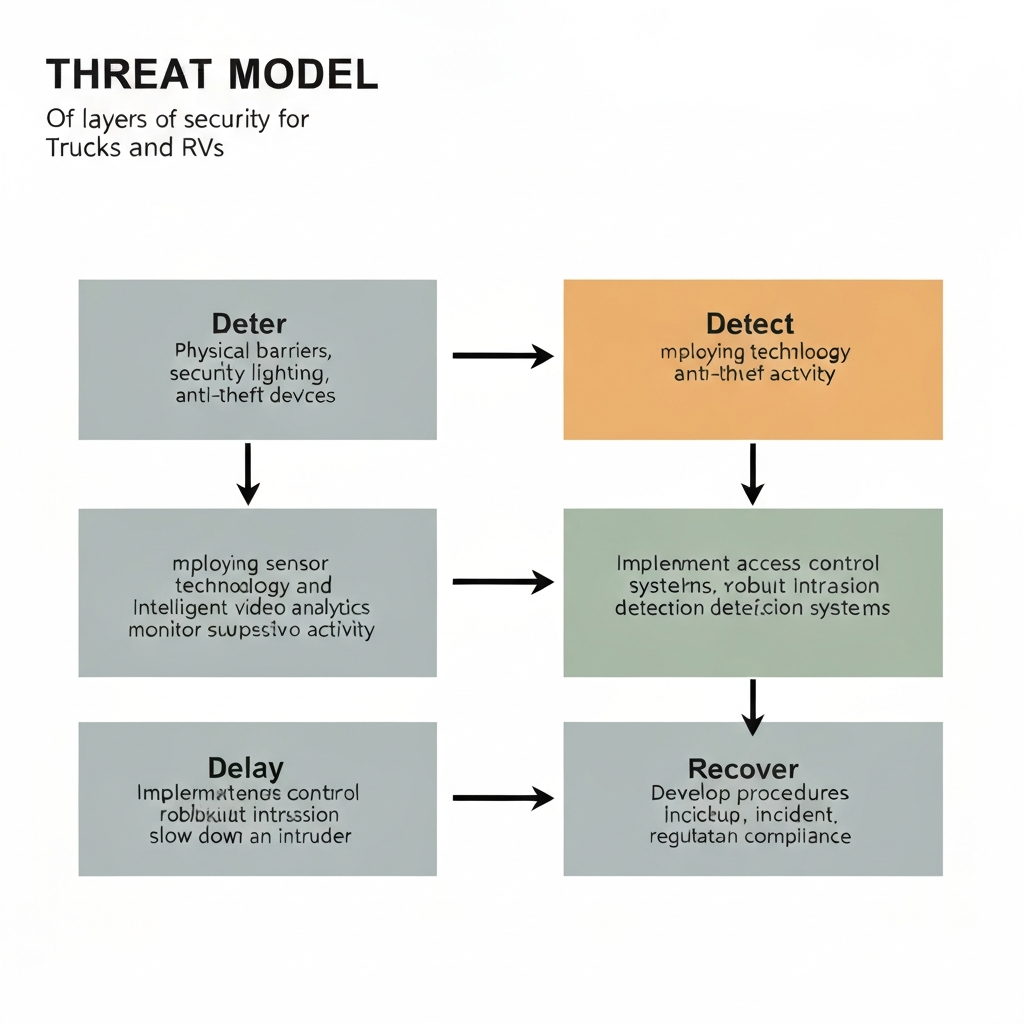
Good security is a stack. A system. A boring, repeatable machine that turns criminals into people who pick a different victim.
Deter: Make your rig look annoying
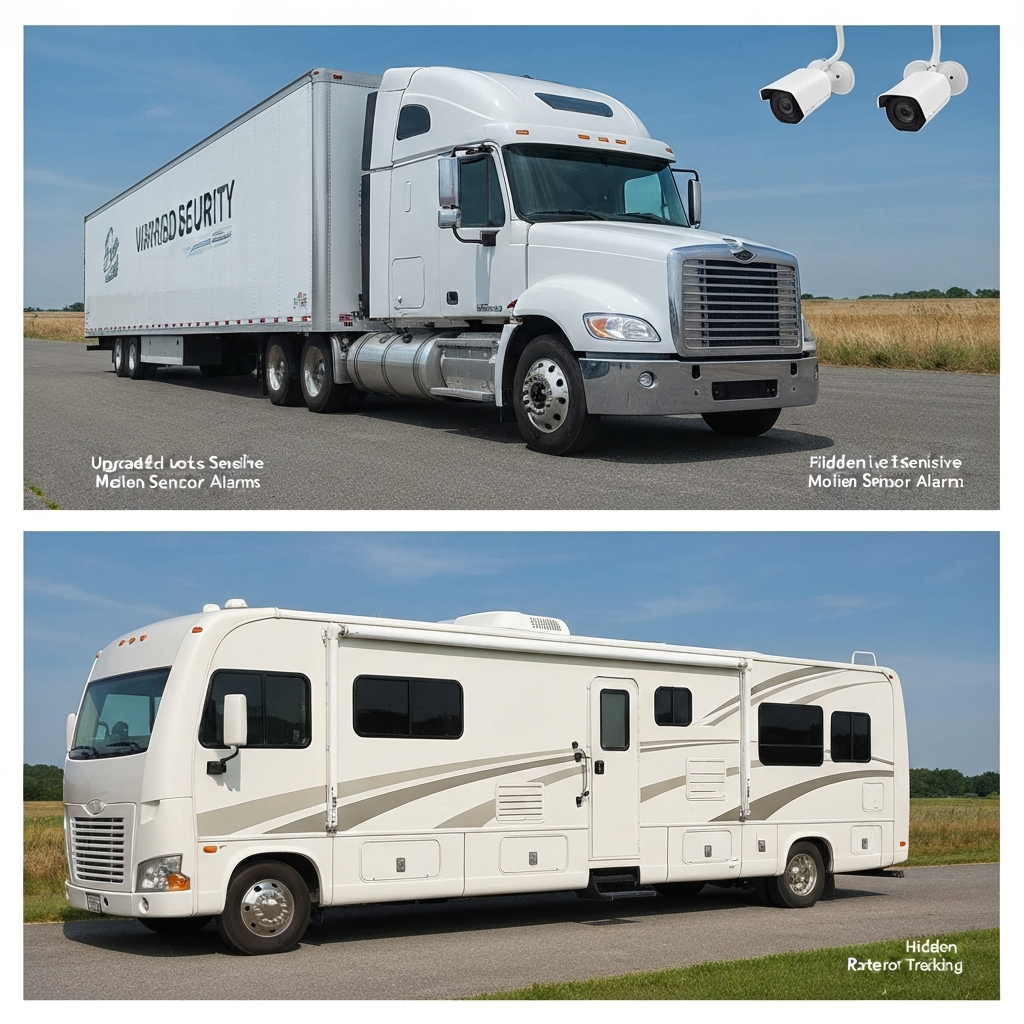
Visibility is a weapon. Exterior lighting, obvious lock upgrades, and clean “this will take effort” signals do more than you think. Thieves do quick math. If you make their math ugly, they bounce.
- Lock upgrades: factory RV locks often rank somewhere between “toy” and “suggestion.” Replace weak entry and compartment hardware.
- Trailer protection: a trailer that can roll away in 30 seconds will roll away in 30 seconds.
- Remove easy wins: don’t leave tools, power stations, or bikes screaming “free money.”
Detect: Know fast, not later
Detection is about time. The faster you know, the better you respond.
- Door/window sensors: cheap and effective, especially when paired with a loud siren.
- Motion alerts: useful when tuned properly; useless when they spam you all night.
- Cameras: not for “catching criminals” (that’s mostly fantasy). Cameras are for early warning and evidence.
Delay: Add friction to force mistakes
Delay is where you win. A thief who needs tools, time, noise, and exposure starts making bad choices.
- Harden strike plates and door frames where possible.
- Use layered locks (entry + compartments + hitch/tongue).
- Secure generators with anchors/cages, not just a “thick-looking” cable.
Recover: If it moves, track it
Recovery is the part most people skip. They buy alarms and forget that alarms don’t magically teleport your trailer back home.
- GPS tracking: geofencing + live location beats “I think it was here yesterday.”
- Documentation: photos, serial numbers, and an inventory list reduce insurance pain.
Fast forward to the big mistake: people buy one premium thing and skip the boring basics. Don’t do that. If you want a clean, structured way to evaluate your current setup, use this internal reference and treat it like an audit checklist: practical truck & RV safety systems framework.
Safe Overnight Parking: The Risk-Reduction System
Let’s talk about the part everyone wants to ignore because it’s not “fun gear.” Parking choice beats product choice. Usually by a lot.
Rule #1: Don’t park where you wouldn’t let your phone charge unattended.
Here’s how pros do it. It’s not complicated, it’s just disciplined:
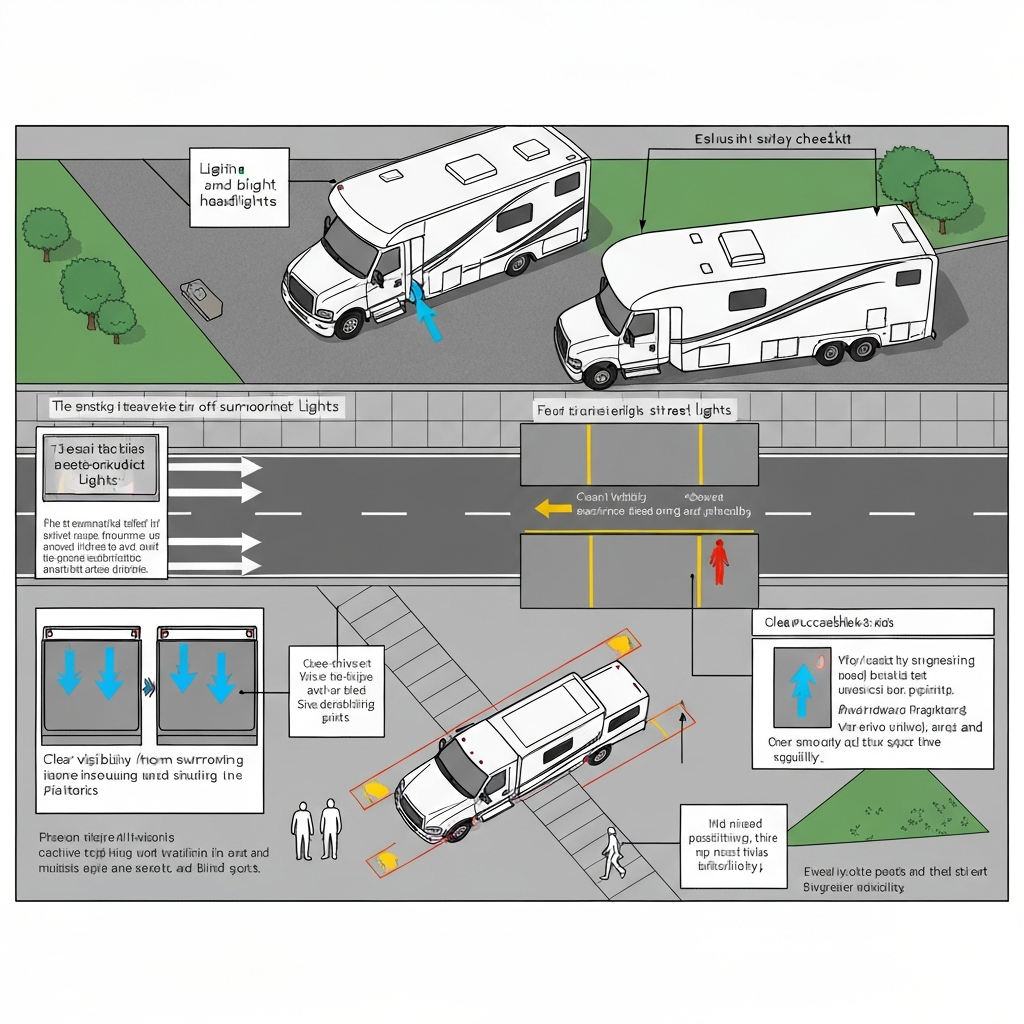
- Score the spot: lighting, visibility, foot traffic pattern, camera coverage, exits.
- Position with intention: driver door toward an easy exit, not boxed in by curbs.
- Reduce incentives: put valuables out of sight, lock compartments, remove “quick grab” items.
- Run a routine: scan, lock, arm, verify, then stop fiddling.
And yes, your gut counts. If it feels wrong, leave. I don’t care if it’s “technically allowed.” Risk doesn’t respect permission.
For emergency readiness basics (the “boring but saves lives” category), the U.S. government keeps the clearest baseline kit guidance around: Ready.gov emergency kit checklist. Use it as a floor, not a ceiling.
Life Safety: Fire, Propane, CO, and Electrical
Time for a blunt statement: fire and gas hazards outrank theft. Theft hurts your wallet. Fire and CO can end a trip permanently.
Carbon monoxide: the silent problem
CO incidents don’t come with a dramatic soundtrack. They come with headaches, confusion, and people “going to sleep early.”
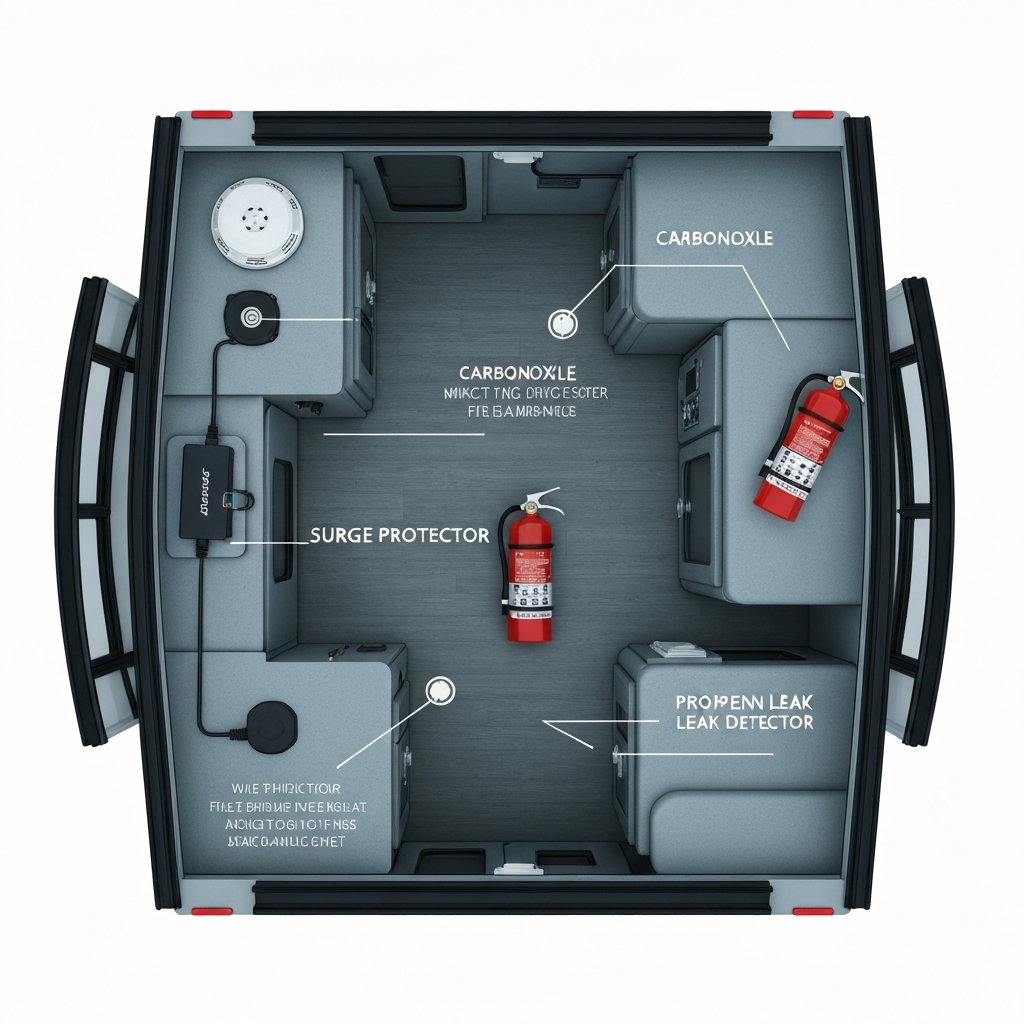
- Use quality CO detection and test it on schedule.
- Cover sleeping areas because that’s where CO becomes lethal.
- Never trust “it smells fine” as your measurement tool.
Propane: leaks, regulators, and bad assumptions
Propane is safe when you respect it. It’s not safe when you ignore it.
- Check fittings and hoses regularly.
- Use a propane leak detector and don’t disable it because it annoys you.
- Shut down properly when storing or troubleshooting.
Electrical: campground power can be garbage
If you’ve traveled long enough, you’ve seen miswired pedestals and low voltage. That’s not rare. That’s Tuesday.
- Use surge protection/EMS to avoid fried gear.
- Respect battery safety (especially lithium installs) with proper fusing and cutoffs.
- Don’t improvise wiring because “it worked at home.”
Routines That Beat “More Gear” Every Time
Here’s the truth: the best security product is the one you actually use correctly, every single time.
Most failures are operational. People forget to arm the alarm. They leave compartments unlocked. They “just ran inside for two minutes.” That’s how it happens.
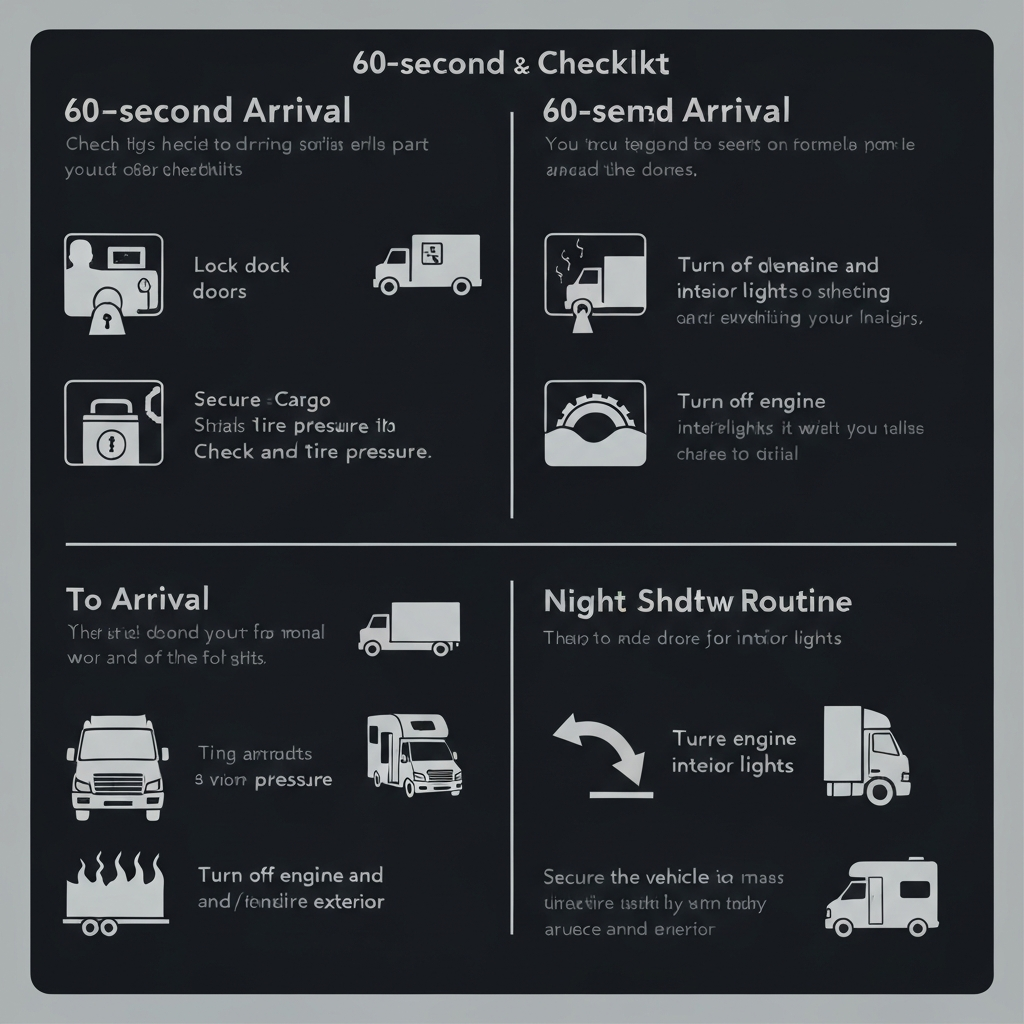
The 60-second arrival routine
- Scan the environment (people, exits, lighting, weird behavior).
- Position for a clean departure (don’t trap yourself).
- Secure obvious points (doors, compartments, hitch/tongue).
- Arm sensors/alarms and verify alerts work.
The night shutdown routine
- Confirm doors/windows locked (yes, confirm—don’t assume).
- Lock up loose gear or move it out of sight.
- Lighting plan set (perimeter lighting where it helps, not where it blinds you).
- Safety check CO/propane status and extinguisher accessibility.
One-sentence truth bomb: Routine reduces risk when gadgets fail.
Recommended Tools and Amazon Search Links
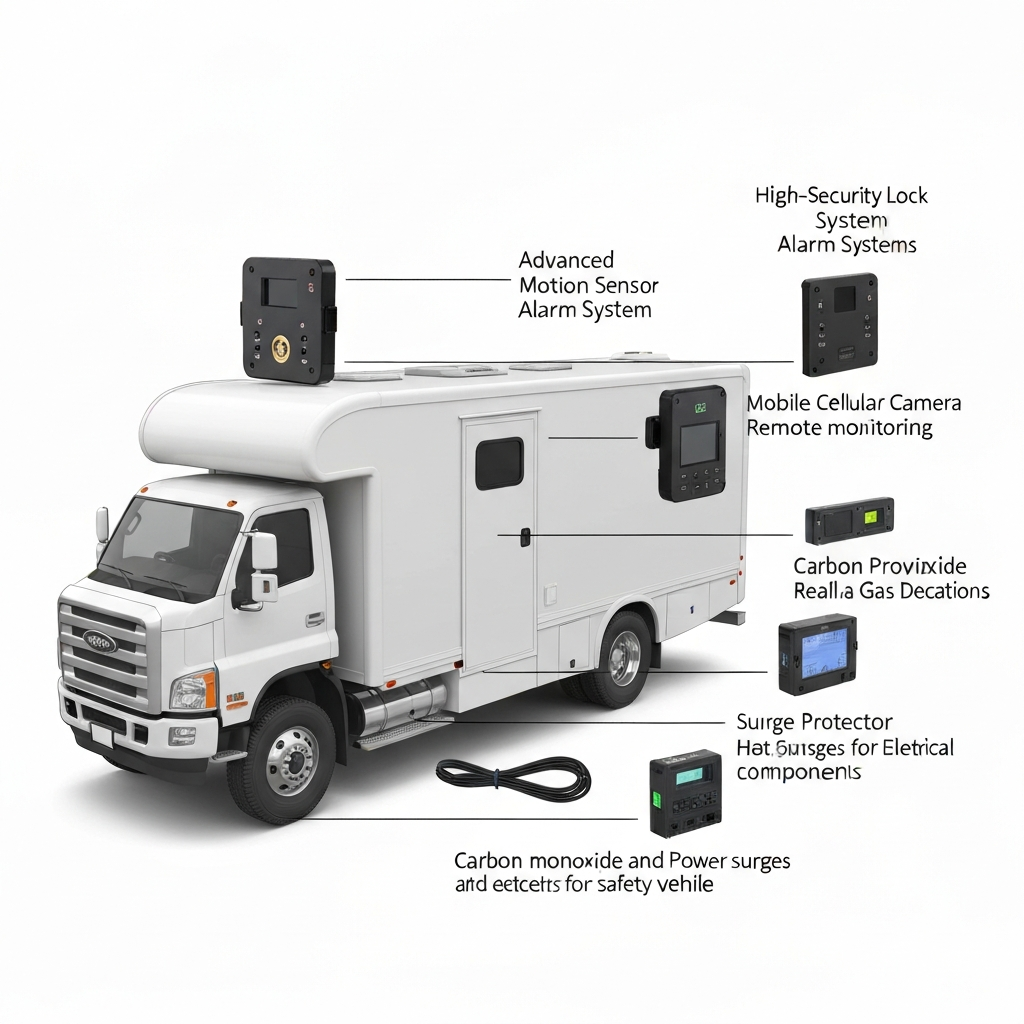
This is the gear stack I’d build for most travelers in 2026. Not because it’s trendy—because it covers the fundamentals: deter, detect, delay, recover.
1) Physical hardening (locks + hitch/tongue security)
Bottom line: if your locks feel “factory,” they probably fail like factory.
2) Detection (alarm sensors + loud siren)
Alarms don’t stop thieves by themselves. Noise buys you time and raises the cost of the attempt.
3) Monitoring (cameras that still work when you travel)
Opinion: Wi-Fi-only cameras are fine at home. On the road, they can suck—because the internet disappears right when you need it.
4) Recovery (real GPS tracking, not wishful thinking)
If it moves, track it. Trailer, rig, toolbox—whatever would ruin your month if it vanished.
5) Life safety essentials (CO + propane + fire + surge protection)
Do not cheap out here. The “savings” aren’t worth it.
Frequently Asked Questions
What’s the best “minimum viable” security setup for most rigs?
Start with reinforced locks, a loud alarm with door sensors, one exterior camera covering the entry side, and a real GPS tracker with alerts. Then tighten your parking choices and routines. That combo wins more than fancy gadgets used inconsistently.
Are Wi-Fi cameras useless for RV security?
No. They’re just limited. Wi-Fi cameras work fine when your internet behaves. When you travel, internet reliability becomes a coin flip. If you want monitoring that keeps working in motion or off-grid, cellular monitoring usually beats Wi-Fi-only setups.
AirTag or GPS tracker: which actually helps you recover a stolen rig?
An AirTag can help in dense areas, but it depends on nearby iPhones and it’s not designed for real-time recovery. A dedicated GPS tracker with live tracking and geofencing gives you better odds when the clock is running.
What life-safety gear matters more than theft gear?
CO detection, propane detection, smoke detection, proper extinguishers, and surge/EMS protection. Theft is expensive. Fire and gas incidents are catastrophic. Treat life-safety as the foundation, not the optional add-on.
How do I reduce risk when I must park overnight in sketchy areas?
Control positioning (lit, visible, fast exit), remove easy wins (loose gear), layer deterrence (locks, alarm, lights), and run a tight routine (scan, lock, arm, verify). And if the vibe is wrong, leave. Don’t negotiate with your gut.
Bottom Line: Your Insider Takeaway
Insider takeaway: The rigs that stay safe don’t rely on “one perfect product.” They run a system: layered deterrence, fast detection, added friction, real recovery, and disciplined parking routines.
Action step: tonight, pick one upgrade that adds friction (locks/hitch), one upgrade that improves detection (sensors), and one habit that improves outcomes (parking scoring). Do all three. That’s how you stop losing to randomness.
And if you catch yourself shopping for “the ultimate” gadget at 1:00 a.m., remember this: thieves love perfectionists because perfectionists procrastinate. Install the boring stuff. Then sleep better.
As an Amazon Associate, I earn from qualifying purchases.