The hunt for the best 12V RV refrigerators usually starts the same way: warm food, warm drinks, and a battery monitor that looks like it’s speed-running toward zero. The problem is most “RV fridge advice” ignores how people actually camp—hot deserts, quick travel days, sketchy campground power, and boondocking with modern lithium.
Here’s the truth: your fridge choice is either going to make your electrical system feel effortless… or turn it into a daily chore. And yes, there are still scenarios where absorption makes sense. Just fewer than the internet wants to admit.
Table of Contents
- Compressor vs Absorption: Quick Answer
- How 12V Compressor Fridges Actually Work (and Why They Win)
- Absorption Fridges: What They Get Right (and What They Mess Up)
- Real-World Power Math: Batteries, Solar, Heat, and Travel Days
- My Shortlist: Best 12V RV Refrigerator Picks (No Fantasy Specs)
- Install Tips & Common Mistakes (That Kill Performance)
- Frequently Asked Questions
- Bottom Line (Insider Takeaway)
Compressor vs Absorption: Quick Answer
If you have (or plan) lithium batteries and solar, buy a 12V compressor fridge. It cools better in heat, doesn’t care about being level, and is more predictable electrically. Absorption fridges only “win” when you’re propane-rich, battery-poor, and willing to accept slower cooling and fussier installs.
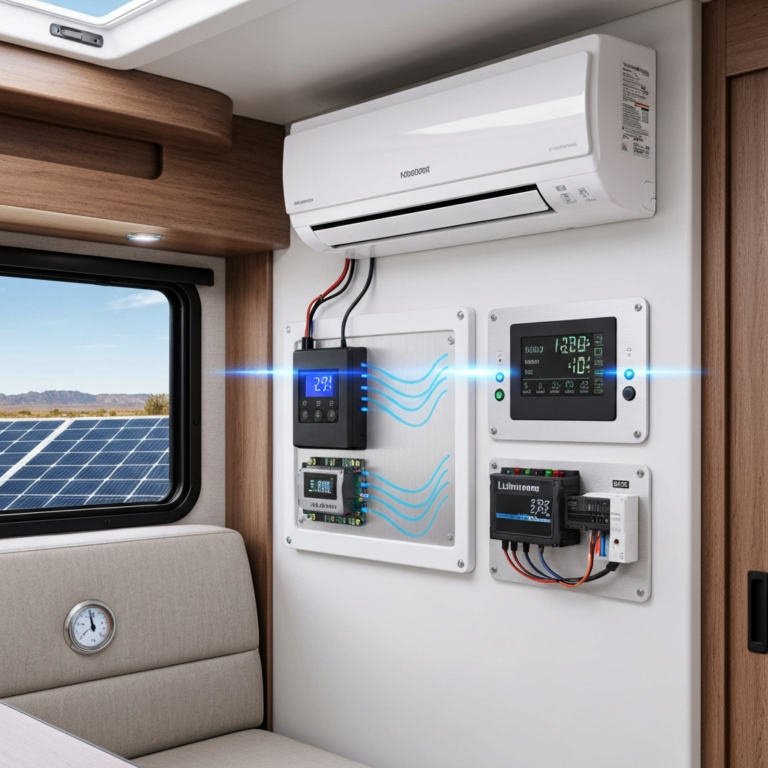
If you’re trying to match the fridge decision to a broader comfort/electrical plan (A/C, heating, fans, battery capacity), read this practical buyer’s guide to 12V HVAC and RV climate control. Refrigeration and HVAC live on the same electrical island—pretending they don’t is how people end up mad at their “brand new” setup.
How 12V Compressor Fridges Actually Work (and Why They Win)
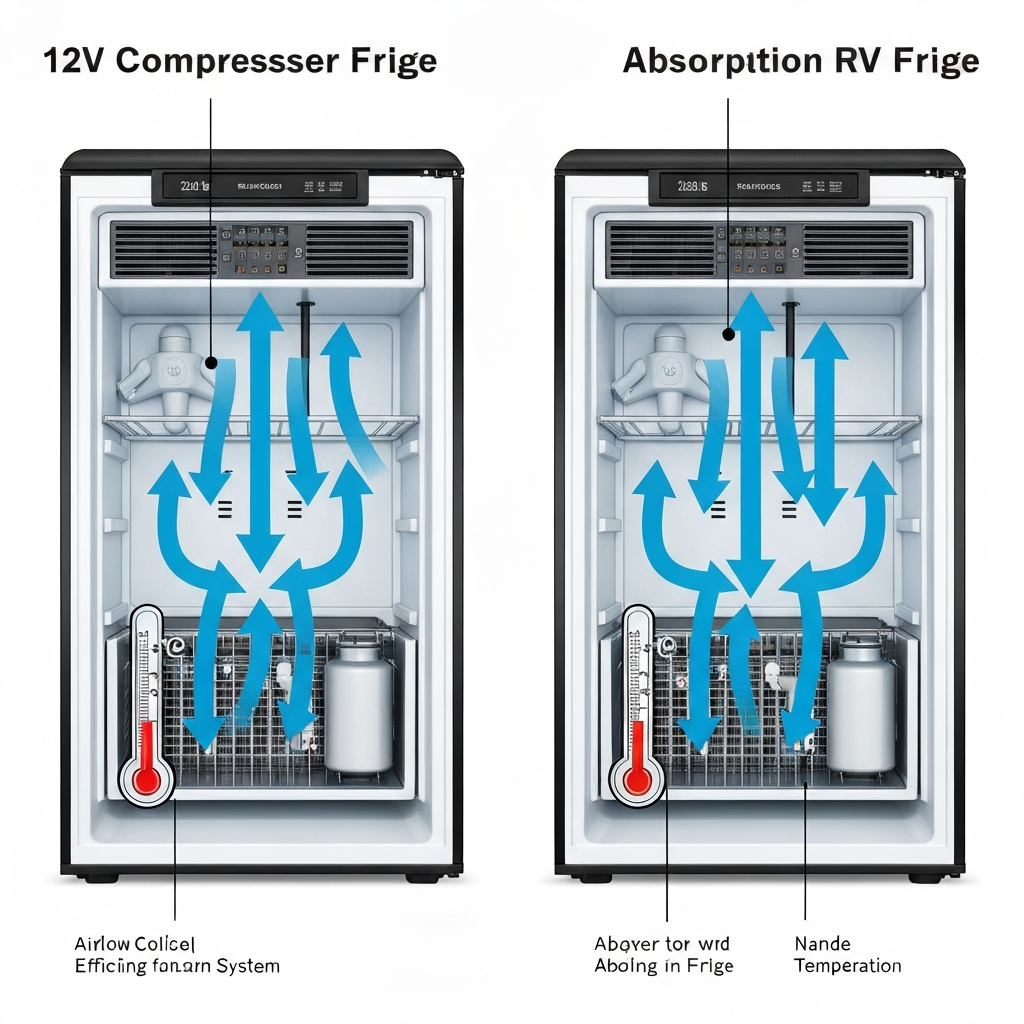
A 12V compressor fridge is basically a tiny, ruggedized version of what you have at home: a vapor-compression refrigeration cycle. Compressor pushes refrigerant, heat dumps at the condenser, expansion happens, then the evaporator pulls heat from your food box. If you want the textbook explanation, Wikipedia’s summary of the vapor-compression refrigeration cycle is accurate and refreshingly not written by a marketing intern.
What matters in an RV is how that translates into real life:
- They don’t care about “level.” Park on a slope? Fine. Eat lunch at a trailhead? Fine.
- They cool harder in hot weather. Not magic—just better thermodynamics and control.
- They sip power in cycles instead of guzzling constantly. The compressor runs, then rests. That duty cycle changes with ambient heat and how often you open the door (yes, you).
Typical draw looks like this:
- Running current: often 3–6 amps at 12V when the compressor is on
- Average daily use: commonly 30–70Ah/day depending on size and conditions
And no, the “rated amps” on the sticker isn’t a promise of average consumption. It’s like reading the horsepower on a truck and guessing your fuel bill.
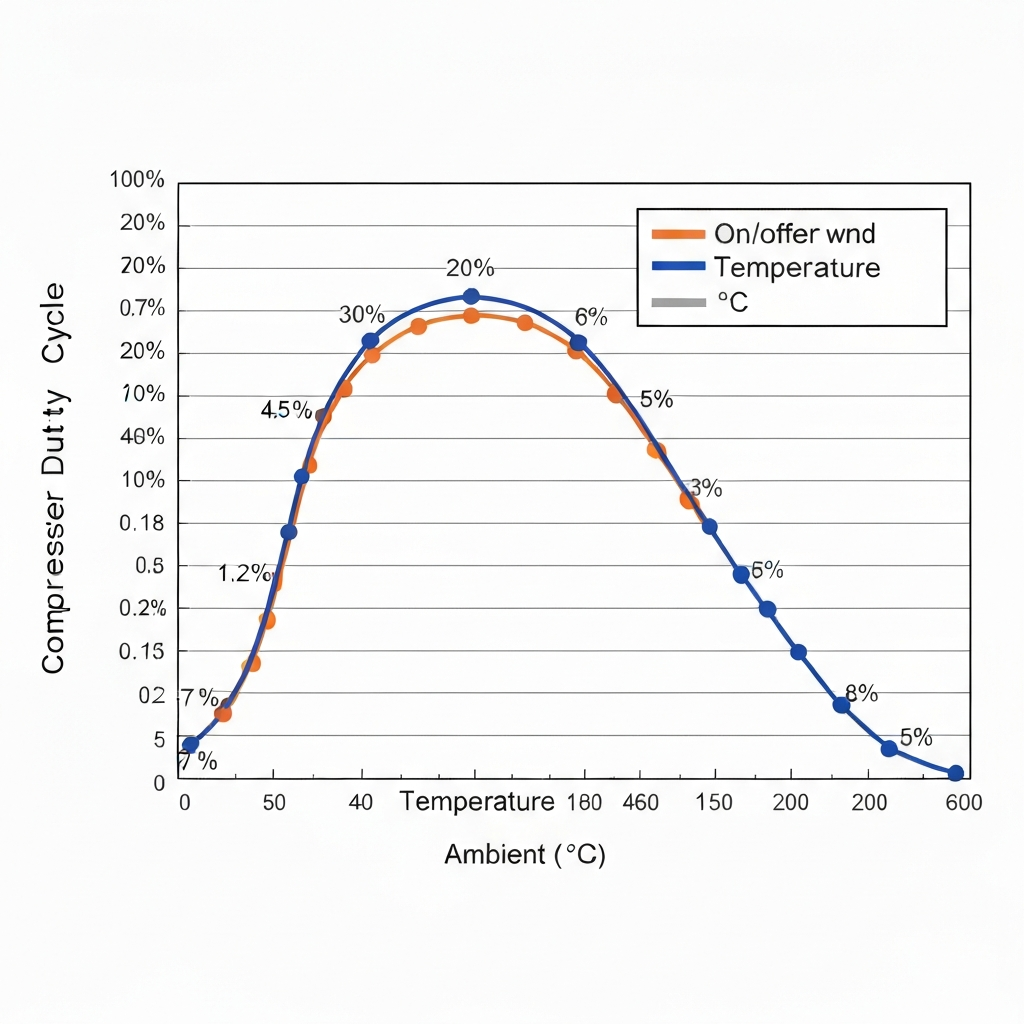
Bonus reality check: “12V” fridges are usually designed for automotive voltage swings. A healthy system might be 12.2V at rest, 13.6V charging, and 14.4V during absorption/boost charging. A quality fridge controller tolerates that without acting like a drama queen.
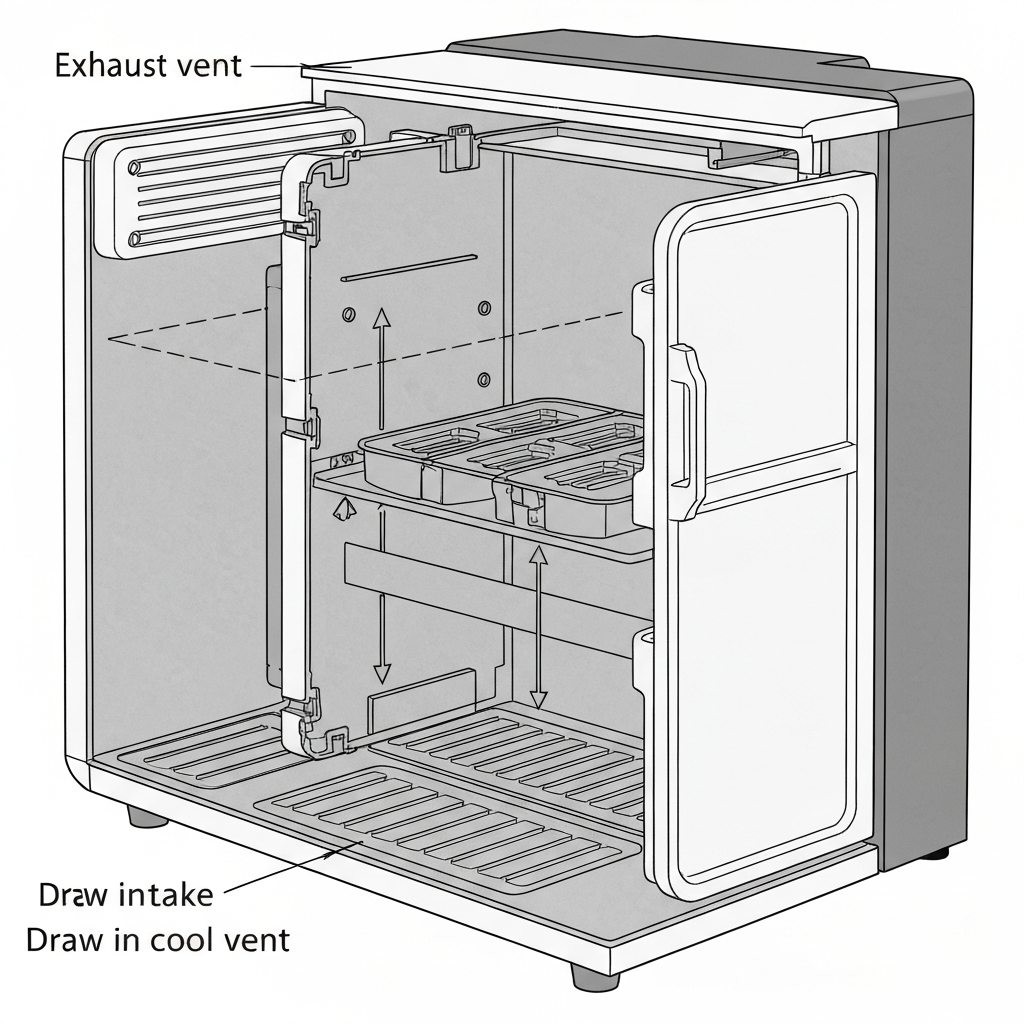
Also, compressor fridges don’t need the old-school exterior vent chimney. But they absolutely do need condenser airflow. Starve that airflow and you’ll blame the fridge for your cabinet’s bad design. That’s on you (or the OEM).
Absorption Fridges: What They Get Right (and What They Mess Up)
Absorption RV fridges are the “propane era” solution. They use heat to drive a refrigerant absorption process—typically ammonia/water/hydrogen in RV units. If you want the technical overview, Wikipedia’s absorption refrigerator page lays out the cycle and why it can run with no compressor.
They get a few things right:
- Propane is energy-dense and widely available. If you’re camping off-grid with minimal batteries, propane refrigeration is a legit tool.
- Quiet operation. No compressor hum (though fans and burner noise still exist).
- They’ve been around forever. Parts, techs, and tribal knowledge exist.
Now the part people gloss over: absorption fridges can be finicky and mediocre, and sometimes outright unsafe if neglected.
Cooling performance: in high ambient temps (think 90–105°F), many absorption units struggle to maintain safe food temps without auxiliary fans and perfect venting. You end up baby-sitting the thing like it’s a toddler with scissors.
Level sensitivity: park off-level for long periods and you can reduce cooling and potentially damage the cooling unit. Yes, you can “get away with it” sometimes. That’s not the same as good design.
Install complexity: the vent “chimney” has to be right. Baffles, seals, roof venting, side venting—it’s easy to get wrong. And when it’s wrong, the fridge works… kind of… until summer hits.
Also, absorption units usually have a 120V mode and a 12V mode, but that “12V mode” on many older rigs is basically a battery destroyer intended for travel while the alternator is charging. If your plan is “I’ll run it on 12V overnight,” you’re about to learn a lesson you didn’t ask for.
Energy use wise, modern household refrigerators have become dramatically more efficient over the years; ENERGY STAR has a good overview of efficient refrigeration and what affects consumption (ENERGY STAR refrigerator guidance). RV absorption units, meanwhile, are still fighting physics with a blowtorch. Sometimes they win. Often they just get “good enough.”
Real-World Power Math: Batteries, Solar, Heat, and Travel Days
Let’s do the math people avoid because it ruins bad purchase decisions.
Say your compressor fridge averages 50Ah/day at 12V in your real conditions (hot weather, normal door openings). That’s roughly:
- 50Ah/day × 12V ≈ 600Wh/day (0.6 kWh/day)
Now battery reality:
- 100Ah lead-acid: usable maybe ~50Ah if you care about battery life. That’s one day (ish). Maybe.
- 200Ah LiFePO4: usable ~160–180Ah depending on BMS limits. Now you’ve got breathing room.
Solar reality: 400W of solar might harvest anywhere from 1.2–2.0 kWh/day depending on location, season, shading, controller, and panel angle. Translation: 400W can comfortably run a compressor fridge for many setups, but it won’t save you from parking under a tree for three days because “it’s cozy.”
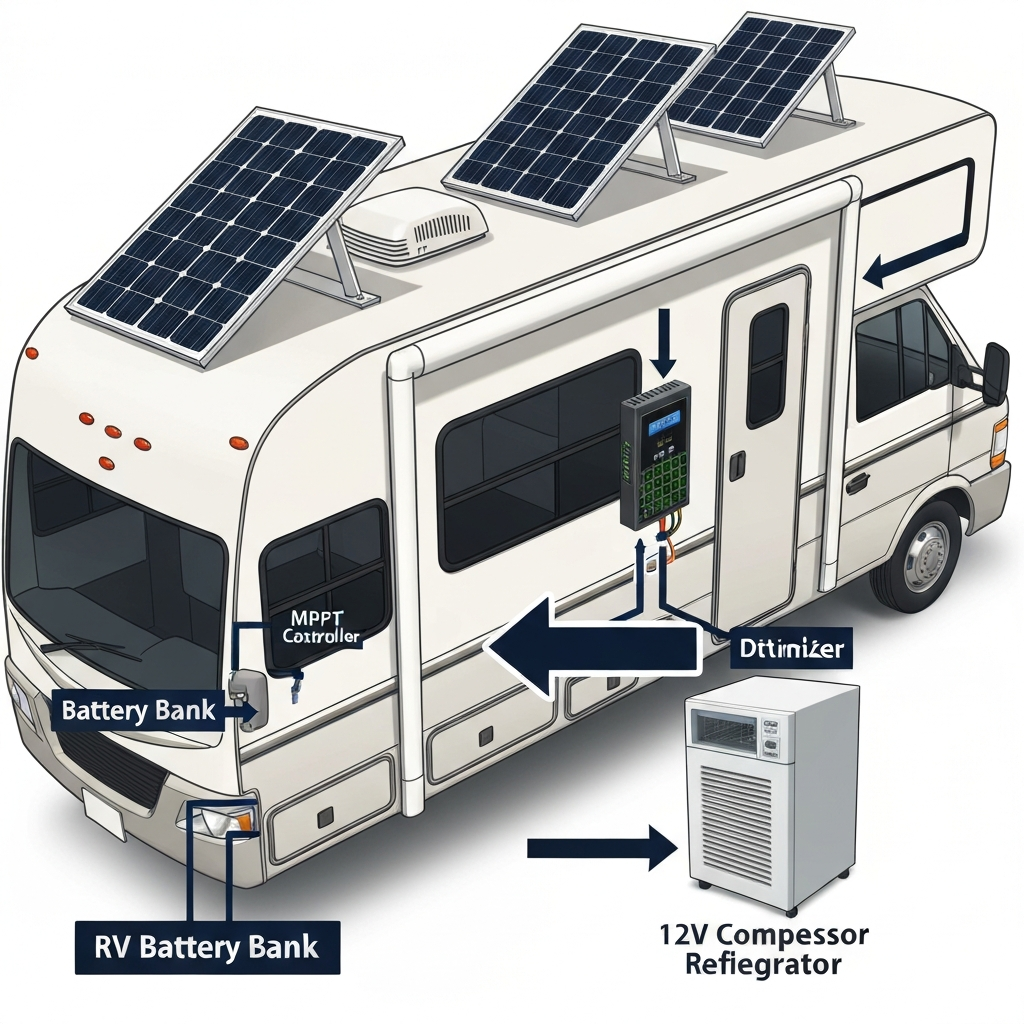
Travel days are the secret weapon. If your alternator/charger setup is legit, you can replace a big chunk of that daily energy while driving. If it’s not legit, you’re just heating wire and patting yourself on the back.
If you’re building a 12V ecosystem (fridge + fans + HVAC + cooking + charging) and you want it to feel cohesive, not cobbled together, browse the broader lineup of 12V comfort appliances and electrical-friendly upgrades. The fridge is one load. Your lifestyle is the system.
My Shortlist: Best 12V RV Refrigerator Picks (No Fantasy Specs)
I’m not going to pretend there’s one “best” fridge for every rig. Cabinet size, door swing, and how you camp matter. But if you’re asking for the best 12V RV refrigerator in the real world, these categories cover most people.
1) Best built-in 12V compressor fridge for most RVers: Dometic NRX series (NRX 80/115/130)
Why I like it: solid reputation, sensible design, and it’s aimed at actual RV installs (not just marine showpieces). The NRX line tends to behave well in normal RV voltage environments, and parts/support are generally easier than boutique brands.
Who it’s for: you want “install it and stop thinking about it.”
2) Best premium (and yes, it costs money): Isotherm Cruise / Vitrifrigo built-ins
Why they’re good: these brands come from the marine world where constant vibration, humidity, and tight installs are normal. Many models are efficient and well-finished.
Why they’re not “for everyone”: price, and sometimes you’ll pay extra for fit-and-finish that doesn’t keep your milk colder.
3) Best “I just need cold food” value play: Furrion / Norcold 12V compressor models
Why they’re on the list: widely used in OEM builds and common in replacements. You can absolutely get good service out of these if the install airflow and wiring are right.
What to watch: don’t cheap out on wire gauge or ventilation and then act surprised when it short-cycles or throws low-voltage errors.
4) Best portable 12V option (for vans, overlanding, or “my RV fridge is terrible”): Dometic CFX3 / ICECO style chests
Portable chest fridges can be ridiculously efficient because cold air doesn’t spill out like a waterfall every time you open the door. They’re not a clean built-in look, but they’re often a performance win.
One warning: tie-downs matter. A 50-quart fridge becomes a missile in a panic stop.
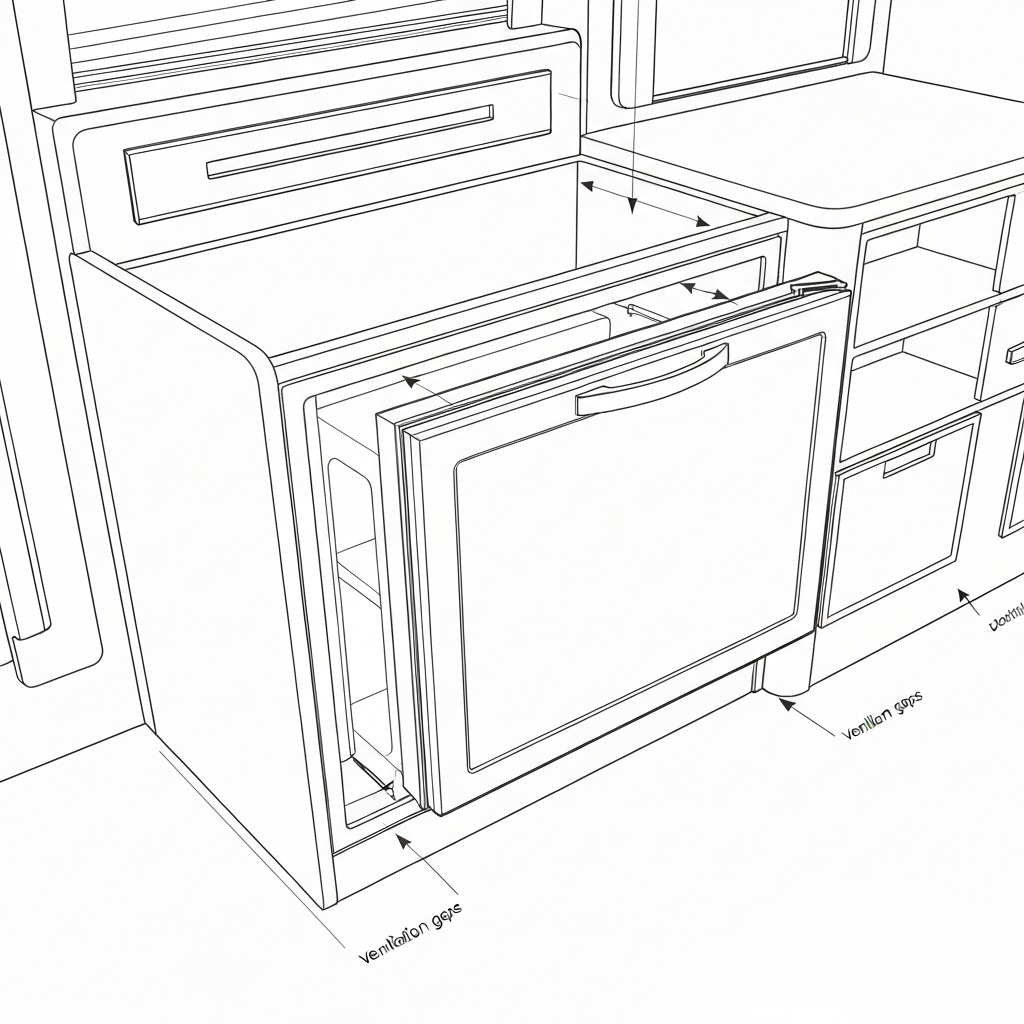
Quick sizing tip from too many installs: measure the cutout, then measure it again, then check where the hinges will land. The number of people who buy a fridge that “should fit” and then discover the face frame/trim steals 1/4″ is… not small.
Install Tips & Common Mistakes (That Kill Performance)
If you take one thing from this whole article, make it this:
A great fridge installed poorly becomes a mediocre fridge.
Wire like you mean it
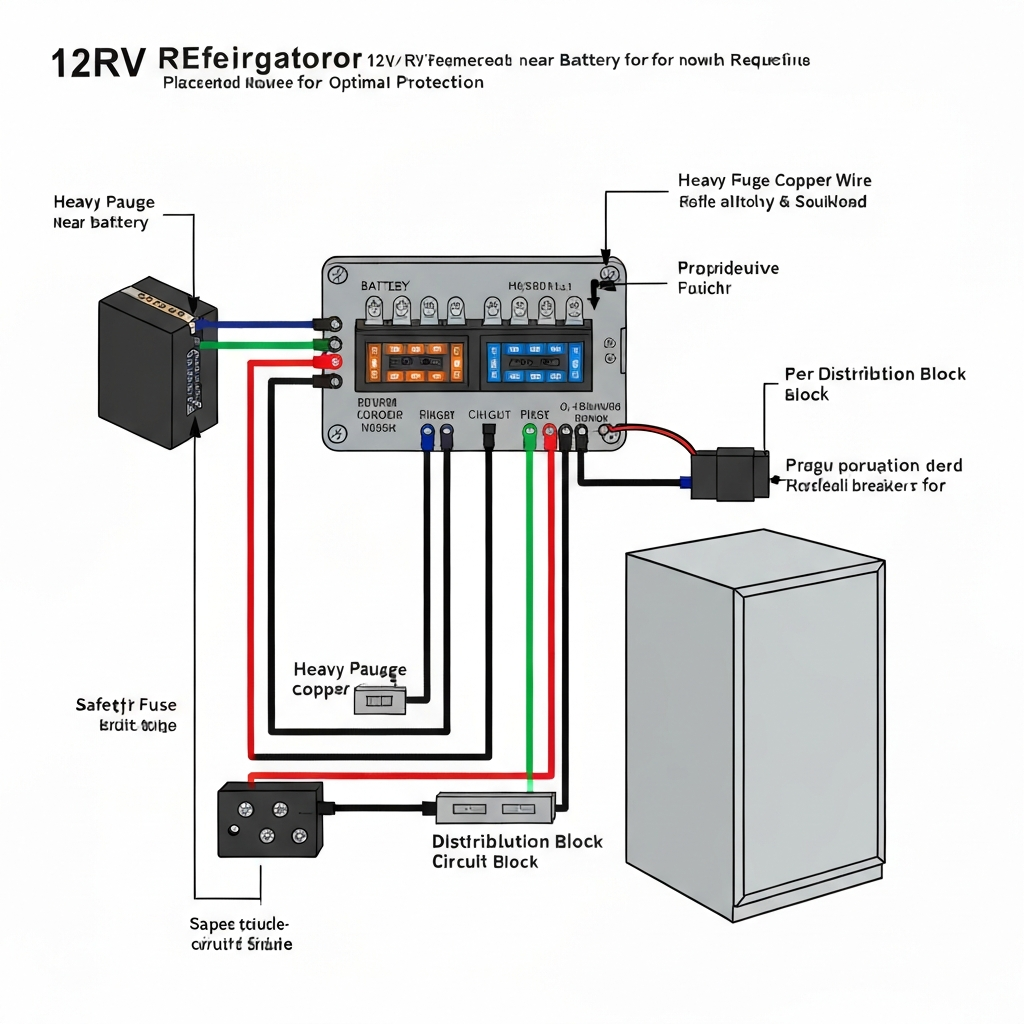
Low voltage is the silent killer of 12V compressor fridges. They’ll often protect themselves and shut down early (which is good), but you’ll blame the fridge (which is wrong).
- Use short runs and thick copper. Especially if the fridge is far from the battery/12V distribution.
- Fuse it correctly at the source. Not “somewhere nearby,” at the source.
- Don’t share a skinny circuit with random loads. The compressor kicks on, voltage dips, lights flicker, and your patience disappears.
Airflow is not optional
Compressor fridges need a cool-ish air intake and a warm air exit path. If the back of the fridge is inside a sealed cabinet, you’ve built a toaster oven behind your condenser.
For absorption replacements: sometimes you can improve performance by properly managing (or sealing) the old exterior vents and forcing airflow where the compressor condenser actually is. That’s a design decision—not a guess.
Stop ignoring ambient heat
Hot rig + sun on the sidewall + poor airflow = higher duty cycle. You can’t negotiate with thermodynamics. Add reflective shades, improve ventilation, or accept higher amp-hours.
One more unpopular truth: if your “12V system” is a tired lead-acid battery and a single 100W panel, the best fridge in the world won’t fix that. It’ll just expose it faster.
Frequently Asked Questions
How many amp-hours per day does a 12V compressor RV refrigerator use?
Most 12V compressor RV fridges land around 30–70Ah/day depending on size, ambient temperature, ventilation, and setpoint. Mild weather + good airflow puts you on the low end. 95°F heat + poor cabinet airflow puts you on the “why is it running nonstop?” end.
Is an absorption fridge better for boondocking because it runs on propane?
If you’re short on battery/solar and already carrying propane, absorption can be a practical band-aid. But it cools slower, performance drops when off-level, and hot weather can humble it fast. With lithium + solar, a 12V compressor fridge is usually the better boondocking tool.
Do 12V compressor fridges need exterior roof and side vents like absorption fridges?
No. Compressor fridges need airflow around the condenser, but they don’t require the classic exterior vent chimney. Many absorption-to-compressor conversions work best when the old venting is managed intentionally (sealed/ducted/fan-assisted), not left as a random hole to the outdoors.
Will a 12V refrigerator drain my batteries overnight?
It can. Rough math: 50Ah/day is about 25Ah over 12 hours. A 100Ah lead-acid battery shouldn’t be taken below ~50% routinely, so yes—overnight can get uncomfortable. A 200Ah LiFePO4 bank has a much easier time.
Can I run a 12V fridge on an inverter from a 120V residential fridge circuit?
You can, but it’s usually an expensive workaround. A true 12V fridge avoids inverter losses and nuisance shutdowns. If you must do inverter-based refrigeration, oversize wiring, fuse correctly, and don’t expect bargain inverters to behave under compressor surge loads.
Bottom Line (Insider Takeaway)
Bottom line: the best 12V RV refrigerator for most modern RVers is a compressor unit, because it’s predictable, efficient enough, and it doesn’t throw a tantrum when you park on a slope or camp in real summer heat.
Absorption still has a place if you’re propane-heavy and electrical-light. But if you’re investing in lithium, solar, and an overall comfort package, absorption starts looking like a rotary phone: nostalgic, occasionally useful, and absolutely not what I’d build around.
Action step: pick your fridge based on how you camp, then size the wiring and battery bank like an adult. Your future self (and your groceries) will thank you. I’ll be over here enjoying a cold drink that didn’t require a sacrifice to the propane gods.
As an Amazon Associate, I earn from qualifying purchases.