Let’s be honest: merging onto a busy highway in a 40-foot rig is terrifying. If you’ve ever clenched the steering wheel until your knuckles turned white while praying that compact car isn’t in your blind spot, you know exactly what I mean. That anxiety? It’s unnecessary. The right truck and rv safety systems are the difference between a relaxing road trip and a white-knuckle nightmare.
Most people think safety is just about checking mirrors and driving slow. They’re wrong. The road throws curveballs that human reflexes just can’t catch in time. But don’t worry, I’ve spent the last decade testing, breaking, and obsessing over heavy-duty vehicle tech so you don’t have to. We’re going to fix that blind spot anxiety today.
Table of Contents
- What Are the Essential Truck and RV Safety Systems?
- The “Stock” Myth: Why Your Factory Mirrors Are Lying to You
- The “Big Three” Safety Essentials (Do Not Skip These)
- Advanced Tactics: The “Nice-to-Haves” That Save Lives
- Installation: DIY or Call a Pro?
- The Ultimate RV Safety Checklist
- My Final Take
What Are the Essential Truck and RV Safety Systems?

Truck and RV safety systems are a suite of aftermarket or OEM technologies designed to mitigate the specific risks of operating large vehicles. The absolute essentials include Tire Pressure Monitoring Systems (TPMS) to prevent blowouts, blind spot detection sensors to cover expansive blind zones, and backup cameras for maneuvering. Advanced setups also integrate collision mitigation and lane departure warnings to actively prevent accidents before they happen.
The “Stock” Myth: Why Your Factory Mirrors Are Lying to You
I need to bust a massive myth right now: Factory mirrors are not enough.
I hear it all the time. “I’ve been driving for 20 years, I know how to use my mirrors.” Look, I respect the experience, but physics doesn’t care about your driving record. The blind zones on a Class A Motorhome or a semi-truck are large enough to hide a literal minivan.
Relying solely on glass mirrors in 2025 is like using a flip phone to run a business. You can do it, but why make life so hard? Onboard safety systems aren’t about replacing your skill; they are about giving you superhuman awareness. If you aren’t using radar or camera assistance, you are voluntarily driving partially blind. That’s just a fact. For those just starting out, understanding the basics of large vehicle maneuvering (PASTE-URL-HERE) is critical, but tech provides the safety net.
The “Big Three” Safety Essentials (Do Not Skip These)
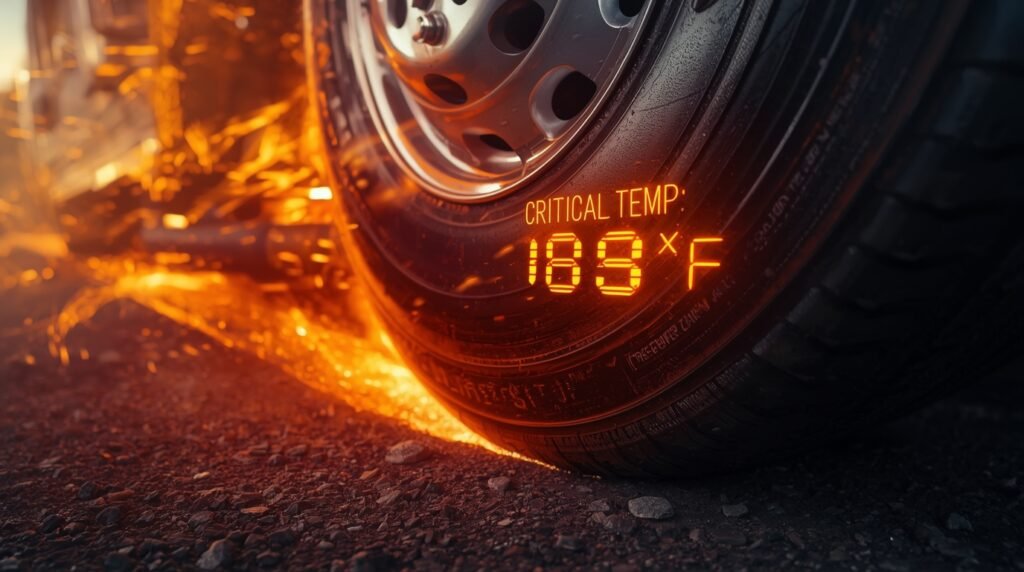
If you have a limited budget, ignore the fancy ambient lighting and spend your money here. These are the non-negotiables.
1. Tire Pressure Monitoring Systems (TPMS)
Here is a scary stat: Most RV and truck accidents are caused by tire blowouts, not collisions.
When you’re hauling 30,000 pounds, a blowout isn’t just a flat tire; it’s a catastrophic loss of control. I’ve seen rigs torn apart because a driver didn’t know their inner dually was running hot.
- The Insider Tip: Don’t settle for the cheap valve-cap sensors that rely on centrifugal force. Get a system that measures temperature as well as pressure. Heat is the silent killer of heavy-duty tires. If your high-end TPMS doesn’t scream at you when your tire hits 180°F, throw it in the trash.
2. Radar-Based Blind Spot Detection
Notice I said radar, not cameras. Cameras are great (we’ll get to them), but they require you to look at a screen. Radar works passively. It watches the road so you don’t have to.
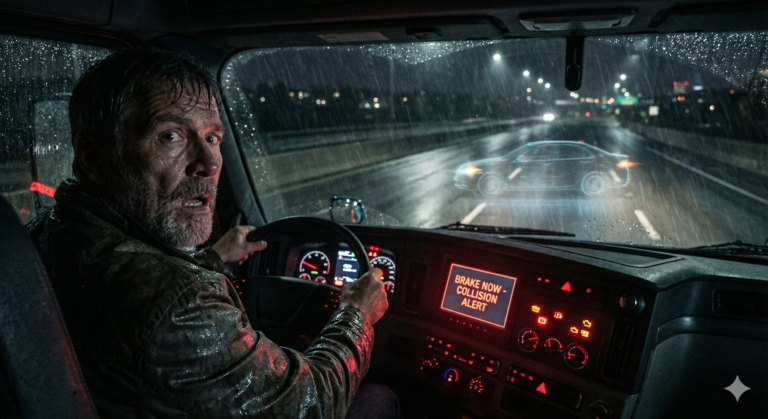
When a vehicle creeps into your “no-zone,” you want a light to flash on your A-pillar. If you turn on your blinker, you want an audible beep.
- My Verdict: Radar is superior because it works in heavy rain, fog, and pitch-black nights where cameras get grainy. IMO, this is the single best upgrade you can make. It’s a staple in modern defensive driving strategies.
3. Dash Cams (Front and Rear)
This isn’t about avoiding accidents; it’s about protecting your wallet. People love to brake-check trucks. It’s a sick game, but it happens.
If you rear-end a sedan because they cut you off, guess who the police blame? The big guy. Every time. Unless you have video proof. A 4K dash cam with GPS is your legal insurance policy. Get one that records your speed and location.
Pro Tip: Ensure your dash cam has a “parking mode.” It wakes up and records if someone hits your rig while you’re sleeping at a truck stop or parked at a campsite.
Advanced Tactics: The “Nice-to-Haves” That Save Lives
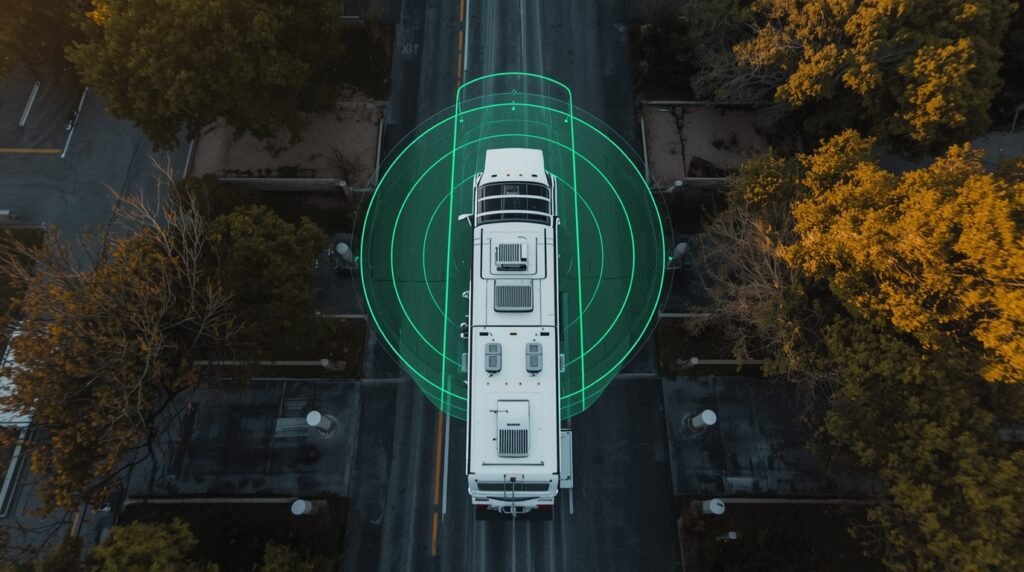
Okay, you’ve got the basics. Now let’s talk about the truck safety essentials that separate the pros from the amateurs.
360-Degree “Bird’s Eye” Camera Systems
You’ve seen these on luxury SUVs, but they are infinitely more useful on a 45-foot RV. These systems stitch together four camera feeds to show you a top-down view of your vehicle.
Why I love it: Maneuvering into a tight campsite or backing up to a loading dock becomes a video game. You can see exactly where your tires are relative to that concrete bollard waiting to rip off your fender. This technology is quickly becoming a favorite topic in RV gadget reviews.
RV-Specific GPS Navigation
Please, for the love of all things holy, stop using Google Maps for your truck or RV.
Google Maps assumes you are in a Honda Civic. It will happily route you under a bridge with 10-foot clearance when your rig is 12 feet tall. I’ve seen the aftermath of “sturrowing” (hitting a low bridge), and it is not pretty.
- The Fix: Get a dedicated RV GPS that allows you to input your vehicle’s height, weight, and length. It will route you around low bridges and propane-restricted tunnels. It’s a small investment that prevents you from turning your RV into a convertible.
Installation: DIY or Call a Pro?
This is where I get controversial. I’m a huge fan of DIY, but when it comes to vehicle safety systems, you need to know your limits.
If you are installing a wireless backup camera? Go for it. It’s usually just splicing into a 12V reverse light wire. Easy peasy.
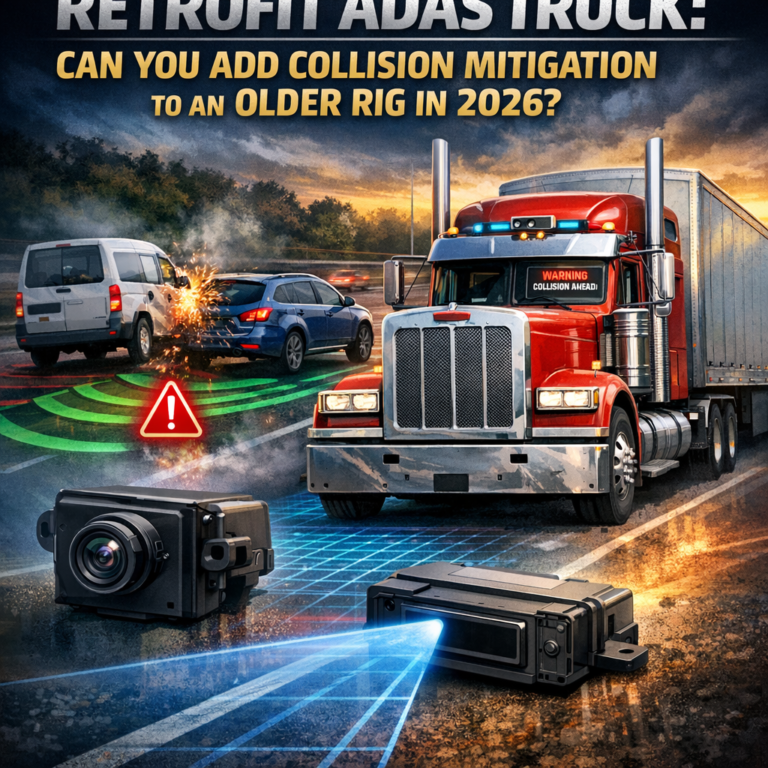
However, if you are installing a Collision Mitigation System that taps into the vehicle’s CAN bus or braking system? Do not touch it. You mess that up, and you could disable your ABS or airbags. If you aren’t comfortable with complex wiring, check out our guide on hiring RV mechanics (PASTE-URL-HERE).
My Rule of Thumb:
- External sensors/Wireless tech: DIY friendly 🙂
- Hardwired into the ECU/Brakes: Professional installation only.
Don’t risk your rig’s electrical system to save $200 on labor.
The Ultimate RV Safety Checklist
Before you roll out, run through this quick rv safety checklist. Print it out, tape it to your dash, tattoo it on your arm—whatever works.
- Walk-Around: Check all lights (brake, turn, clearance).
- Tire Kick: Verify TPMS is active and reading all tires (including the tow vehicle!).
- Connection Check: If towing, double-check the breakaway cable and safety chains.
- Height Clearance: Confirm your GPS has your current height (did you add a new AC unit?).
- Secure Interior: Locking the fridge and cabinets. A flying jar of salsa is a projectile in a panic stop.
- Test Cameras: Clean the lenses! A muddy camera is a useless camera.
My Final Take
Here is the reality: You can be the best driver in the world, but you cannot control the chaos around you. Truck and rv safety systems buy you time. They buy you reaction speed. They buy you peace of mind.
Don’t wait until after a close call to upgrade your rig. The technology exists to make driving these beasts safer and less stressful—use it.
Your Next Step
Go check the date codes on your tires right now. Seriously, go outside and look. If they are older than 6 years, your first safety upgrade isn’t a camera—it’s new rubber. Once that’s done, come back and look into a decent TPMS. Safe travels!
Recommended Gear from the Article
If you’re ready to upgrade your rig, here are the specific tools I mentioned above:
- 🛡️ TPMS: High-Temp Monitoring Systems
- 🎥 Documentation: 4K GPS Dash Cams
- 🗺️ Navigation: RV-Specific GPS Units
As an Amazon Associate, I earn from qualifying purchases.

2 Comments