Table of Contents
- The “Dumb Alarm” Myth: Why Your Factory System Fails
- The New Gold Standard: Truck & RV Connectivity
- Trucks vs. RVs: Different Beasts, Different Vulnerabilities
- The Big Three: Expert-Recommended Systems for 2025
- The “Ghost” Installation: Hiding in Plain Sight
- The Battle-Tested RV Setup Checklist
- The Future is Here: Integration and AI
- Conclusion: Don’t Be the Low-Hanging Fruit
Let’s be honest: walking out to an empty driveway or a smashed window is a gut-punch sensation nobody wants to experience. You’ve spent thousands building your rig, yet most people protect their investment with a blinky red light and a prayer. Here is the hard truth: If your strategy doesn’t prioritize truck & rv connectivity, you don’t have a security system—you just have a noise machine.
The old-school approach of loud sirens and shock sensors? Thieves laugh at them. Nobody calls the cops when a car alarm goes off in a Walmart parking lot anymore; they just turn up their radio. The game has changed. Modern theft requires modern countermeasures, and that means reliable, always-on connections that keep you in the driver’s seat, even when you’re miles away.
The “Dumb Alarm” Myth: Why Your Factory System Fails
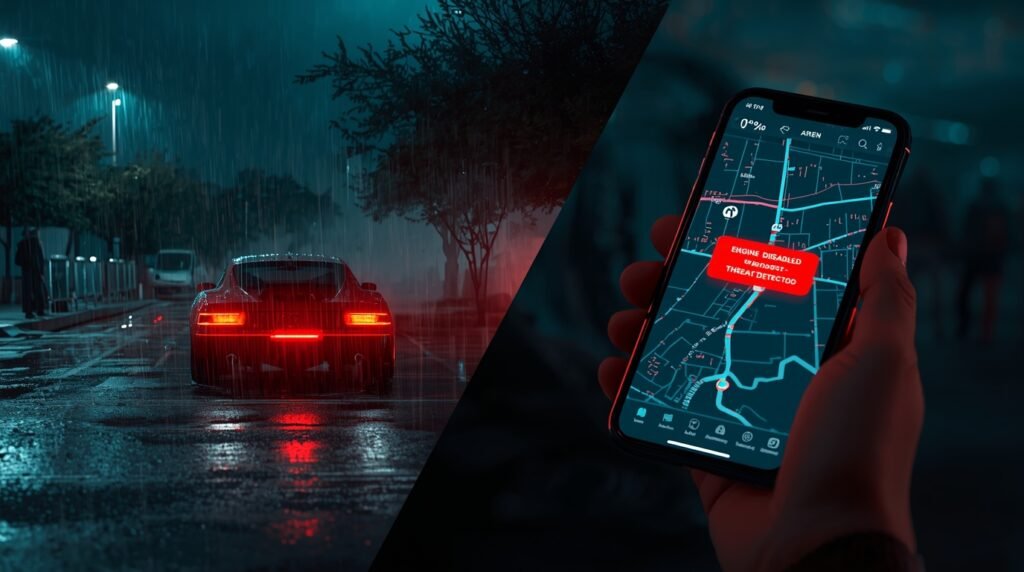
What is the biggest mistake vehicle owners make?
Most people assume the “lock” button on their key fob activates a fortress-level defense. It doesn’t.
Factory vehicle security systems are designed for mass production, not maximum protection. They usually rely on three archaic triggers:
- Door triggers: Only active once the door is physically pried open.
- Immobilizers: Great for stopping hot-wiring, terrible at stopping relay attacks or tow-truck thefts.
- Horns: Annoying, but easily disabled by cutting a single wire.
Here is the insider reality: Professional thieves can clone your key fob signal from outside your house (a “relay attack”) and drive your $80,000 truck away without breaking a single glass pane. If your system isn’t smart enough to detect signal manipulation or track the vehicle immediately, you’ve already lost.
Expert Take: A siren screams for help; a connected system screams at you via your phone. I know which one I’d bet my rig on.
The New Gold Standard: Truck & RV Connectivity
This is where we leave 1999 behind. Truck & rv connectivity isn’t just about streaming Netflix in the woods or getting GPS directions; it is the absolute backbone of rv theft prevention and asset recovery.
When I build a security package for a client, I don’t look at decibels. I look at data.
1. Real-Time Telematics (Not Just Bluetooth)
Bluetooth is great if you are standing ten feet away. It is useless if you are hiking a trail while someone hitches up your travel trailer. You need a system that utilizes LTE (cellular) or satellite networks.
- Instant Alerts: Your phone should buzz the second a window breaks or the vehicle tilts (towing attempt).
- GPS Tracking: Not the “last known location” dots, but active, breadcrumb-trail tracking.
2. The Kill Switch 2.0
Old-school kill switches required you to flip a hidden toggle under the dash every time you parked. I always forgot to do it. Modern connectivity allows for remote immobilization. Did your truck just move outside your geofence? Open your app, hit a button, and cut the fuel pump or starter relay instantly. That truck becomes a very heavy, very useless brick.
3. Cloud-Connected Cameras
Dash cams are essential, but standard ones only record to an SD card. If the thief steals the camera (or the whole truck), they steal the evidence.
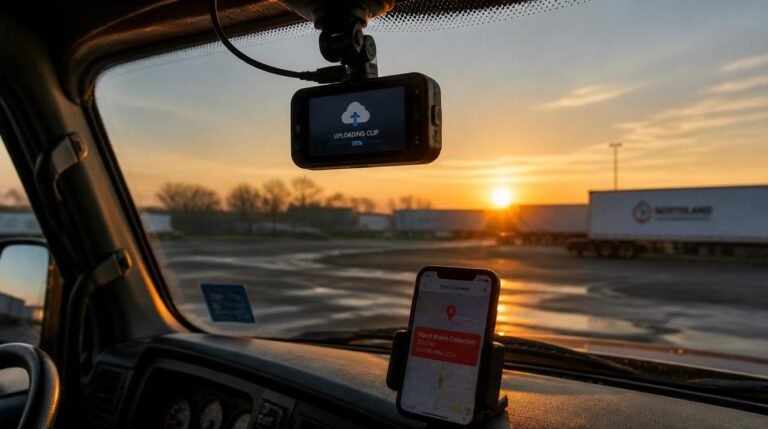
The Fix: LTE-enabled cameras (like BlackVue or Owlcam) that upload footage to the cloud the moment an impact or motion is detected. I call this the “gotcha” feature. Even if they smash the camera, the face of the perp is already on your server. 🙂
Trucks vs. RVs: Different Beasts, Different Vulnerabilities
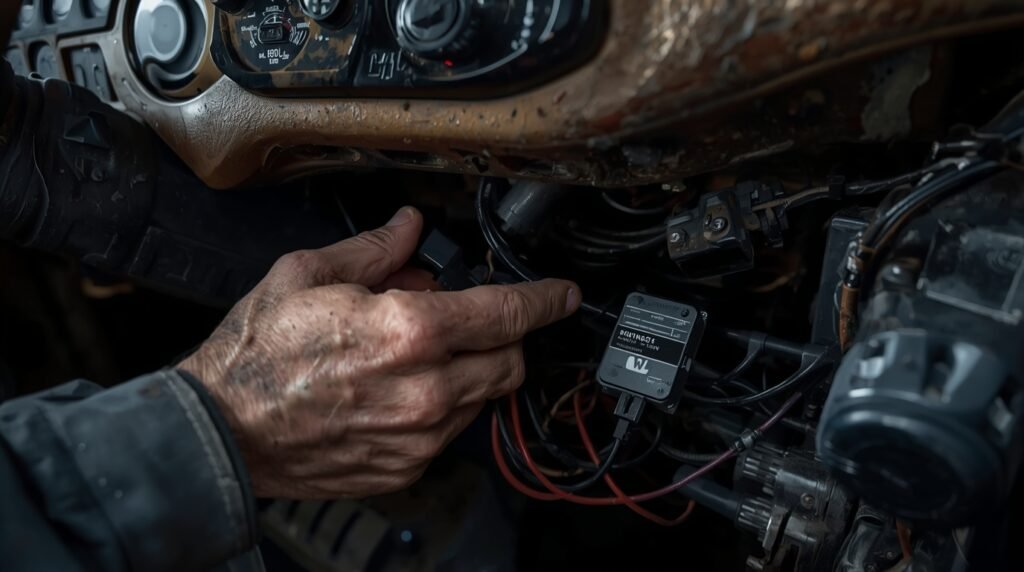
While the tech overlaps, truck security systems and rv security systems need different tactical approaches.
For the Truck Owners
Trucks are high-value targets for two reasons: they are easily exported, and they often contain expensive tools or firearms.
- OBDII Port Lock: Thieves use the On-Board Diagnostics port to program new keys. I install a physical metal lock over this port on every truck I own.
- Tailgate Protection: Tailgate theft is rampant. A simple hose clamp isn’t enough anymore; get a dedicated electronic lock tied to your central locking.
- Glass Break Sensors: Since thieves smash windows to grab items without opening doors (bypassing door triggers), audio glass-break sensors are mandatory.
For the RV Nomads
RVs face a unique problem: You live in them.
- Perimeter Monitoring: You don’t want an alarm blasting just because a raccoon walked by. You need AI-driven cameras that distinguish between “human” and “wildlife.”
- Entry Sensors: RV locks are notoriously weak. Prioritize magnetic sensors on all storage bays and the main door.
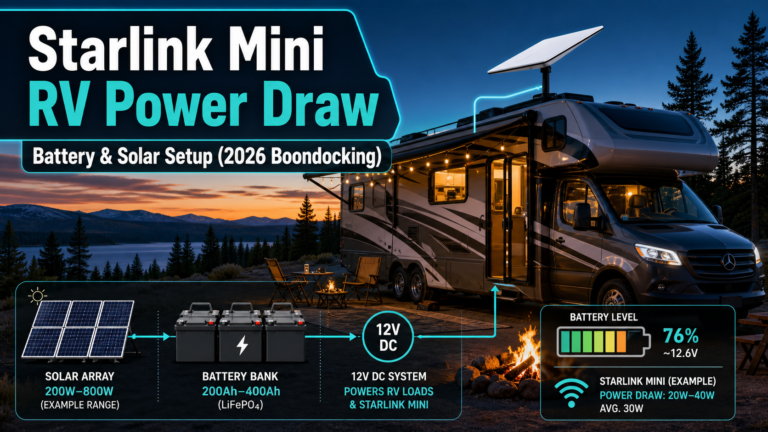
- Battery Drain Management: This is critical. A high-tech security system draws power. If your RV sits in storage for months, a hungry security system will kill your house batteries. Look for systems with “low power modes” that wake up only upon vibration.
| Feature | Truck Focus | RV Focus |
|---|---|---|
| Primary Threat | Relay Attack / Drive-away | Break-in / Tow-away |
| Sensor Priority | Glass Break / Ignition | Motion / Door Contacts |
| Connectivity | LTE (City/Highway) | Satellite / Starlink Integration |
| Power Source | Starter Battery | House Battery / Solar |
The Big Three: Expert-Recommended Systems for 2026
Since I don’t know if you’re driving a shiny new Ford F-450 Limited or towing a vintage Airstream, I’m going to break this down by Category of Use. Security isn’t one-size-fits-all.
1. The “Fortress” Choice (Best for Trucks)
System: Compustar PRO T13 + DroneMobile X1-MAX
If you own a truck (especially high-theft targets like Super Dutys, Silverados, or RAMs), this is the absolute gold standard. It is not cheap, but neither is your rig.
- The Tech: Pairs Compustar’s top-tier alarm brain (shock, tilt, glass-break sensors) with the DroneMobile LTE module.
- The Killer Feature: 2-Way LTE Communication. If your alarm goes off, your phone buzzes instantly—anywhere in the world.
- Why It Wins: You can disable the starter from the app. The DAS-II sensor is smart enough to distinguish between a gust of wind and a thief trying to jack up your truck to steal the catalytic converter.
Amazon quick links (educational — check compatibility before buying):
2. The “Digital Nomad” Choice (Best for RV Living)
System: SimpliSafe (Custom “RV” Build)
For motorhomes and travel trailers, automotive alarms are often useless because you live inside the vehicle. You need “Home Security” adapted for the road. SimpliSafe is currently the king of this niche because it’s modular and wireless.
- The Tech: A central hub connects to entry sensors, motion detectors, and glass-break sensors.
- The Killer Feature: Environmental Monitoring. It detects smoke, freezing temps (burst pipes!), and water leaks.
- Why It Wins: You can arm the “Entry Sensors” (doors/windows) while you sleep inside, leaving the internal motion sensors off. Plus, you can stick a sensor on every storage bay door.
Amazon quick links (build a modular RV kit):
- SimpliSafe base stations and starter kits
- Extra entry sensors for doors and bays
- Water leak sensors for RV plumbing surprises
3. The “Ghost” Choice (Best for Trailers & Asset Recovery)
System: Spot Trace (Satellite)
If you tow a trailer, boat, or toy hauler, your biggest fear isn’t a break-in—it’s the whole thing vanishing from the storage lot.
- The Tech: Small, concealable black boxes that ping location coordinates at set intervals via Globalstar satellites.
- The Killer Feature: Satellite Connectivity. Unlike LTE trackers that die in the desert, Spot Trace works where your phone doesn’t.
- Why It Wins: It’s pure stealth. Hide it inside a roof vent or a cabinet false bottom. It doesn’t care if the truck is attached or not.
Amazon quick link (stealth asset tracking):
The “Ghost” Installation: Hiding in Plain Sight
What is the Answer Target for Installation?
A security system is only as good as its installation. If a thief can find the brain of your alarm by looking under the steering column, it’s worthless. “Ghost installation” refers to burying the tracking module deep within the vehicle’s frame or body panels, and wrapping wiring in factory-style loom tape so it looks indistinguishable from original equipment.
I cannot stress this enough: Do not let the Best Buy teenager install your high-end security system.
Pay a specialist who understands “stealth installs.” When I wire a GPS tracker, I often run dummy wires that lead to nowhere, just to waste the thief’s time. If they cut the decoy wire and the engine still won’t start, panic sets in. Thieves hate panic. They abandon the job.
The Battle-Tested RV Setup Checklist
If you opt for the “Digital Nomad” route (SimpliSafe or similar), you can’t just slap it on the wall and drive away. RVs are rolling earthquakes. Follow this protocol to make a house alarm work on the highway:
1. The Power Problem (The “Vampire” Fix)
The SimpliSafe Base Station is designed for a house with endless 110V AC power. In an RV, if you turn off your inverter to save juice while boondocking, your security system dies 24 hours later.
The Fix: Do not run your massive 2000W inverter just to power a tiny base station. Buy a small dedicated 150W pure sine wave inverter (cig-lighter style) or plug it into a portable power station (like a Jackery) to create a power buffer.
Amazon quick links (keep the system alive without wasting power):
2. The “Shake & Bake” Sensor Mount
RV walls vibrate violently. The standard “Command Strips” included in the box will fail after 500 miles of Interstate potholes.
The Fix: Throw away the included tape. Use 3M VHB Tape (Very High Bond) for all entry sensors. For motion sensors, use the included screws. It’s the only way to be 100% sure they won’t end up on the floor.
Amazon quick link (mount it once, stop re-mounting forever):
3. The “Hot Box” False Alarm
RVs heat up fast. Passive Infrared (PIR) motion sensors detect heat changes. If the sun hits a window and rapidly heats the cushion next to it, the sensor thinks it’s a burglar.
The Fix: Never point a motion sensor at a window or a roof vent. Point them inward toward the center aisle. Rely more heavily on Entry Sensors (magnets) on your doors and storage bays.
The Future is Here: Integration and AI
We are seeing a massive shift toward integrated ecosystems. We aren’t just talking about alarms; we are talking about smart hubs.
Imagine this scenario: Your rv security system detects a perimeter breach at 2 AM.
- It doesn’t just sound a siren.
- It turns on your exterior floodlights automatically.
- It sends a push notification to your phone.
- It locks the smart deadbolt.
A Note on Signal Jamming:
Some of you cynical veterans (I see you) are thinking, “But what about GPS jammers?”
Valid concern. Professional thieves use signal jammers to block cellular and GPS signals.
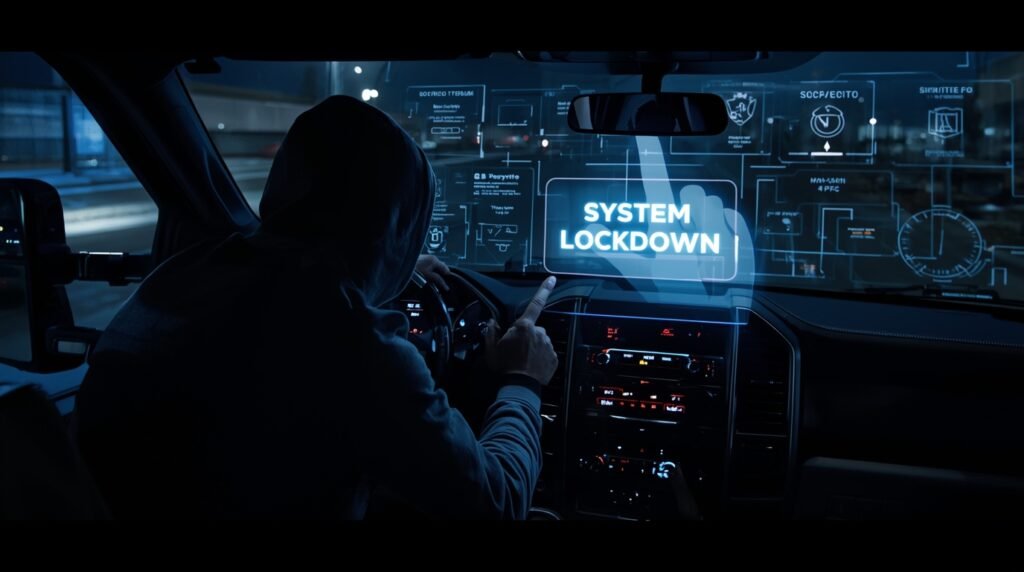
The Counter-Move: Look for systems with “Jamming Detection.” If the device detects a sudden loss of signal or interference, it triggers the siren and immobilizer locally immediately. It assumes it’s being attacked and locks down the rig, even if it can’t phone home.
Conclusion: Don’t Be the Low-Hanging Fruit
Here is the bottom line: The days of the “set it and forget it” car alarm are dead. To truly protect your assets in this era of high-tech theft, you need to embrace truck & rv connectivity.
You need a system that watches your back, talks to your phone, and shuts down the engine when things go sideways. Don’t cheap out on the install, stop relying on factory locks, and for the love of gears, put a lock on your OBDII port.
Ready to secure your rig? Start by checking your vehicle’s LTE coverage map to decide between a Cellular or Satellite-based tracker—that’s your homework for today.
Products / Tools / Resources:
- OBDII port lock to slow down key-programming attempts (simple physical friction works).
- Tailgate security upgrades that tie into central locking (less “easy grab,” more “not today”).
- Glass break sensors to catch smash-and-grab behavior that door triggers miss.
- BlackVue LTE dash cams for cloud-upload evidence when things go sideways.
- Owlcam LTE cameras for near-instant alerts and cloud-backed footage.
- Automotive harness/loom tape to keep installs stealthy and factory-clean.
As an Amazon Associate, I earn from qualifying purchases.

One Comment