If you’re googling rv solar sizing calculator, you’re probably tired of guesswork, dead batteries, and forum math that magically ignores losses. Here’s the truth: most “solar calculators” underbuild your system, then act surprised when your fridge and Starlink bully your battery into submission.
The problem is simple: people size solar like it’s a sticker on a panel, not an energy system. Your RV doesn’t run on vibes. It runs on watt-hours, amp-hours, and the laws of physics (which don’t negotiate).
Table of Contents
- The Quick RV Solar Sizing Calculator (Do This First)
- Watts → Amp-Hours: The Only Conversion You Actually Need
- Load Audit: Stop Guessing What You Consume
- Battery Sizing: Capacity, DoD, and Why Lead-Acid Is a Drama Queen
- Solar Array Sizing: Panels, Sun Hours, and Real-World Losses
- Controller, Inverter, Wiring: Where Good Systems Win
- Worked Example: Fridge + Lights + Phones + “Just One More Gadget”
- Recommended Gear (Amazon Search Links)
- Frequently Asked Questions
- Insider Takeaway (Read This Before You Buy Anything)
The Quick RV Solar Sizing Calculator (Do This First)
Featured-snippet answer: To size RV solar, convert your daily energy use to watt-hours (Wh), divide by peak sun hours, then add a loss factor. Battery sizing comes from daily Wh divided by system voltage, adjusted for depth-of-discharge and autonomy days. This turns “watts on the roof” into usable amp-hours in the battery.
Fast forward to what you actually want: a simple calculator you can run on a napkin, then refine.
- Daily energy (Wh/day): Sum (watts × hours) for each device.
- Battery needed (Ah): Wh ÷ V = Ah (then adjust for DoD and days of autonomy).
- Solar needed (W): Wh ÷ peak sun hours = watts (then divide by efficiency).
Use these planning defaults unless you have better local data:
- System voltage: 12V (most RVs), unless you deliberately built 24V.
- All-in efficiency: 0.75 (75%) if you use an inverter often; 0.80 if you live mostly on DC.
- Peak sun hours: 4 hours/day as a mid-range planning number (then reality-check your region).

If you want the bigger picture (components, wiring topology, and why some installs run hot), follow the full build flow in this RV solar system design guide.
Watts → Amp-Hours: The Only Conversion You Actually Need
Let’s kill the confusion:
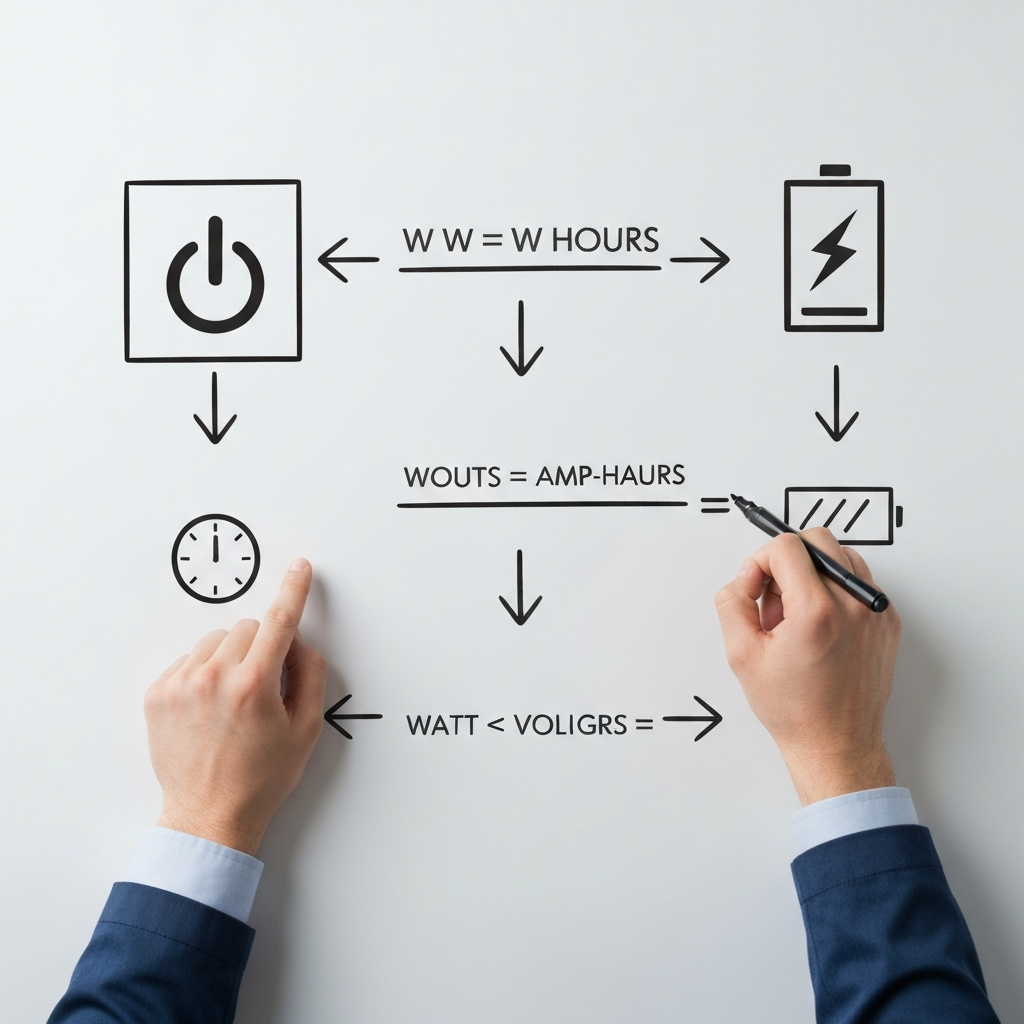
Watts (W) = how hard you’re pushing right now. Watt-hours (Wh) = how much energy you used over time. Amp-hours (Ah) = battery “fuel gauge” units at a given voltage.
Here’s the math you use 90% of the time:
- Wh = W × hours
- Ah = Wh ÷ V (use 12V or 24V)
- W = Wh ÷ hours
One sentence reality check: Ah means nothing without voltage. A 100Ah battery at 12V and a 100Ah battery at 24V are not the same energy. Energy equals voltage times amp-hours (in watt-hours). Wikipedia even keeps it blunt on this. Ampere-hour definition and watt-hour definition explain why people mess this up.
Example: A 60W laptop charger used for 3 hours:
- Wh = 60 × 3 = 180Wh
- Ah at 12V = 180 ÷ 12 = 15Ah (before inverter losses)
Now add the part most calculators “forget”: inverter losses. If you charge that laptop on a 120V inverter, assume ~85–92% efficiency (varies by load and inverter quality). That means your battery pays extra.
Load Audit: Stop Guessing What You Consume
Most RV solar failures aren’t “bad panels.” They’re bad math.
Do a load audit. Yes, it’s boring. So is sitting in the dark watching your battery monitor read 11.9V while you pretend that’s “fine.”
Start with this table. If you don’t know watts, use the device label, manual, or a plug-in power meter for AC loads.
| Device | Watts | Hours/day | Wh/day | Notes |
|---|---|---|---|---|
| 12V Compressor Fridge | ~45W avg | 24 | 1080 | Varies by ambient temp + door openings |
| LED Lights | 20W | 4 | 80 | Easy win: swap bulbs, reduce hours |
| Starlink / Router | 50W | 8 | 400 | This is where “I don’t use much power” dies |
| Phone + Laptop Charging | 80W | 2 | 160 | Charge on DC when possible to avoid inverter tax |
Bold insight: If you can’t explain your daily Wh number, you’re not sizing a system—you’re gambling with your wallet.
Want quick location-based reality checks for solar production? Use a solar resource model like NREL’s PVWatts (yes, it’s meant for PV systems generally, and it still helps you stop lying to yourself). NREL PVWatts gives you a sanity check on expected production based on location and system assumptions.
Battery Sizing: Capacity, DoD, and Why Lead-Acid Is a Drama Queen
Battery sizing is where your rv solar sizing calculator either becomes useful… or becomes a motivational poster.
Step 1: Convert daily energy to battery amp-hours:
Daily Ah = (Daily Wh ÷ Battery Voltage) ÷ System Efficiency
Then you adjust for:
- Depth of Discharge (DoD): How much you can use without wrecking the battery.
- Autonomy days: How many days you want to survive without decent sun.
- Battery chemistry reality: Lead-acid hates deep cycling; LiFePO4 tolerates it much better.
Here’s the no-BS chemistry take:
- Lead-acid: If you routinely drain it past ~50% DoD, it will punish you with shorter life. People still do it, then complain that “batteries don’t last.” Sure.
- LiFePO4: You can typically use more of the rated capacity. That means less battery weight for the same usable energy.
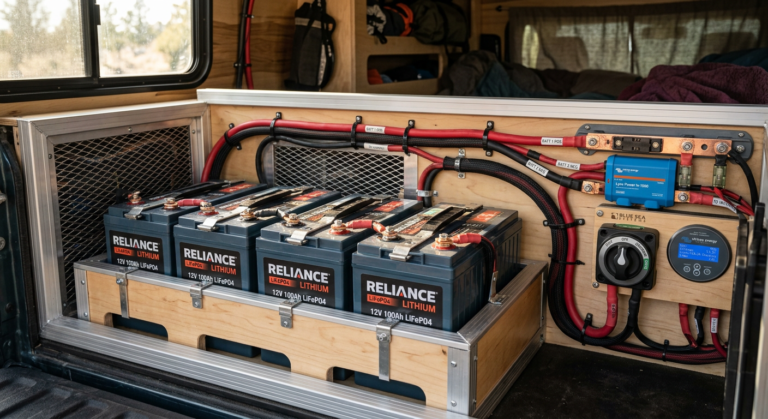
If you’re building around a 100Ah LiFePO4 (a common sweet spot), you’ll want to understand how that real usable capacity behaves in an RV system. This deep dive on the Renogy 100Ah 12V LiFePO4 battery helps you plan around actual use cases instead of marketing numbers.
Bold insight: People obsess over “how many watts of solar” and ignore battery sizing. That’s backwards. Solar refills the tank. Batteries are the tank.
Solar Array Sizing: Panels, Sun Hours, and Real-World Losses
Solar array sizing boils down to: can your panels replace what you used yesterday, today, and tomorrow—in the conditions you actually camp in?
Start with:
Required Solar Watts = Daily Wh ÷ Peak Sun Hours ÷ System Efficiency
Use realistic numbers:
- Peak sun hours: 3–5 is typical planning range. Winter and cloudy stretches will laugh at 6+.
- Efficiency: 0.75 is a safe planning factor for many RV builds (wiring, controller, heat, dirt, inverter use).
Temperature matters too. Panels produce less power when they’re hot. That’s not a “maybe,” that’s physics. Even the U.S. Department of Energy routinely explains PV performance and factors that reduce output in plain terms. DOE Solar Photovoltaic Basics is a solid grounding reference.
Also: shading. Partial shading can crater output depending on wiring and panel tech. If your roof looks like an obstacle course (AC units, vents, antennas), your “400W system” might behave like a sad 250W system at noon.
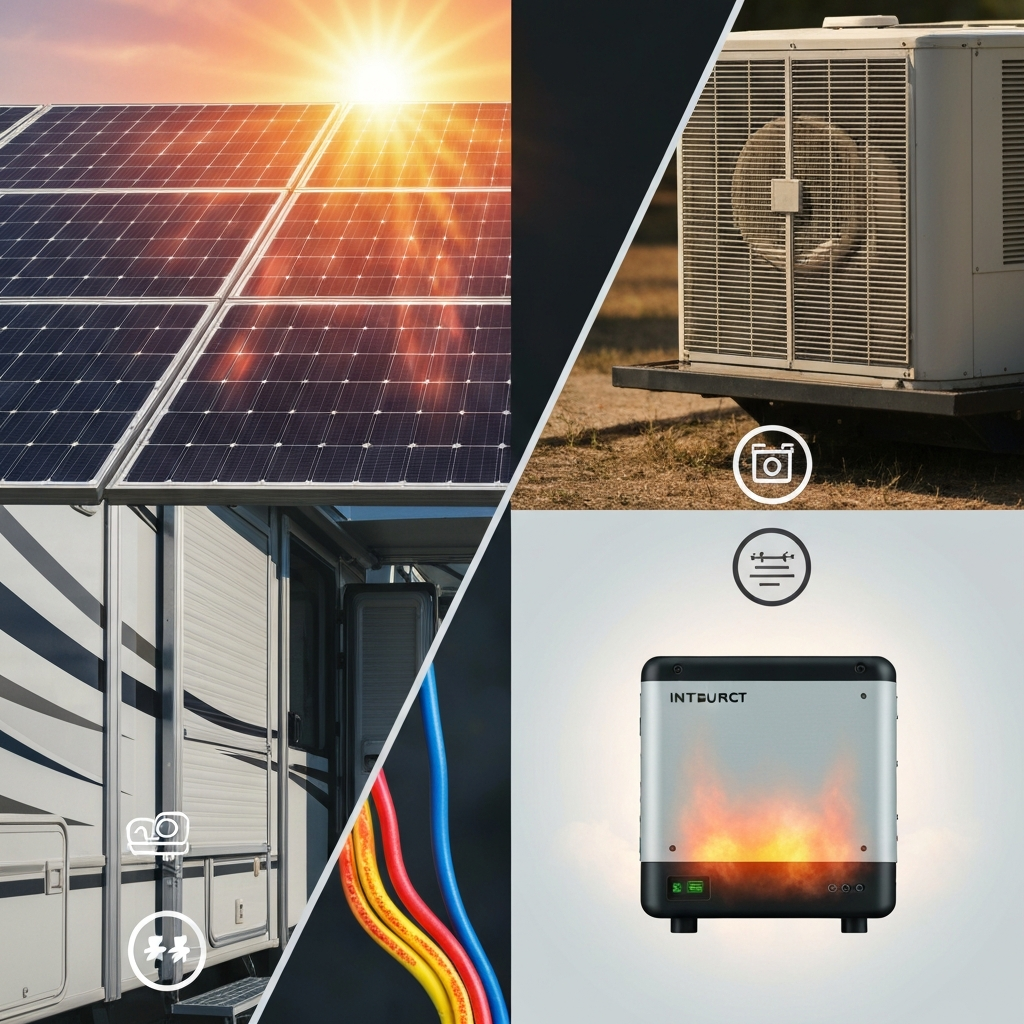
If you want a clean, step-by-step way to design the whole system (panels, controller sizing, fusing, wiring, and monitoring), circle back to Master RV Solar System Design in 6 Simple Steps. It helps you avoid the classic “I bought parts that don’t fit together” move.
Controller, Inverter, Wiring: Where Good Systems Win
Here’s where cheap builds show their teeth.
MPPT vs PWM
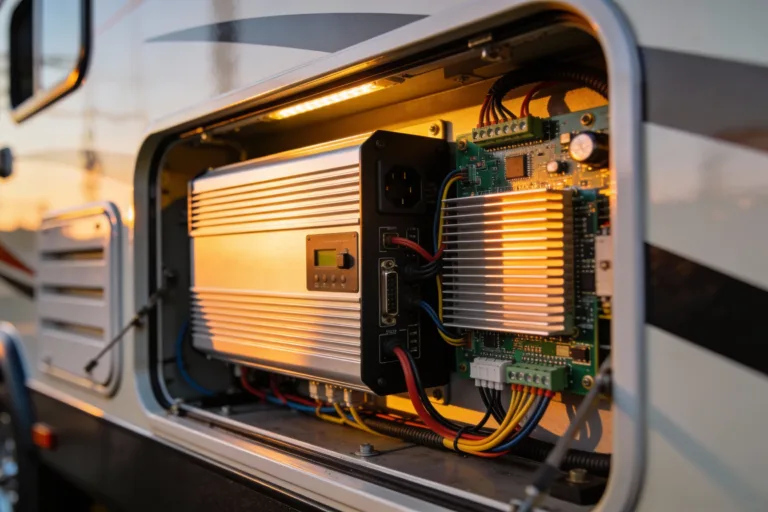
If you run higher-voltage panel strings (common with rigid panels) or deal with variable temps, MPPT usually outperforms PWM. PWM isn’t evil. It’s just… limited. It throws away potential panel voltage like it’s optional.
Inverter sizing (and why “pure sine” isn’t marketing fluff)
Pure sine matters for sensitive electronics and motor loads. Modified sine can run some stuff, but it can also make devices run hot, buzz, or behave weird. If that sounds like a good time, go for it. Otherwise: pure sine.
Size your inverter to your peak simultaneous load, not the fantasy scenario where only one thing runs at a time because you “promise.” People always break that promise.
Wiring and fusing
Voltage drop steals performance quietly. Undersized wire turns energy into heat. Heat turns into melted insulation. Melted insulation turns into “why is my RV on fire?”
Bold insight: If your system depends on “it’ll probably be fine,” it won’t be. Size wire for current, distance, and acceptable voltage drop. Fuse close to the battery. Every time.
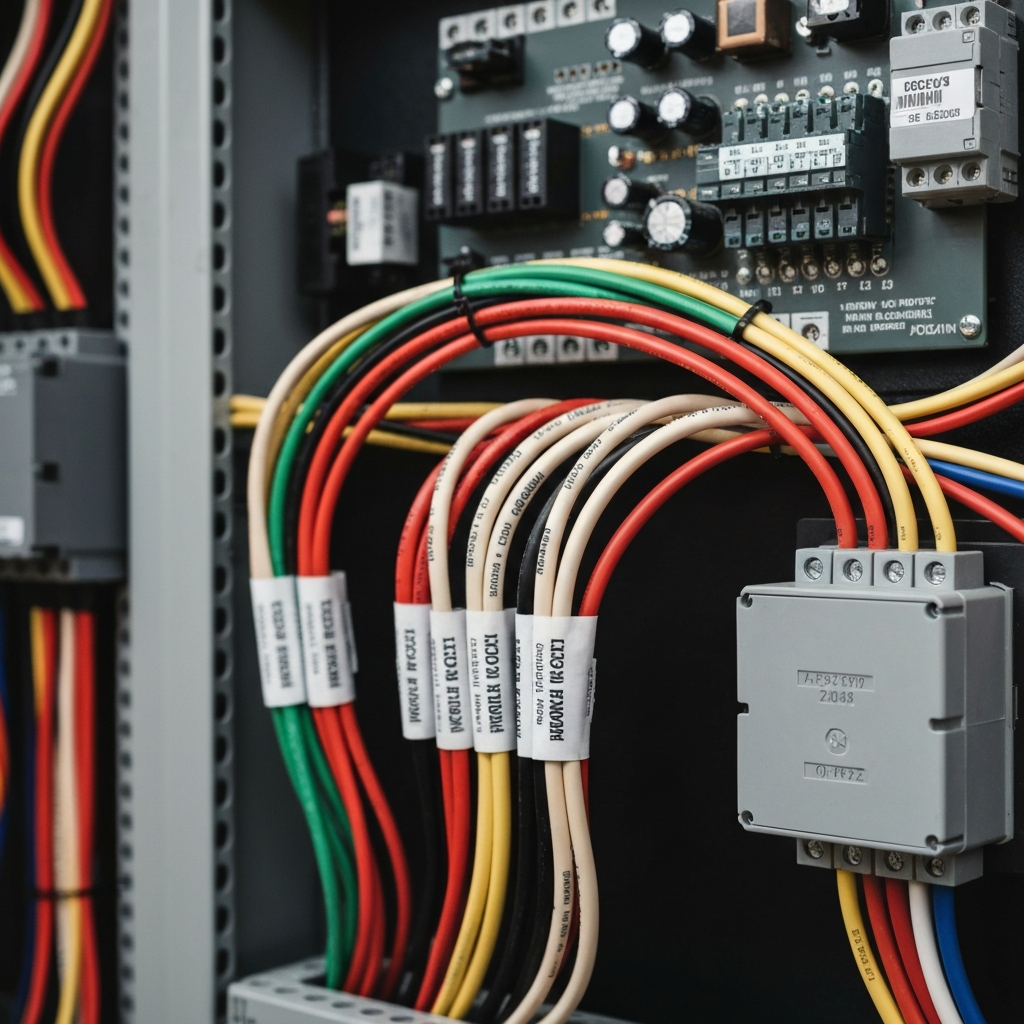
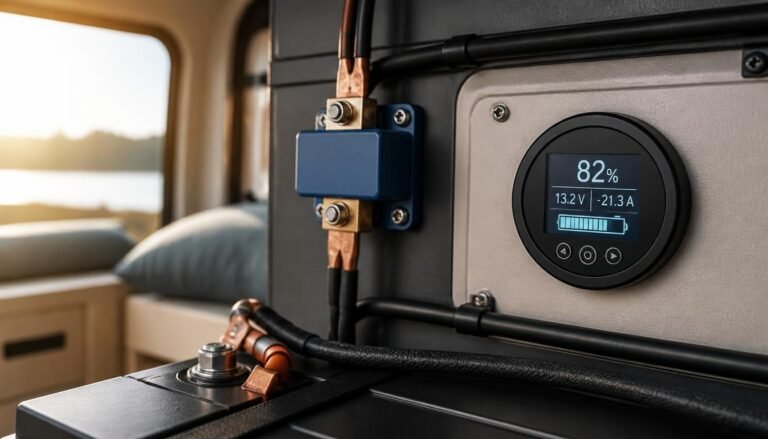
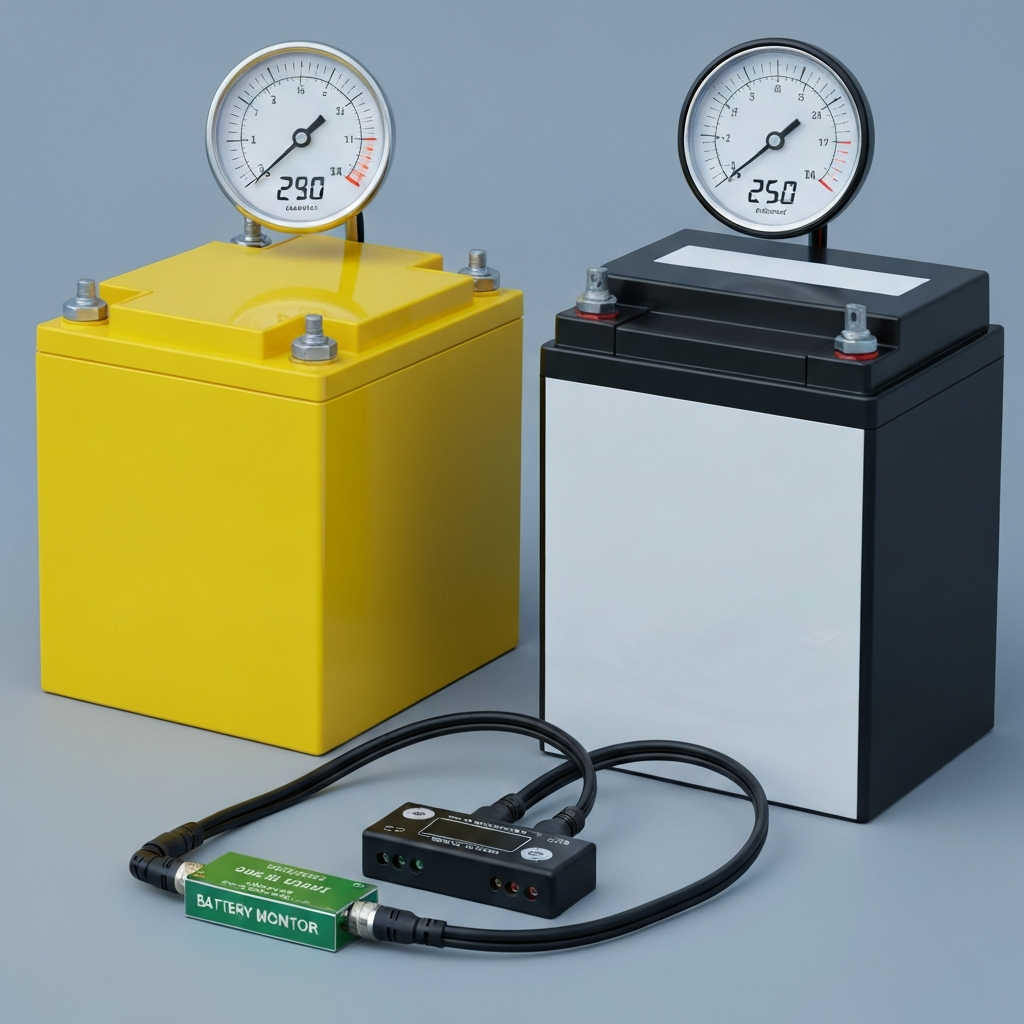
And yes, monitoring matters. A battery monitor with a shunt tells the truth. Voltage-only “monitors” mostly tell stories.
Worked Example: Fridge + Lights + Phones + “Just One More Gadget”
Let’s run a realistic example that matches how people actually camp.
Assume daily usage:
- 12V compressor fridge: 1080Wh/day
- Lights: 80Wh/day
- Starlink/router: 400Wh/day
- Charging (phones/laptop): 160Wh/day
Total = 1720Wh/day
Now convert to battery Ah (12V system). Use 0.80 efficiency if you stay mostly DC; use 0.75 if you use an inverter regularly. We’ll use 0.75 to stay honest.
Daily Ah = (1720Wh ÷ 12V) ÷ 0.75
Daily Ah = (143.3Ah) ÷ 0.75 = 191Ah/day
Now decide autonomy days. Let’s say 1 day (you accept you might ration on bad weather days).
Battery chemistry:
- LiFePO4 usable DoD: plan 80% usable for conservative longevity.
- Lead-acid usable DoD: plan 50% usable unless you like replacing batteries.
Battery bank sizing (LiFePO4):
Required rated Ah = Daily Ah ÷ 0.80 = 191 ÷ 0.80 = 239Ah
That means a practical setup might be two 100Ah batteries if you keep usage tighter, or three 100Ah batteries if you want breathing room and less stress. If you’re using the popular 100Ah class, revisit the Renogy 100Ah LiFePO4 breakdown and plan the bank like an adult: for your actual load and your actual habits.
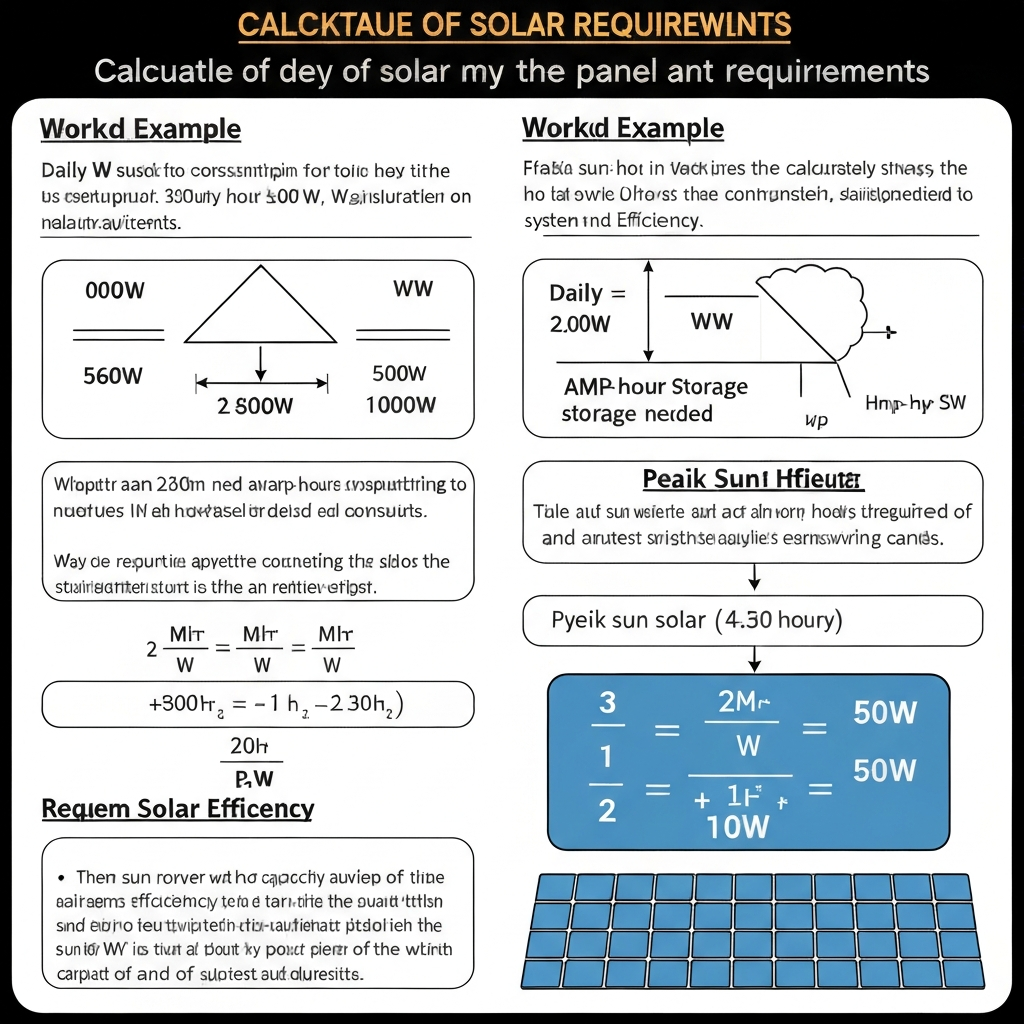
Now solar. Assume 4 peak sun hours and 0.75 efficiency:
Required solar watts = 1720Wh ÷ 4h ÷ 0.75
Required solar watts = 430W ÷ 0.75 = 573W
So if you install 600W of panel, you’re in the “works most days” zone. If you install 400W, you’ll still run, but you’ll pay with generator time or battery depletion when the weather turns.
Bottom line: sizing is math plus honesty. If you want to run power-hungry stuff (microwave, air fryer, hair dryer) off-grid, that’s a different tier of design. Don’t pretend it isn’t.
Recommended Gear (Amazon Search Links)
I can’t verify live stock for specific SKUs here, so I’m using safe Amazon search links. Use them to compare options, then pick based on specs, warranty, and reviews—not vibes.
Solar Panels (Roof Array)
MPPT Charge Controller
LiFePO4 Battery (100Ah Class)
Battery Monitor (Shunt-Based)
Pure Sine Wave Inverter
Bold insight: If your “calculator” doesn’t force you to account for inverter use, peak sun hours, and losses, it’s not a calculator. It’s a sales brochure wearing glasses.
Frequently Asked Questions
Can I size RV solar using watts only (and ignore amp-hours)?
No. Watts tells you instantaneous power, but amp-hours (or watt-hours) tells you how long you can run stuff. Solar and batteries live in energy (Wh/Ah) over time, not just peak watts.
What efficiency losses should I assume for an RV solar system?
A realistic all-in system efficiency is about 70–85% depending on wiring, controller type, temperature, shading, and inverter use. If you plan with 100% efficiency, your math will lie to you.
How many peak sun hours should I use for RV solar sizing?
Use your typical travel region and season, then sanity-check with a PVWatts-style estimate. As a rough planning number: 3–5 peak sun hours/day is common, but shoulder seasons and bad weather will punish optimistic assumptions.
Do I need MPPT, or is PWM fine?
If you care about performance in the real world, MPPT usually wins, especially in cold temps, partial shading, and when panel voltage runs higher than battery voltage. PWM works, but it leaves usable power on the roof.
Should I size for one day of autonomy or more?
If you boondock or camp in variable weather, size for at least 1 day of autonomy. If you hate running a generator, push toward 2 days. People who size for “perfect sun every day” end up listening to their generator more than their music.
Insider Takeaway (Read This Before You Buy Anything)
Here’s the truth: a solid rv solar sizing calculator doesn’t start with panels. It starts with your daily watt-hours, then it converts that to amp-hours with voltage and losses included.
Key insider takeaway: Size batteries for your lifestyle, then size solar to refill them in your worst “normal” conditions. If you do it the other way around, you’ll either underbuild and suffer or overbuy and pretend you “planned ahead.”
Action step: remember your three numbers—daily Wh, peak sun hours, and efficiency. Run the math. Then buy parts that match the math, not the marketing.
And if you still feel tempted to say, “I’ll just add more later”… yeah, you will. Everybody does. Just do yourself a favor and plan the wiring and controller capacity now so “later” doesn’t turn into “rewire the whole roof.”
As an Amazon Associate, I earn from qualifying purchases.