
Table of Contents
- What Are 12V HVAC Systems for RVs?
- Why Your Factory RV Air Conditioner Sucks (And What Actually Works)
- The 12V vs 120V Battle: What Nobody Tells You About Power Consumption
- Best 12V Climate Control Systems for Off-Grid RVing
- Installing Your 12V HVAC System: The Reality Check
- Heating Solutions That Don’t Drain Your Battery Bank Overnight
- Advanced Climate Control Strategies for Extreme Weather
- Common Mistakes That’ll Cost You Thousands
- Frequently Asked Questions
- Final Thoughts
What Are RV Climate Control & 12V HVAC Systems for RVs?
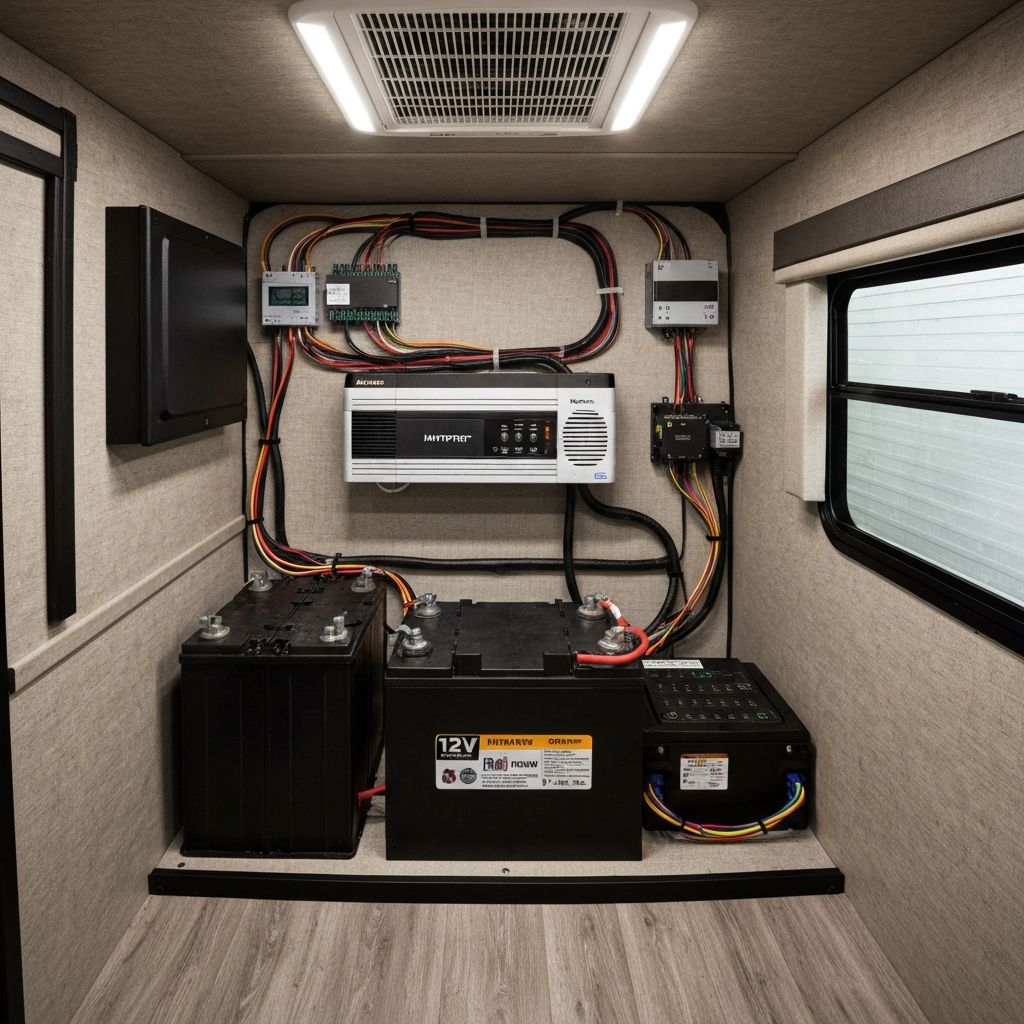
A 12V HVAC system runs directly from your RV’s DC electrical system (battery bank) without requiring an inverter, generator, or shore power connection. Unlike traditional rooftop AC units that demand 120V AC power, these systems use DC compressors and fans designed to operate efficiently on battery voltage, enabling true off-grid climate control when paired with adequate battery capacity and solar charging.
That’s the textbook answer. Here’s the truth most manufacturers won’t tell you:
The term “12V HVAC” is thrown around so loosely it’s almost meaningless. You’ve got everything from legitimate variable-speed DC compressor systems that actually work, to rebranded Peltier coolers that couldn’t chill a beer on a mild spring day. The market is flooded with solutions ranging from $300 Chinese Amazon specials to $3,000+ marine-grade units, and the performance gap is absolutely staggering.
Real 12V air conditioning uses vapor-compression refrigeration cycles—the same physics as your home AC—but with DC motors and compressors designed for battery operation. These systems typically draw 30-60 amps depending on cooling capacity, meaning your electrical system better be up to the task or you’re in for disappointment.
The heating side is often simpler. Most “12V HVAC” systems handle cooling only, leaving you to figure out heating separately. Smart operators pair their 12V cooling with diesel heaters (which sip both fuel and electricity) rather than trying to heat with battery power—a recipe for disaster we’ll dig into later.
Why Your Factory RV Air Conditioner Sucks (And What Actually Works)
Your factory-installed rooftop air conditioner was engineered with one singular goal: be cheap enough that the RV manufacturer can hit their target price point while technically checking the “A/C included” box on the spec sheet.
Let me be specific about why these units are problematic for anyone who actually wants to use their RV off-grid:
Power consumption is catastrophically high. A typical 13,500 BTU rooftop unit pulls 12-16 amps at 120V AC. That’s 1,440-1,920 watts. To run this on battery power, you need an inverter (with its own efficiency losses), meaning you’re pulling 140-180 amps from your 12V battery bank. Every. Single. Hour. Do the math on how long your batteries last.
Most RVers with a single 100Ah battery (standard in many rigs) could run their rooftop AC for approximately 20 minutes before hitting unsafe discharge levels. That’s not climate control—that’s a joke.
The noise factor is real. Factory rooftop units sound like a small aircraft taxiing on your roof. They’re designed for campgrounds where everyone’s generator is already running, not for peaceful boondocking where you’re trying to enjoy actual nature.
What actually works? It depends entirely on your use case, but here’s the framework:
For dry climates (under 30% humidity): Evaporative coolers are shockingly effective and draw minimal power. A quality 12V swamp cooler might pull 3-8 amps and drop interior temps by 15-25°F in desert conditions. They’re useless in humid environments, but in the Southwest, they’re hard to beat for efficiency.
For moderate climates: Modern 12V mini-split systems with variable-speed compressors offer the best balance. Brands like Cruise-N-Comfort and Nomadic Cooling offer units that can actually cool a well-insulated RV on 30-50 amps draw, making overnight battery operation realistic with a proper lithium bank.
For extreme heat: You’re either running a generator, deploying multiple 12V units, or accepting that some conditions exceed battery-powered solutions. Physics is physics. A 12V system capable of cooling a 35-foot motorhome in 105°F Arizona heat while drawing under 50 amps doesn’t exist—anyone claiming otherwise is selling vaporware.
The military and marine sectors figured this out decades ago, which is why premium 12V comfort appliances often have marine or tactical lineage. They’re engineered for actual off-grid use, not weekend camping.
The 12V vs 120V Battle: What Nobody Tells You About Power Consumption
The conventional wisdom says “12V systems are more efficient for RV use.” That’s both true and misleading, depending on how you measure efficiency.
Here’s what’s actually happening with power conversion:
When you run a 120V appliance from batteries, you’re running DC power through an inverter (converting 12V DC to 120V AC), then the appliance’s internal power supply often converts it back to DC to run motors and electronics. You’re losing 10-15% in the inverter, then another 10-20% in the appliance’s power supply. Those losses add up fast and generate heat you don’t want.
A native 12V system eliminates that conversion nonsense. Power flows from battery → charge controller/regulator → appliance. Fewer conversion steps mean fewer efficiency losses and less waste heat.
But—and this is critical—not all 12V systems are created equal. A cheap 12V air conditioner with a fixed-speed compressor might actually be less efficient than a high-quality 120V unit with inverter-driven variable-speed technology, even accounting for conversion losses.
According to the Department of Energy’s research on air conditioning efficiency, variable-speed compressors can reduce energy consumption by 20-40% compared to fixed-speed units. This applies whether you’re running 12V or 120V—the compressor technology matters more than the voltage.
The real advantage of 12V systems isn’t raw efficiency—it’s compatibility with your battery bank and solar charging system. Your solar panels generate DC power. Your batteries store DC power. Running DC appliances means you’re keeping everything in the DC ecosystem, which is inherently more elegant for off-grid applications.
Bottom line: A quality 12V HVAC system paired with lithium batteries and adequate solar will outperform any 120V system on battery power, not because “12V is magic,” but because you’ve eliminated multiple conversion inefficiencies and designed the system holistically.
Best 12V Climate Control Systems for Off-Grid RVing
Let’s talk specific solutions, organized by budget and use case. I’m not going to pretend every option is great—some are legitimately terrible, and you deserve to know which ones.
Budget Tier ($300-$800): Proceed With Caution
The Amazon marketplace is flooded with Chinese-manufactured 12V “air conditioners” that make bold claims about BTU output and amp draw. Some work adequately. Most don’t.
The portable 12V AC units in this range typically use small rotary compressors and claim 3,000-5,000 BTU cooling capacity. In reality, you’re looking at maybe 2,000-3,000 effective BTUs under load, which is enough for a well-insulated camper van or small trailer. For anything larger, don’t bother.
The survivor bias is real with these units. For every happy customer review, there are three people who returned units within a month due to compressor failure or wildly inflated performance claims. If you go this route, buy from sellers with legitimate return policies and assume you’re beta testing.
Mid-Tier ($1,200-$2,500): Where Performance Gets Real
This is the sweet spot for serious off-gridders who want proven technology without marine-grade pricing.
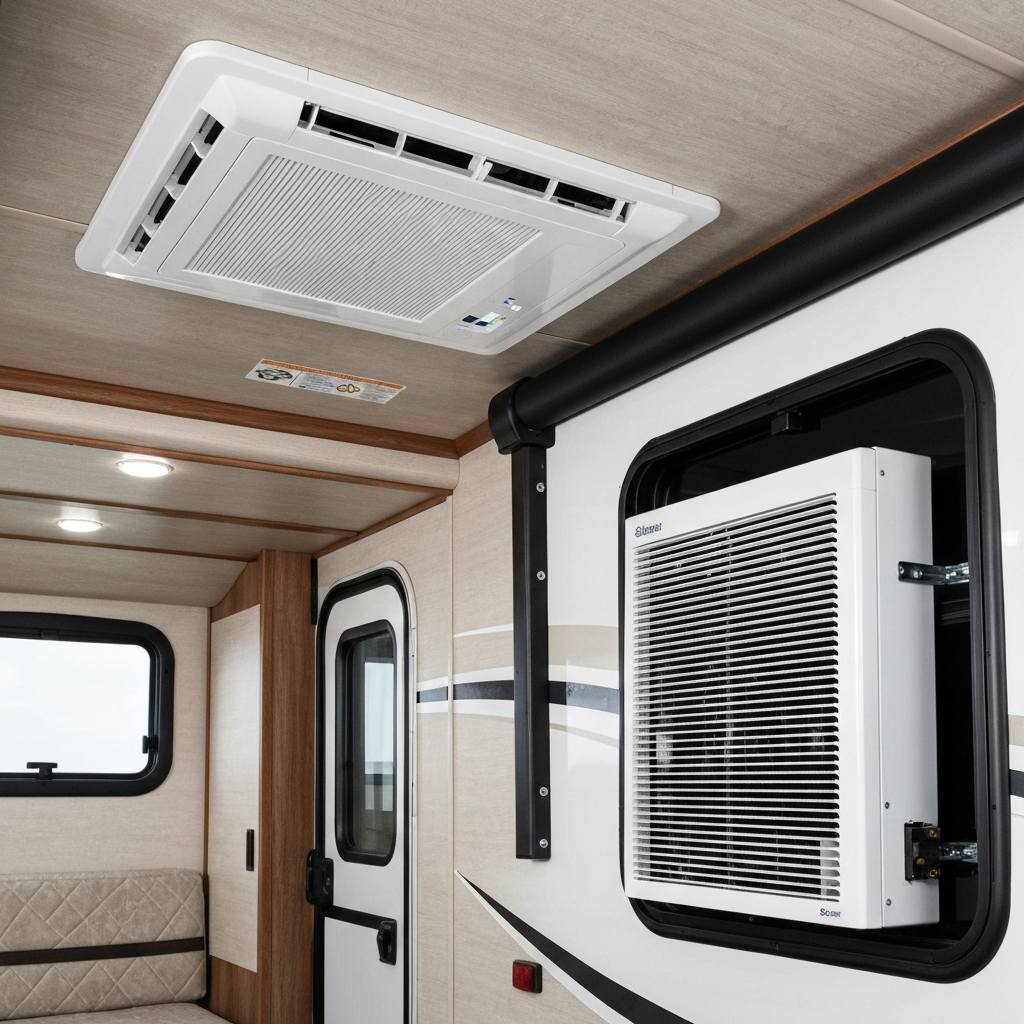
Cruise-N-Comfort systems have earned their reputation through actual field performance. Their 12V units use quality Secop/Danfoss compressors (the same compressors found in high-end marine refrigeration) and deliver legitimate 6,000-9,000 BTU cooling on 35-50 amp draw. These aren’t perfect—installation requires actual HVAC knowledge, and customer support can be slow—but the core technology works.
Rigid HVAC (marine crossover) offers units originally designed for sailboats that adapt well to RV use. Expect to pay a premium, but you’re getting systems engineered for 24/7 operation in harsh environments. If you’re planning multi-month off-grid excursions, the reliability premium is worth considering.
For those comfortable with DIY installation, proper RV installation techniques are critical. A $2,000 system installed incorrectly will perform worse than a $500 unit installed properly.
Premium Tier ($3,000+): Marine-Grade Performance
When failure isn’t an option—extended ocean passages, full-time remote living, expedition vehicles—you step up to marine-grade climate control.
Dometic and Webasto marine HVAC systems represent the gold standard. These units are engineered for continuous operation in corrosive saltwater environments, which means they’ll laugh at anything your RV adventures throw at them. The 16,000 BTU Dometic units can actually cool a large motorhome on battery power, assuming you’ve got the battery bank to support 60-80 amp continuous draw.
The sticker shock is real, but so is the performance envelope and longevity. We’re talking 10,000+ hour compressor lifespans with proper maintenance, compared to 2,000-3,000 hours for budget units.
The Evaporative Alternative
Don’t sleep on quality evaporative coolers if you spend time in arid climates. A 12V swamp cooler pulling 5 amps can deliver comfort equivalent to a 5,000 BTU air conditioner in low-humidity environments, at one-sixth the power consumption.
The physics are simple: evaporating water absorbs massive amounts of heat. In desert conditions (under 20% humidity), evaporative cooling is devastatingly effective. Once humidity climbs above 50%, performance drops off a cliff. Know your climate zone.
Installing Your 12V HVAC System: The Reality Check
Here’s where most people’s dreams of off-grid climate control crash into the rocks of electrical reality.
Your factory RV electrical system is not designed for this. Not even close.
A typical RV comes with 10-gauge wire feeding the 12V distribution panel, maybe 200-300 amp-hours of lead-acid battery capacity, and a 30-amp shore power converter charger. That’s adequate for LED lights, a water pump, and a propane furnace blower. It’s catastrophically inadequate for running 40-60 amp climate control systems.
Let’s walk through what you actually need:
Battery Bank: The Foundation
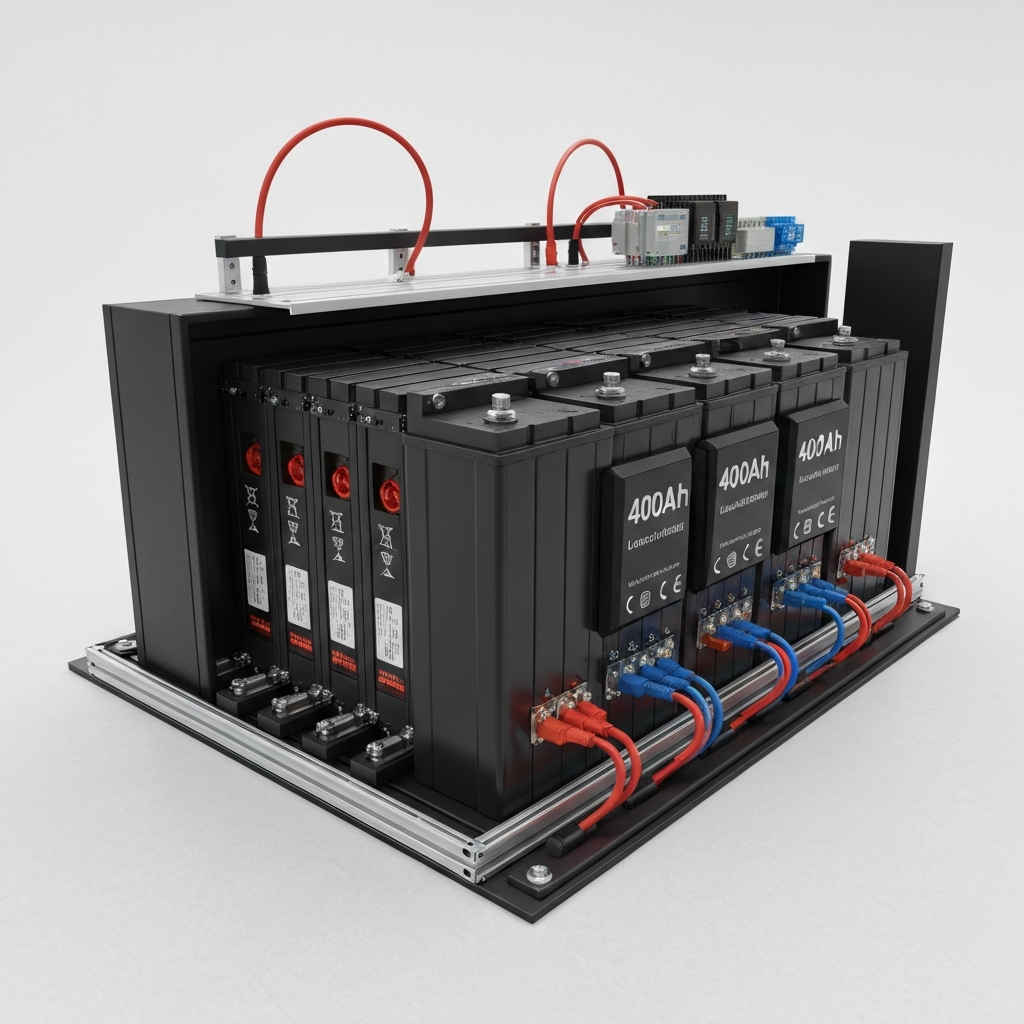
For legitimate off-grid climate control, you need minimum 400Ah of lithium battery capacity. Not 400Ah of lead-acid (which you can only safely discharge to 50%, giving you 200Ah usable). Not AGM marketed as “deep cycle.” Actual lithium iron phosphate (LiFePO4) with a quality battery management system.
Why lithium? Three reasons:
- Usable capacity: You can safely discharge lithium to 20% (some say lower), meaning 400Ah gives you 320Ah usable versus 200Ah from lead-acid.
- Voltage stability: Lithium maintains voltage under load. Lead-acid voltage sags dramatically as discharge depth increases, meaning your HVAC system’s efficiency tanks as the battery drains.
- Charging efficiency: Lithium accepts charge at 1C or higher (you can push 400 amps into a 400Ah bank). Lead-acid acceptance rate plummets above 80% charge, making solar charging agonizingly slow.
Yes, lithium costs 3-4x more than lead-acid up front. The total cost of ownership over 5 years is actually lower when you factor in replacement cycles and usable capacity. Budget $2,000-$4,000 for a proper lithium battery bank.
Wiring: Where Fires Start
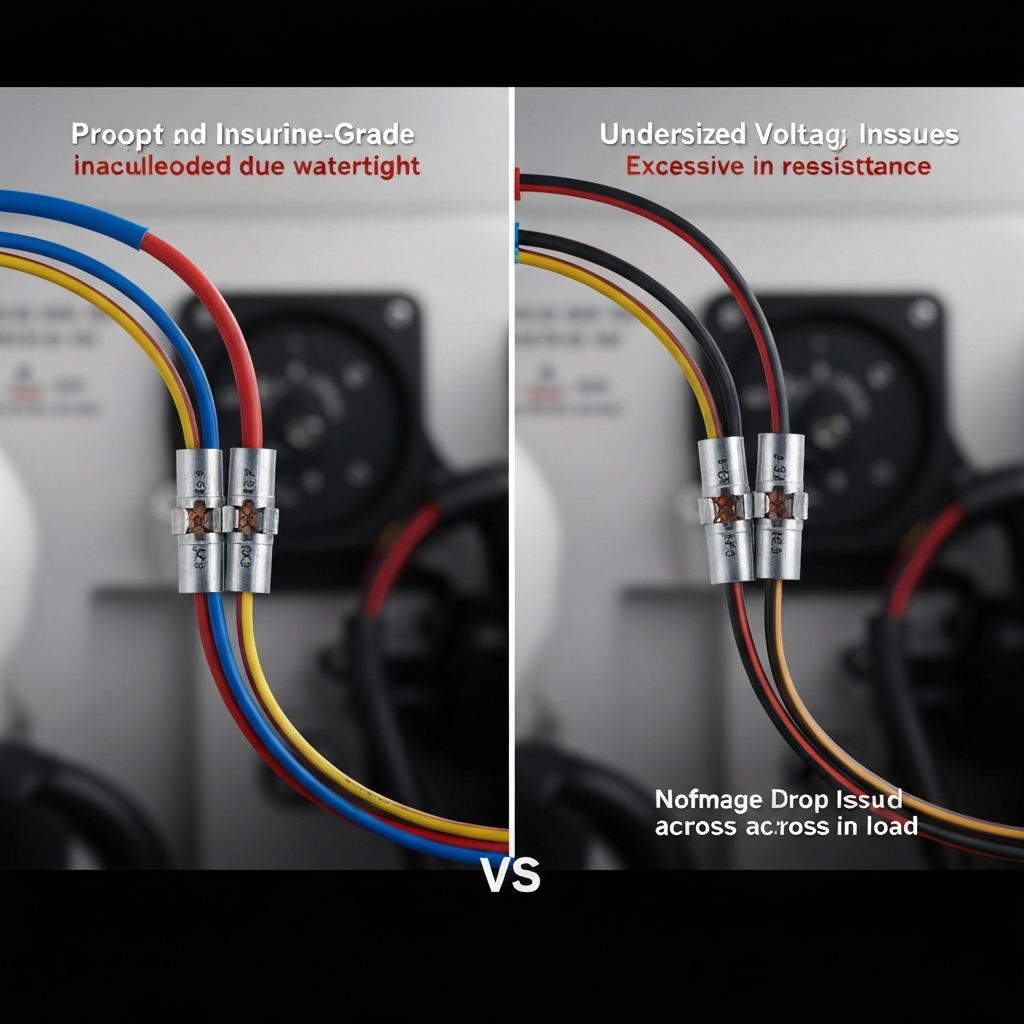
Running 50 continuous amps requires 6-gauge wire for runs under 10 feet, 4-gauge for longer runs. This is non-negotiable. The voltage drop calculators don’t lie, and neither does physics.
Using undersized wire causes voltage drop (reducing HVAC efficiency), generates heat (fire risk), and creates resistance losses that waste battery capacity. I’ve seen RVs with 10-gauge wire feeding 40-amp loads. The wire gets hot enough to soften the insulation. Don’t be that person.
Proper installation means:
- Correctly rated marine-grade tinned copper wire (not cheap automotive wire)
- Proper crimped terminals (not crimp-and-pray Amazon specials)
- Appropriate fusing at the battery (ANL or Class T fuses rated for DC interruption)
- Heat-shrink tubing on every connection
Solar Charging: Keeping The Party Going
A 12V HVAC system running 8 hours at 40 amps consumes 320Ah. To replace that energy, you need 800-1,000 watts of solar generating about 4-5 sun-hours daily. That’s 4-5 full-size panels on your roof, with a charge controller capable of handling the input.
Most RVs leave the factory with maybe 200 watts of solar (if you’re lucky). Do the math on whether that’s adequate for climate control. Spoiler: it’s not even close.
Heating Solutions That Don’t Drain Your Battery Bank Overnight
Cooling gets all the attention, but heating on battery power is where most people’s electrical systems go to die.
The problem is thermodynamics. Heating with electrical resistance (ceramic heaters, radiant heaters, electric blankets) converts electricity to heat at roughly 1:1 efficiency. One watt of electricity produces one watt of heat. To heat an RV in freezing weather, you might need 1,500-3,000 watts continuously. That’s 125-250 amps at 12V. Your battery bank lasts about 90 minutes before you’re freezing in the dark.
Heat pumps (reverse-cycle air conditioners) are better, achieving 200-300% efficiency by moving heat rather than creating it. But they lose effectiveness below about 40°F and become almost useless below 20°F, exactly when you need heat most.
The solution is simple: stop trying to heat with electricity.
Diesel Heaters: The Off-Grid Heating Champion
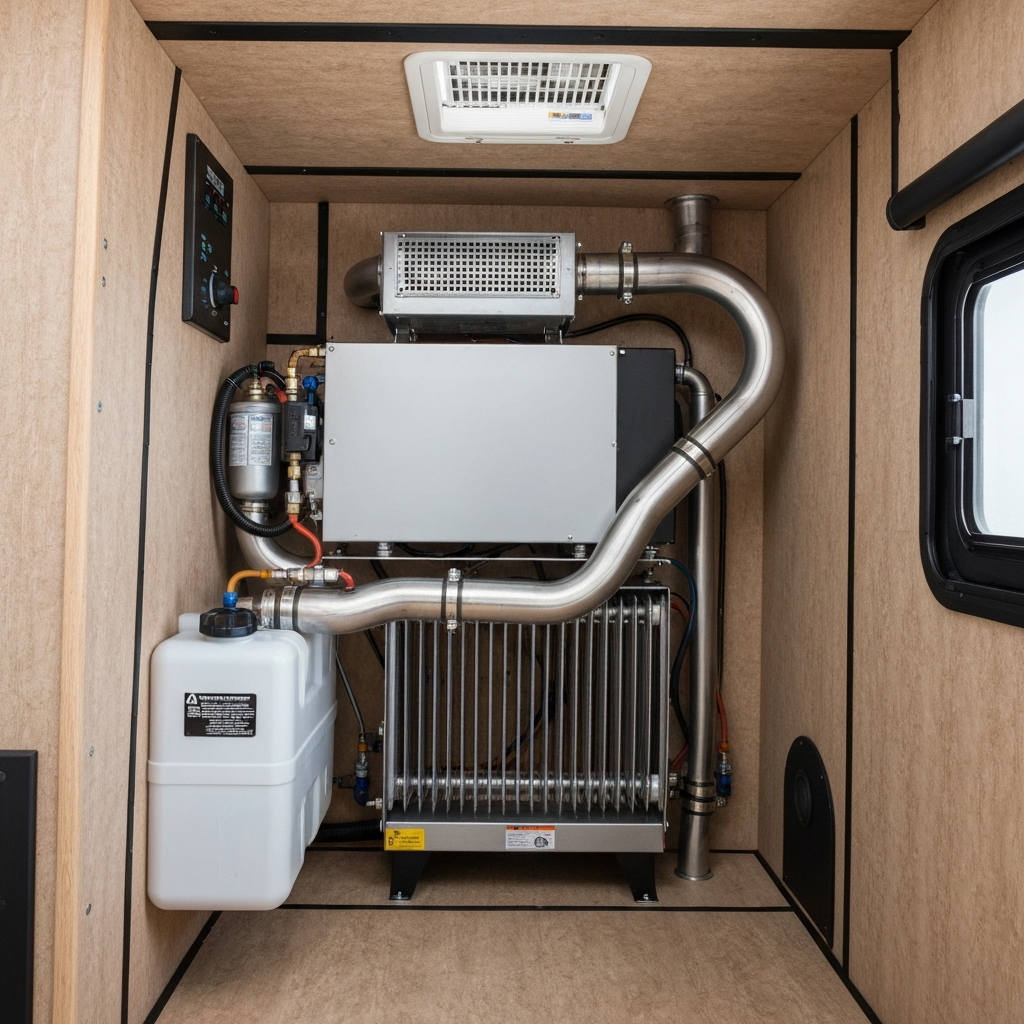
Diesel and gasoline heaters (Espar, Webasto, and Chinese clones) are the correct answer for battery-powered heating. Here’s why:
A quality diesel heater produces 7,000-15,000 BTU/hour while consuming:
- 0.1-0.3 liters of diesel per hour (fuel cost: pennies)
- 1-3 amps of 12V power (just for the fan and glow plug)
Compare that to electric resistance heating requiring 100+ amps for equivalent heat output. The efficiency advantage is almost obscene.
Espar and Webasto represent the premium tier. These are the heaters used in expedition trucks crossing Siberia and fishing boats in the Bering Sea. Prices run $1,000-$2,500 installed, but you’re getting German engineering and parts availability.
Chinese diesel heater clones (commonly branded as “Vevor” or sold generically) cost $150-$400 and use suspiciously similar designs to the premium brands. The quality control is inconsistent, the documentation is hilariously bad, and you’re on your own for parts and support. But they work—I’ve run one for three winters with zero failures.
Propane Furnaces: The Traditional Fallback
Your RV probably came with a propane furnace. It’s loud, inefficient, and has a huge thermal mass that cycles on and off constantly. But it works without destroying your battery bank (most draw 4-8 amps just for the blower fan).
The fuel efficiency is terrible compared to diesel heaters—propane costs 3-4x more per BTU in most markets—but if you already have the system installed, it’s adequate for occasional cold-weather camping.
Advanced Climate Control Strategies for Extreme Weather
Once you’ve got the basic systems dialed in, here’s how the pros extend their performance envelope:
Thermal Mass Management
Your RV is essentially a thin-walled metal box with minimal thermal mass. It heats up fast and cools down fast. Adding thermal mass strategically can dramatically reduce HVAC cycling and improve efficiency.
Water is the easiest thermal mass to add. A 5-gallon water jug that’s been cooled at night (or by your AC during the day) will continue releasing coolness for hours after the AC cycles off. Position them strategically near air return vents.
The same principle works for heating. Mass heated during the day (by solar gain through windows or by your heater) releases that heat slowly overnight, reducing heater runtime.
Zoned Climate Control
Cooling or heating your entire RV is inefficient. Most people occupy about 30% of their RV’s space at any given time. Why condition the whole thing?
Portable 12V fans with insulated curtains create effective climate zones. Cool just the bedroom at night. Heat just the living area during the day. This approach can cut energy consumption by 40-60% compared to whole-rig conditioning.
Ventilation Is Free Cooling
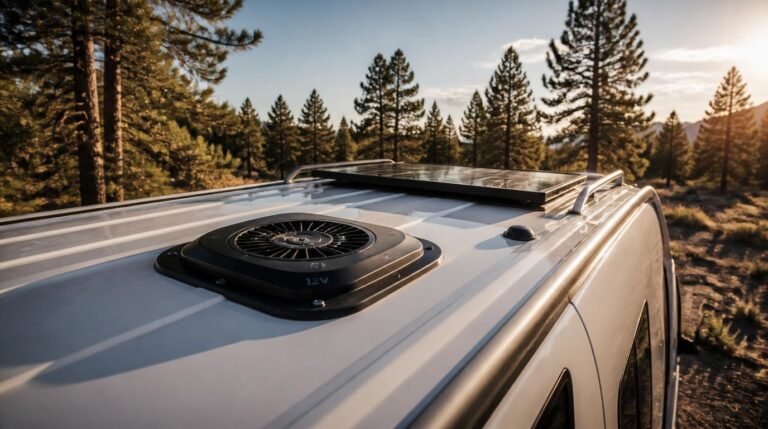
A quality 12V roof vent fan (MaxxAir, Fantastic Fan) pulling 3-5 amps can exchange your entire RV’s air volume in minutes. In shoulder seasons when outdoor temps are comfortable, this eliminates the need for AC entirely.
The strategy: use ventilation fans to purge hot air in the evening, close up the RV to trap cool morning air, use reflective window covers to block solar gain during the day, then repeat. This passive approach keeps my rig comfortable in 85°F weather without running any climate control.
Insulation Upgrades: Unsexy But Effective
Every BTU you don’t lose is a BTU you don’t have to generate. According to R-value research, most factory RV walls have R-values around R-5 to R-7, compared to R-13 to R-21 for residential construction. The thermal performance is laughably bad.
The highest-ROI insulation upgrades:
- Windows: Add insulated magnetic window covers or cellular shades. Windows are massive thermal bridges.
- Ceiling vents: MaxxAir vent covers with insulated pillows for the winter.
- Floor: If you’re doing a renovation, add rigid foam insulation under flooring. Heat loss through floors is substantial in cold weather.
- Air sealing: Use a thermal camera to find air leaks, then seal with appropriate materials. Air infiltration causes more heat loss than conduction through walls in many RVs.
Common Mistakes That’ll Cost You Thousands
After watching countless RVers burn money on climate control upgrades that never deliver, here are the patterns I see repeatedly:
Mistake #1: Buying Equipment Before Auditing Your Electrical System
Nobody wants to hear that they need to spend $4,000 on batteries and solar before they can run their $2,000 HVAC system. But that’s the reality. Installing a 12V air conditioner on a 200Ah lead-acid battery bank is like installing racing brakes on a Prius—the limiting factor is elsewhere.
Do the electrical audit first. Calculate your realistic amp-hour consumption, determine necessary battery capacity, figure out solar requirements, then spec the HVAC equipment. Doing it backwards guarantees disappointment.
Mistake #2: Trusting Manufacturer BTU Ratings
The BTU ratings on budget 12V AC units are fantasy. A unit claiming “10,000 BTU” might deliver 5,000 BTU under real-world conditions. The testing standards are loose, and enforcement is nonexistent.
Look for independent thermal testing data. Check forums for actual thermal camera measurements. Better yet, size your system assuming the manufacturer is exaggerating by 40-50%, because they probably are.
Mistake #3: Ignoring Insulation and Air Sealing
I’ve watched people install $5,000 worth of HVAC equipment in RVs with single-pane windows and zero air sealing. The system runs constantly trying to overcome heat gain/loss that could be eliminated for $500 in insulation upgrades.
Fix the envelope first. Always.
Mistake #4: Running Electric Heat On Batteries
This bears repeating because people keep doing it: electric resistance heating on battery power is stupid. The amp draw is catastrophic, the efficiency is terrible, and you’ll spend more on batteries than a quality diesel heater costs.
If you’re too scared to install a diesel heater, use propane. If you’re too cheap for propane, add more insulation and use fewer blankets. But stop trying to heat with electricity unless you have unlimited shore power.
Mistake #5: Cheap Wire and Connections
Using automotive wire instead of marine-grade tinned copper. Crimping with cheap Amazon tools instead of proper ratcheting crimpers. Undersizing wire by one gauge to save $30.
These shortcuts cause voltage drop, efficiency loss, connection failures, and occasionally fires. The cost difference between correct materials and cheap materials is maybe $100 on a complete installation. The cost of redoing it after failure is your entire vacation and possibly your RV.
Frequently Asked Questions
Can a 12V HVAC system really cool an RV as well as a roof AC unit?
Here’s the hard truth: no single 12V air conditioning unit will match the cooling power of a traditional 15,000 BTU rooftop unit. Physics doesn’t care about your off-grid dreams. But strategically deployed 12V solutions—like a quality 12V evaporative cooler in dry climates or multiple mini-split DC units—can absolutely keep a well-insulated RV comfortable without running a generator. The key is matching the technology to your climate zone and realistic BTU requirements.
What size battery bank do I actually need to run 12V climate control overnight?
For a realistic overnight cooling scenario with a quality 12V air conditioner pulling 40-50 amps, you’re looking at a minimum 400Ah lithium battery bank to run 8 hours without dropping below 50% depth of discharge. Most people severely underestimate this. Add in your refrigerator, lights, and other parasitic loads, and 600Ah becomes the comfortable minimum for true off-grid climate control. Lead-acid? Double those numbers or plan on disappointment.
Are Chinese 12V air conditioners worth the risk or complete garbage?
The market is a minefield. Some Chinese-manufactured 12V units are rebranded versions of the same compressors used in premium brands, just without the markup. Others are absolute junk that’ll fail in three months. The differentiator? Look for units using recognized compressor brands like Secop/Danfoss or Embraco, check for actual customer installs with thermal imaging data, and avoid anything that won’t provide replacement parts. Budget brands can work, but you’re gambling with zero customer support infrastructure.
What’s the best heating solution for below-freezing temperatures on battery power?
Diesel heaters dominate this space for good reason. A quality Espar or Webasto diesel heater sips fuel and draws only 1-3 amps during operation, providing legitimate cold-weather heat without destroying your battery bank. Chinese diesel heater clones work but require careful installation and realistic expectations about longevity. Resist the temptation to use electric resistance heaters on battery power—they’re catastrophically inefficient and will kill your batteries faster than anything else you could possibly install.
Should I bother with insulation upgrades before installing a 12V HVAC system?
Absolutely, and this is where most people screw up the order of operations. Adding a 12V climate control system to a poorly insulated RV is like putting racing tires on a car with a blown engine. Every BTU you save through proper insulation is a BTU you don’t have to generate. Focus on thermal bridging at windows, upgrade to insulated window covers, seal air leaks, and add roof vent insulation before spending thousands on HVAC equipment. The ROI on insulation is dramatically higher than any equipment upgrade.
Final Thoughts: The Climate Control Reality Check
Here’s what a decade in this industry has taught me: effective RV climate control isn’t about buying the most expensive equipment—it’s about understanding the system as a whole and fixing the weakest links first.
The RVers who succeed with off-grid climate control are the ones who approach it methodically: audit the electrical system, upgrade batteries and solar, improve insulation, seal air leaks, then—and only then—add climate control equipment sized appropriately for their actual needs.
The ones who fail are the ones who bought a $2,500 12V air conditioner, slapped it in their RV without upgrading anything else, then complained on forums that “12V AC doesn’t work.” Of course it doesn’t work—you’re pulling 50 amps from a 100Ah battery bank through undersized wire in a poorly insulated box. The technology isn’t the problem.
The truth about RV climate control and 12V HVAC systems is this: the technology exists to live comfortably off-grid in almost any climate. But it requires investment in the complete system—electrical, insulation, ventilation, and equipment. Half-measures deliver disappointing results.
Do it right, or keep running your generator. There’s no middle ground that actually works.
Now go fix your electrical system, upgrade that insulation, and stop pretending your factory battery bank was designed for anything beyond weekend camping.
You’re welcome.
As an Amazon Associate, I earn from qualifying purchases.

One Comment